How to Write a Movie Script: Essential Steps and Tips
 RoboNeo TeamAugust 18, 2026
A movie script turns a story idea into a practical blueprint for actors, directors, and production crews. It describes what viewers can see and hear while organizing the story into scenes that a team can realistically film.
If you are wondering how to write a movie script, begin with the premise, characters, and central conflict before drafting individual scenes. This guide explains how to plan the story, format each scene, write effective action and dialogue, revise the first draft, and prepare the finished screenplay for production.
Why a Movie Needs a Script Before Production Begins
A script gives every department the same version of the story. Actors use it to understand their characters. Directors plan performances and coverage from it, while producers estimate the cast, locations, equipment, and shooting time the project will require. Even outside traditional filmmaking, a clear video script helps connect spoken content, visual direction, and timing before production starts.
Without a finished screenplay, filmmakers may spend money on scenes that later become unnecessary. A nighttime argument outside a crowded stadium sounds simple when it exists only as an idea. On a production schedule, it may require permits, lighting, background performers, traffic control, and several nights of filming.
The script also reveals whether the story works before production begins. Weak motivations, missing information, repetitive scenes, and rushed endings cost far less to repair on the page than on set.
What to Prepare Before Writing Your First Scene
Writing can begin with an exciting image or a line of dialogue, but a few early decisions will give the full screenplay direction.
Define the Genre, Audience, and Target Length
Genre shapes the expectations surrounding tone, tension, pacing, and resolution. A family adventure and a psychological thriller may share the same premise, yet they will present danger, humor, and consequences very differently.
Consider the intended audience as well. Age, viewing habits, and likely distribution format will affect language, subject matter, and running time. Most screenplay pages equal roughly one minute of screen time, although dialogue-heavy and action-heavy pages can play at different speeds. Writers working with a shorter runtime need an even tighter focus, since a short film script usually allows little room for extended backstory or secondary plots.
Develop the Premise and Logline
The premise identifies the story’s central situation. A logline compresses that idea into one or two sentences covering the protagonist, goal, main obstacle, and stakes.
“A paramedic must cross a flooded city to deliver medicine before her brother’s life-support battery fails” gives the writer a character, a task, pressure, and a deadline. When a planned scene does not support that dramatic path, the logline makes the problem easier to spot.
Build the Main Characters and Central Conflict
Give the protagonist an external goal and an internal need. The external goal drives visible action, while the internal need creates room for change. An ambitious chef may want to save her failing restaurant but need to stop controlling every person around her.
Supporting characters should create pressure, assistance, temptation, or contrast. Even an ally can complicate the story by wanting a different solution. Conflict becomes stronger when each side has a reasonable motive rather than one character opposing the hero without a clear purpose.
Research the Story World and Production Reality
Research enough to avoid obvious errors and discover believable details. A courtroom drama requires knowledge of legal procedure. A story set in a commercial kitchen should reflect its hierarchy, sounds, tools, and pace.
Production limits matter too. A first-time filmmaker working with a small crew may struggle to shoot car crashes, airport scenes, and large historical battles. Constraints do not have to weaken the idea. Moving a confrontation from an airport runway to an empty baggage office can make the scene cheaper and more personal.
How to Write a Movie Script Step by Step
People often ask, "How can I write a movie script when I only have a basic idea?" The answer is to develop it in stages. Move from the full story to individual scenes, then turn those scenes into formatted action and dialogue.
Step 1: Map the Major Story Turns
Start by identifying the opening situation, inciting incident, protagonist’s first major decision, rising conflict, midpoint, crisis, climax, and ending. A three-act structure can help organize these turns, but it should support the story rather than force every event onto a fixed page.
Each major turn needs a cause. If a detective hides evidence early in the story, that choice might later allow a suspect to discredit her. The resulting scandal changes her position and forces a new plan. This chain feels more convincing than an unrelated setback appearing only because the plot needs additional tension.
Every turning point should alter at least one major element: the protagonist’s goal, circumstances, knowledge, relationships, or course of action.
Step 2: Create a Scene-by-Scene Outline
A scene outline lets you test the story before spending time polishing dialogue. For each scene, record:
Location, time, and characters present
The viewpoint character’s immediate goal
The obstacle and key action
The change that occurs before the scene ends
Ask three questions: Who wants what? What stands in the way? What changes by the end?
Arrange scenes through cause and effect. A student misses an exam because she helps an injured stranger. That decision leads to a disciplinary meeting, where she discovers the stranger is the dean’s estranged son. Each event grows from the one before it.
The outline does not need complete dialogue. It does need to show that the main plot, character arc, and necessary subplots can all reach a satisfying resolution. This same scene-focused approach also helps when planning the wider process of taking a short film from script to screen.
Step 3: Write Each Scene in Screenplay Format
A slugline identifies whether the scene takes place indoors or outdoors, followed by the location and time:
INT. MAYA’S APARTMENT – NIGHT
Write action in the present tense and limit it to what viewers can see or hear. Short paragraphs make the page easier to scan. Character names, dialogue, and necessary parentheticals should follow standard screenplay format. A trusted template or screenwriting program can handle margins, spacing, and page breaks automatically.
A strong scene contains a goal, an obstacle, and a turn. Maya may enter her apartment hoping to recover a hidden passport, find her sister waiting inside, and leave after realizing the passport has already disappeared. Her plan and relationship have both changed.
When nothing changes by the end, rewrite, combine, or remove the scene.
Step 4: Use Action and Dialogue to Reveal the Story
Screenplays cannot rely on long explanations of private thoughts. Turn feelings into behavior that an actor can perform. Instead of writing that Maya feels betrayed, show her remove her sister’s photograph from a packed suitcase and leave it face down on the table.
Distinct characters also need distinct speech patterns. Their backgrounds, relationships, and immediate aims should influence vocabulary and rhythm. A nervous intern may overexplain, while an experienced surgeon answers the same question with three clipped words.
Subtext keeps dialogue from sounding like a report. Characters can avoid questions, pause, lie, imply, or behave in ways that contradict their words. A husband saying, “Take whatever you need,” while gripping the car keys communicates more than a direct statement about resentment.
Enter scenes as late as possible and leave once the dramatic change lands. Greetings, routine preparation, repeated visual information, and explanations of facts both characters already know usually slow the story.
Step 5: Complete the First Draft
Begin at a moment when the character’s situation starts changing. The audience does not need twenty pages of ordinary life before the central problem appears.
During the first draft, prioritize reaching the ending. Constantly rewriting the opening can prevent the story from developing beyond it. When a research question or logic problem interrupts your progress, leave a short marker such as [CHECK HOSPITAL PROCEDURE] and continue.
After finishing, first confirm that the story forms a complete chain from opening to resolution. Later passes can focus separately on structure, character motivation, scene purpose, and dialogue. Trying to repair all four at once makes revision harder.
That staged process also answers the common question "How do you write a movie script without becoming overwhelmed?" Work on one storytelling layer at a time.
Tips to Turn the Finished Screenplay into a Movie Plan
A completed draft still needs testing. Reading, breaking down, and visually planning the script can reveal problems that remain difficult to notice on the page.
Hold a Table Read
Invite several people to read the characters aloud. Listen to unnatural phrases, indistinct character voices, slow sections, and awkward transitions. Mark the points where listeners become confused or lose interest, along with turns that appear to lack preparation.
Do not interrupt to explain what a scene means. If the plot only works after the writer provides extra information, the necessary detail has not reached the page clearly enough.
Break the Script Down for Production

Review every scene and list its actors, location, time, props, costumes, vehicles, background performers, effects, and technical needs. This scene breakdown turns the screenplay into information that producers can schedule and budget.
The process often exposes avoidable costs. Five short conversations set in five cafés may serve the same purpose as two longer conversations in one recurring location. Combining them could reduce travel, setup time, permits, and set dressing without damaging the story.
Create Storyboards and Shot Plans
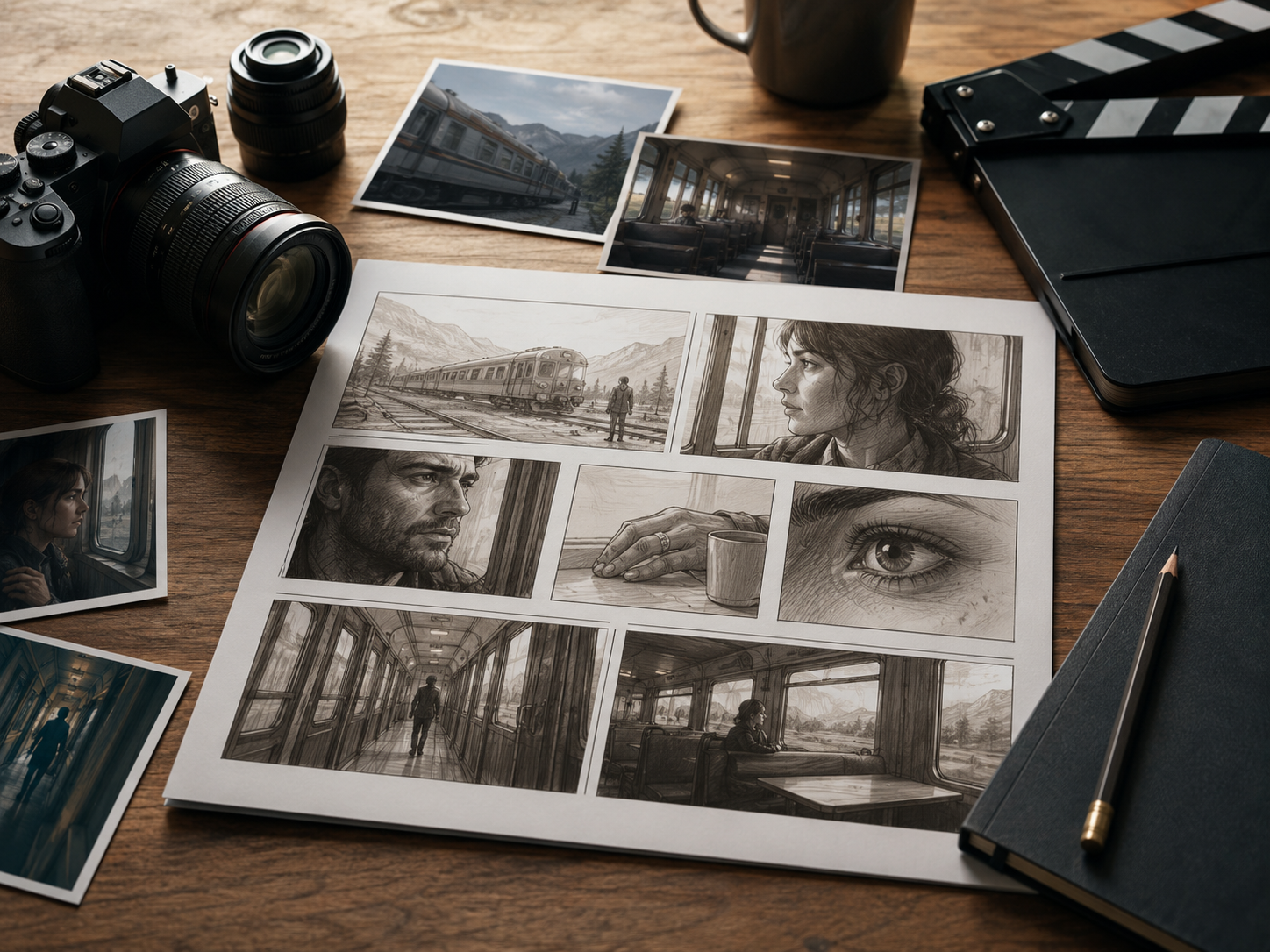
Start with the opening, main turns, action sequences, and climax. Record character positions, composition, major movement, camera movement, and visual connections between scenes. Early planning does not need to lock every shot.
Keep scenes and shots separate. One scene in a train carriage might contain a wide establishing shot, two close-ups, an insert of a ticket, and a moving shot through the aisle. Those additional shots do not create additional screenplay scenes.
Once the draft is stable, an AI script generator can help turn the written material into ordered shots, scene breakdowns, character actions, and transitions for early visual planning.
Test Important Scenes with a Video Preview
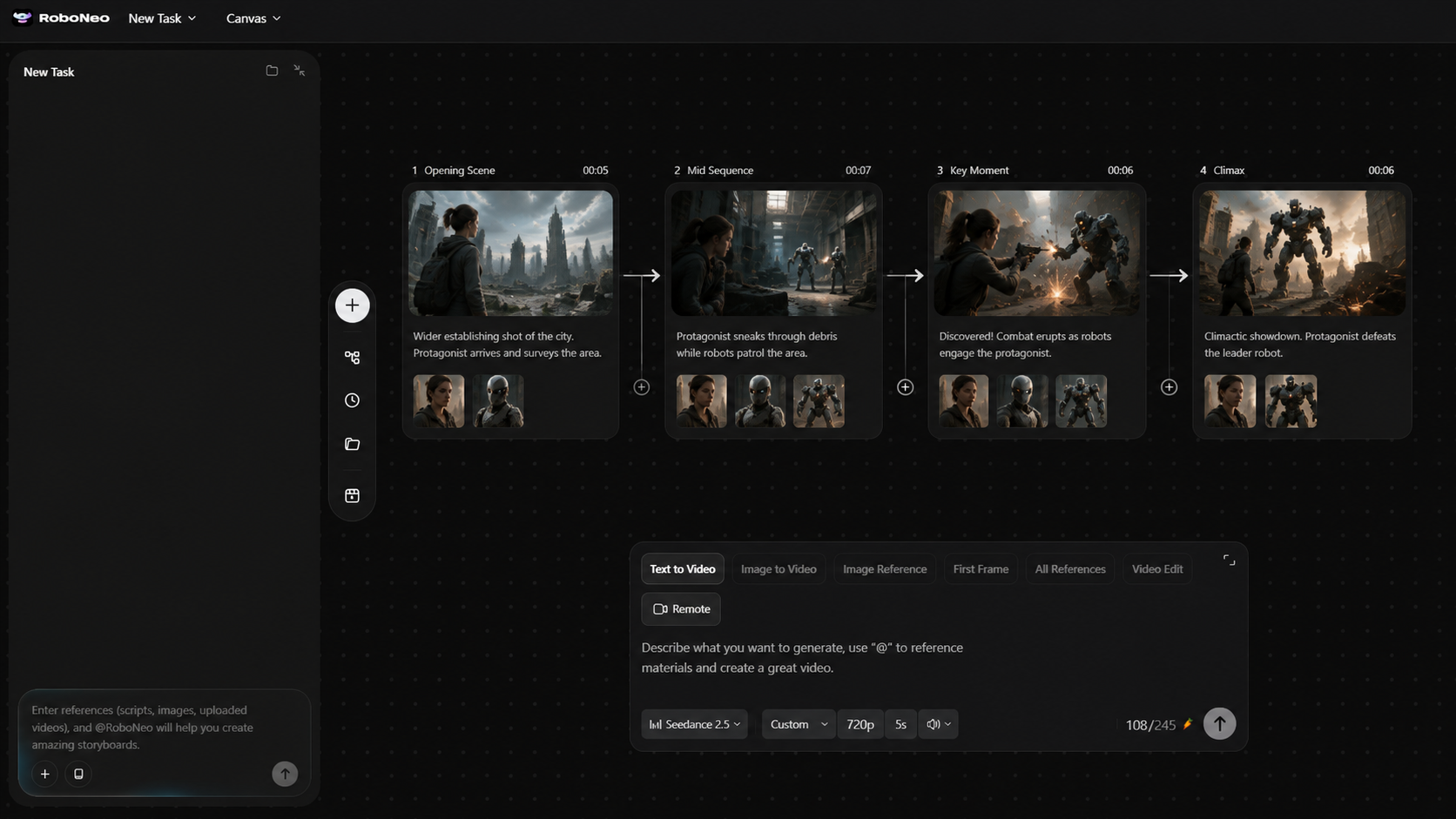
Choose the opening, an important sequence, or the climax and separate it into characters, environment, action, mood, composition, and camera movement. These details can then support a simple visual preview.
Writers can take scene descriptions and character references into RoboNeo to generate a few key images or short video clips, then arrange them in script order. Starting with several important scenes gives clearer feedback than attempting to generate the entire film at once.
The preview can show whether character appearances remain consistent, action directions connect, and spatial relationships make sense. It supports planning; it does not replace the screenplay, the director’s decisions, or the final shoot. When a preview exposes a confusing location or broken movement, return to the script or storyboard and correct it there.
Prepare the Production Draft
Apply what you learned from the table read, scene breakdown, storyboards, and video preview. This last revision should remove confusion and align the story with realistic production needs.
Standardize scene names, character details, version numbers, and revision dates so every collaborator works from the same document. Once production officially begins, add scene numbers and any other shooting-script information the project requires.
FAQ
How long should a movie script be?
A typical feature screenplay runs about 90 to 120 pages. Many comedies and family films sit near the shorter end, while some dramas and large-scale stories run longer. Story needs and intended running time matter more than hitting an exact number.
Can I write a movie script without screenwriting software?
Yes. A word processor and a reliable screenplay template can produce a correctly formatted script. Dedicated software saves time by automatically formatting sluglines, character names, dialogue, and page breaks.
How many scenes should a feature-length screenplay contain?
No fixed number applies to every feature. Many scripts contain roughly 40 to 60 scenes, while fast-paced films may have far more. Scene length, genre, and editing style affect the total. Each scene should earn its place by advancing the plot, character, or conflict.
How long does it take to write a first movie script?
Some writers complete a first draft in several weeks; others need several months. Research demands, available writing time, story complexity, and planning habits all affect the schedule. A consistent weekly routine usually matters more than writing quickly.
Do I need permission to write a movie script based on a true story?
You can write about public events and conduct research using public records, but rights involving private individuals, unpublished material, copyrighted sources, privacy, and defamation can become complicated. Seek qualified legal advice before selling or producing a true-story screenplay, especially when living people appear in it.
You May Be Interested

New from RoboNeo: Agent Team. The AI That Hired You a Whole Creative Squad

How to Choose the Best AI Text to Video Generator in 2026 (+ Our Top Pick)

Best Free AI Video Generator: Top Tools to Try
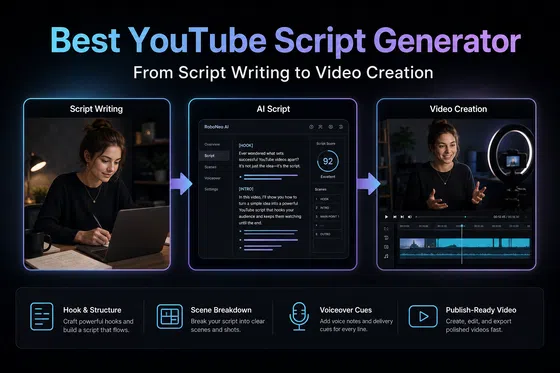
Best YouTube Script Generator: From Script Writing to Video Creation
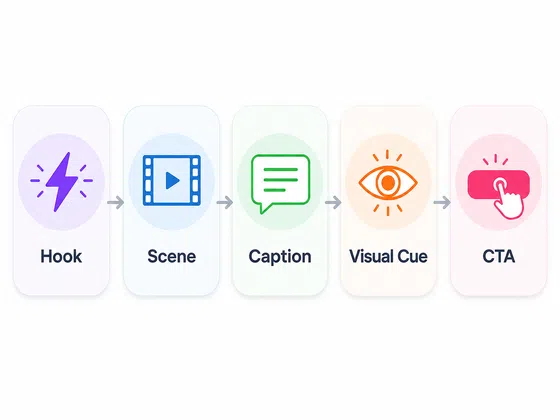
Best TikTok Script Generator in 2026