How Much Does It Cost to Make a Movie? Traditional vs AI Production
 RoboNeo TeamSeptember 29, 2026
"How much does it cost to make a film?" has no single answer. A home-made short may cost a few hundred dollars. A studio movie may pass $100 million. AI changes where the money goes, but it does not remove the work. The script and shooting plan should set the budget.
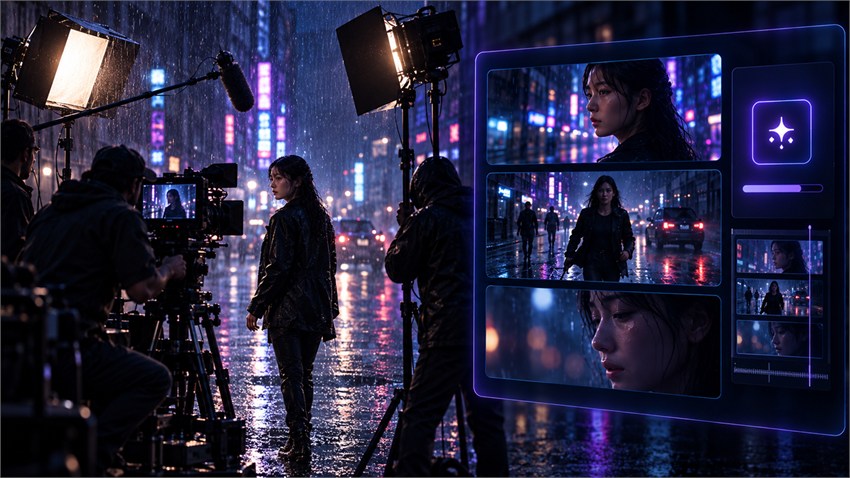
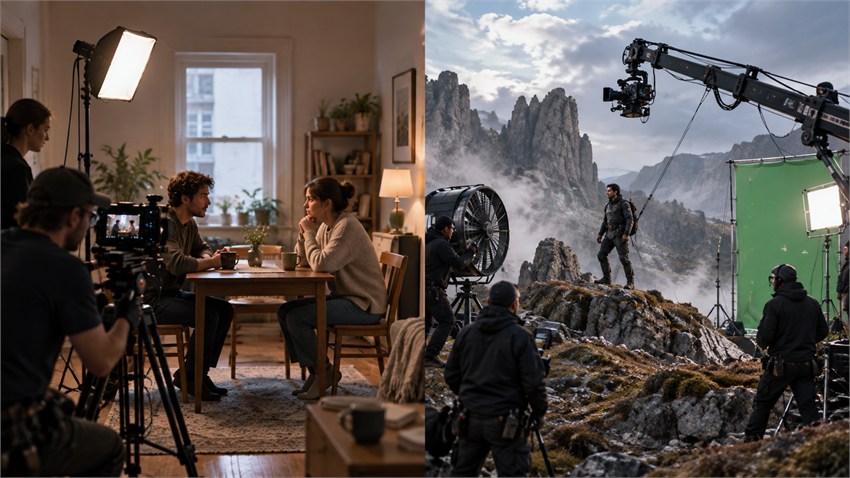
An average budget for a movie says little without the type of project. Running time matters, but it is only one part of the cost. A difficult location or effects shot can change the budget more than several pages of dialogue.
Short Films
For anyone learning how to make a short film, a student crew can begin with a phone, a friend's apartment, and free editing software. Cash spending may cover only food and transportation. Paid actors, rented equipment, and locations can push the cost into thousands or tens of thousands of dollars.
A short action scene can cost more than an entire dialogue film. Period clothing and visual effects also raise the price. After filming, allow for sound, editing, color, music, and captions. Festival entries and promotion need a separate amount.
Microbudget Feature Films
Feature length means more working days, so microbudget films limit actors, locations, and crew size. One person may handle several jobs. The team may also use owned gear or free locations.
"Microbudget" can mean a few thousand dollars or several hundred thousand. Write the script around the resources you have. A one-house story is easier to finish than one filled with crowds and stunts. Keep money for sound, backups, insurance, and post-production. Donated work and deferred pay are not free labor.
Independent Feature Films
Independent features often cost hundreds of thousands or several million dollars. That money supports professional actors, department crews, longer schedules, and formal post-production.
Payroll, equipment, locations, travel, and insurance take large shares. Known actors, licensed music, distant shoots, and effects push the total higher. Genre also matters. A one-room drama cannot be priced like an action or historical film. Festival fees and publicity may sit outside the production figure.
Studio Films
At studio scale, costs often reach tens of millions of dollars. Some productions pass $100 million. Large casts, international shoots, major sets, and stunt teams all add expense. Effects work may continue for months after filming and go through many revisions.
The published figure may also leave out financing, legal work, global marketing, and distribution. A larger budget buys more time and resources. It does not guarantee that audiences will buy tickets.
Where Does the Money Go in Traditional vs AI Movie Production?
Traditional and AI production pay for different kinds of work. One places more money on the set. The other can reduce some filming while adding generation and review costs. Neither approach removes the need for planning or post-production.
Planning and Pre-Production
Before filming starts, the script has to become a workable schedule. Producers secure story rights, hire actors, visit locations, and plan each shooting day. The director, cinematographer, and art team then decide what the audience will see in every scene. A stunt or difficult location may need a test before the full crew arrives. Finding problems at this stage is cheaper than losing a day on set.
AI is useful during these early tests. A writer may use it to sort notes, while the director tries different storyboards or scene designs. An AI video generator can also turn a storyboard or scene description into a short concept clip before the crew commits to a set or location. These drafts still need to be reviewed and changed. These drafts still need to be reviewed and changed. If a character or visual style cannot stay consistent across several shots, the team may have to start again. Contracts and permissions for reference material remain part of the planning.
Cast, Crew, and Filming
Each traditional shooting day adds payroll, rentals, meals, travel, and location fees. Night work, stunts, and union rules can raise the bill further. The production also pays actors and every crew department.
A generated shot may avoid some of those costs. It still uses paid models, credits, or computing time. Several attempts may be needed. Across a feature, someone must track faces, clothing, props, and locations. A real person's face or voice also requires permission.
Sets, Locations, and Visual Effects
A real location may require rent, permits, security, cleaning, and repairs. Built sets add materials, labor, transport, storage, and removal. Cameras, lights, vehicles, and data storage add more costs.
AI can replace some wide views, fantasy settings, or period backgrounds. Simple scenes offer the greatest savings. Longer action may need many retries to keep people and objects consistent. These continuity problems are among the limitations of AI video generation. Generated footage also needs color, lighting, and texture work before it matches live action.
Editing, Sound, and Delivery
Both routes meet in the editing room. Poorly recorded dialogue may need voice enhancement before the final mix. The movie still needs editing, sound, music, color, captions, and final masters. Theaters, streaming services, and festivals may request different files.
Generated footage adds cleanup. Weak shots must be fixed, replaced, or made again. Voices and music need checks for timing and usage rights. A longer movie also takes more work to keep the story and characters consistent. Money saved during filming may be spent here.
Which Production Approach Is Right for Your Movie?
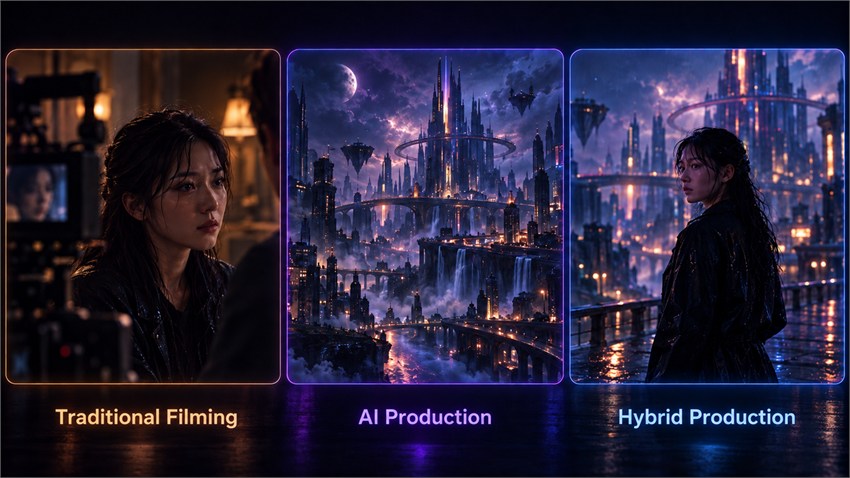
The cheapest method is not always the right one. Start with what the story must show and what the audience must believe. That will tell you which scenes need a camera and which can be created another way.
Choose Traditional Production When
Use traditional filming for acting, long conversations, and physical contact. It is also safer for documentaries, product demonstrations, and real locations. A dinner scene with six actors depends on small reactions and precise timing. Generating that performance shot by shot may take longer than filming it. Existing actors, equipment, and locations make the choice even easier.
Choose AI Production When
AI suits animation, dream sequences, experimental films, and stylized images. A singer floating through an invented city may work well in a music video. The team still needs time to test and remake shots. The tools and source material must allow the planned release. AI is a poor choice for exact acting or complex physical contact.
Choose Hybrid Production When
A hybrid production films the scenes that need real performances and generates selected supporting shots. A product film could record its presenter and demonstration in a studio, then add a costly exterior view. This keeps the shooting budget focused on scenes viewers need to trust. Test two neighboring shots before using the method across the movie.
Tips for Blending AI-Generated Scenes With Live-Action Footage
Decide how each shot will be made before filming. Match the frame shape, camera height, composition, and movement direction. Photos from the set can guide the character, product, or location.
RoboNeo can create a missing background or transition from text or an image. Give the shot one main action. Match the time, weather, light direction, and nearby colors.
Once the images match, listen to the cut. Keeping the same room tone, dialogue, or music across both shots can make the change less noticeable. A shared color grade, grain, and depth of field will bring the images closer together. Keep the real actor throughout any continuous action. If the generated shot changes a face, product, or movement, replace it with live action or traditional visual effects.
Blend Movie Scenes with RoboNeo
FAQ
Does a movie budget include marketing and distribution?
Not always. Published production budgets usually cover development, planning, filming, and post-production. Advertising, festival entries, distribution, and theater promotion may be counted separately. Check what the figure includes before comparing two movies. Small productions should still reserve money for posters, trailers, captions, applications, and delivery files.
Can you make a feature film for $10,000?
Yes, but the story must fit the money. A $10,000 feature usually needs few actors, limited locations, a short schedule, and available equipment. The filmmaker may handle several jobs. Sound, backups, insurance, and a finished edit still matter. Completing the movie does not mean it meets every theater or streaming standard.
How much does it cost to make a short film?
A short may use almost no cash or cost tens of thousands of dollars. Cast, crew, locations, equipment, and effects matter as much as running time. A short battle scene can cost more than a longer drama in one room. Price the actual script and shooting plan instead of using a rate per minute.
Can AI make an entire movie without actors or a film crew?
AI can generate pictures, temporary voices, music, and sound. It cannot decide the story or judge every shot on its own. A finished movie still needs writing, direction, editing, sound, and review. Feature-length work also brings problems with character consistency, dialogue, continuity, and rights. Human filmmakers remain responsible for those choices.
Can an AI-generated movie be released commercially?
Possibly. The answer depends on the model, account plan, reference files, and release platform. Check the rights for generated output, actor likenesses, voices, music, brands, and outside material. Commercial permission from a tool does not cancel other people's rights. A major release should receive a legal review before distribution.
You May Be Interested
How Many Scenes in a Movie? A Screenwriter’s Guide
How to Write a Movie Script: Steps for First-Time Writers
Movie Ideas to Make at Home: 15 Easy Beginner Films
How to Create an Anime Movie: The Complete Process
Movie-Quality AI Video Prompts: Complete Guide