
How Many Scenes in a Movie? What Screenwriters Should Know
 RoboNeo TeamAugust 18, 2026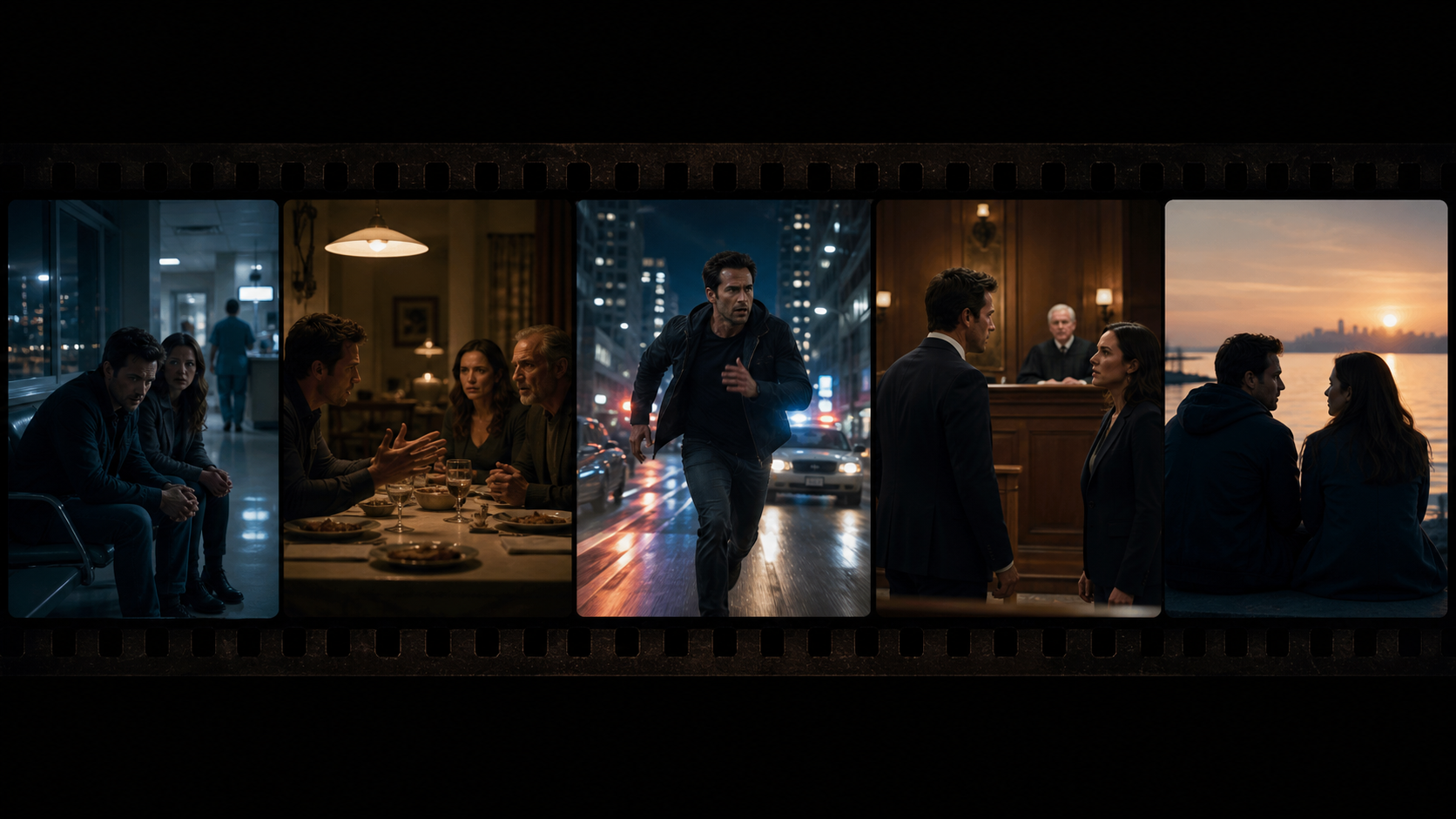
A feature film often contains 40–60 screenplay scenes, but that range is only a loose reference. Fast-paced action films may use far more, while a contained drama may tell its story through fewer, longer scenes. There is no required number.
When deciding how many scenes are in a movie, focus on story turns, character decisions, and pacing rather than an average. This article explains what counts as a scene, what affects the final number, and how to write scenes with clear objectives, conflict, and change. It also covers scene breakdowns, visual previews, and common mistakes to avoid when preparing a screenplay for production.
What Counts as a Scene in a Movie?
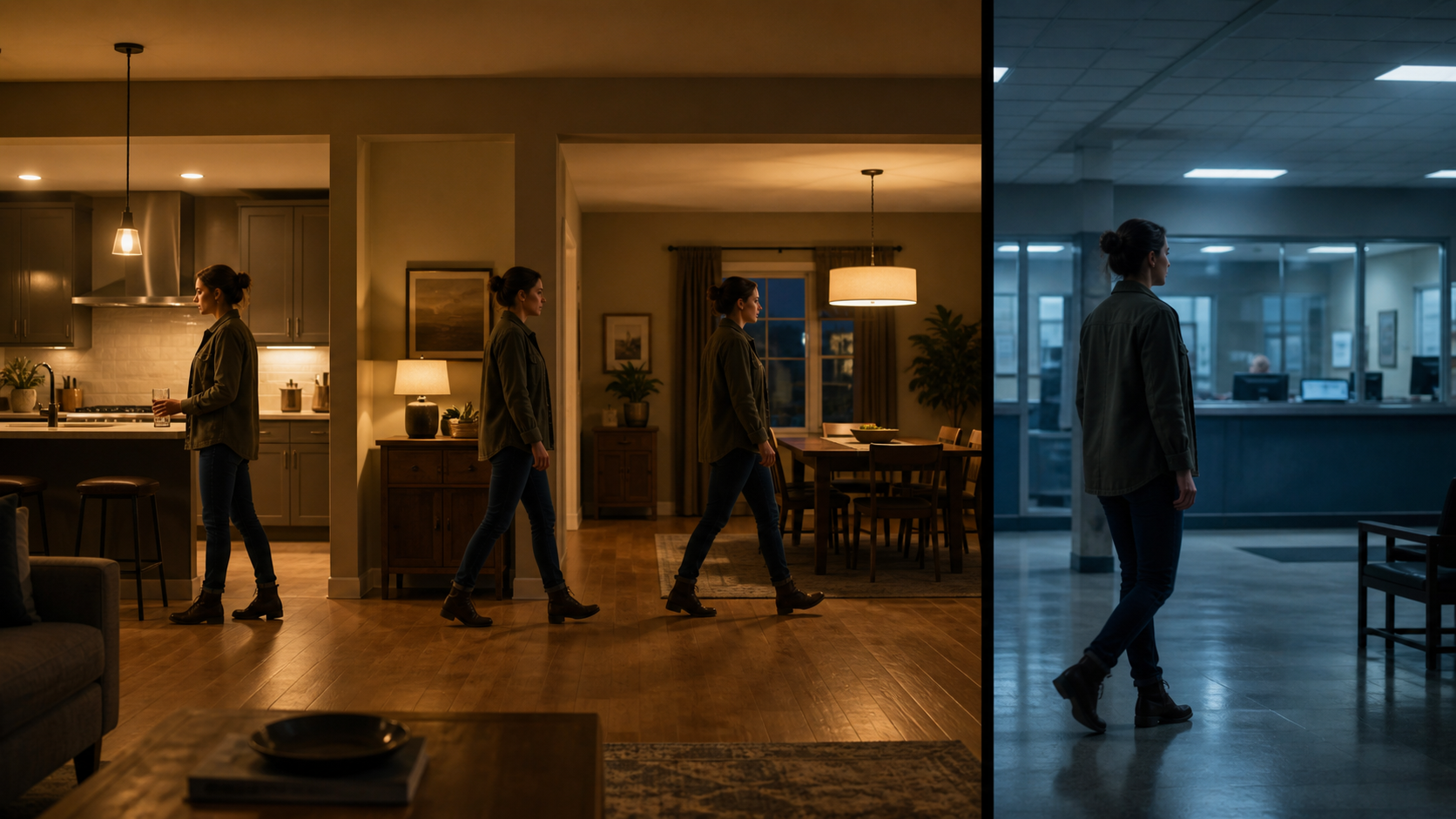
In a screenplay, a scene usually presents continuous action in one place and time. A new scene begins when the story moves to another location, shifts between interior and exterior, or makes a clear jump in time. Screenwriters mark that change with a new scene heading, such as:
INT. HOSPITAL WAITING ROOM – NIGHT
A character walking from a kitchen into a connected dining room may remain in the same scene if the action continues without interruption. Moving from that house to a police station requires a new heading and normally creates a new scene.
The final film may treat scenes differently. Editors can cut between two locations, insert memories, or divide one scripted conversation with reaction shots. Therefore, the answer to how many scenes in a film can change depending on whether someone counts screenplay headings, dramatic units, or edited sequences.
What Determines How Many Scenes a Movie Needs?
Several practical and creative choices influence the total. None provides a fixed formula.
Runtime and Screenplay Length
One screenplay page generally represents about one minute of screen time, so a 100-page script may become a movie lasting roughly 100 minutes. Scene length varies widely within those pages. A ten-second image of an empty bedroom and an eight-page courtroom confrontation both count as one scene.
Shorter scenes often raise the apparent speed of a film. Longer ones allow tension, performance, and relationships to develop without interruption. The time required to complete a draft also depends on its length and complexity, which is why estimates for how long it takes to write a script vary so widely.
Genre and Intended Pace
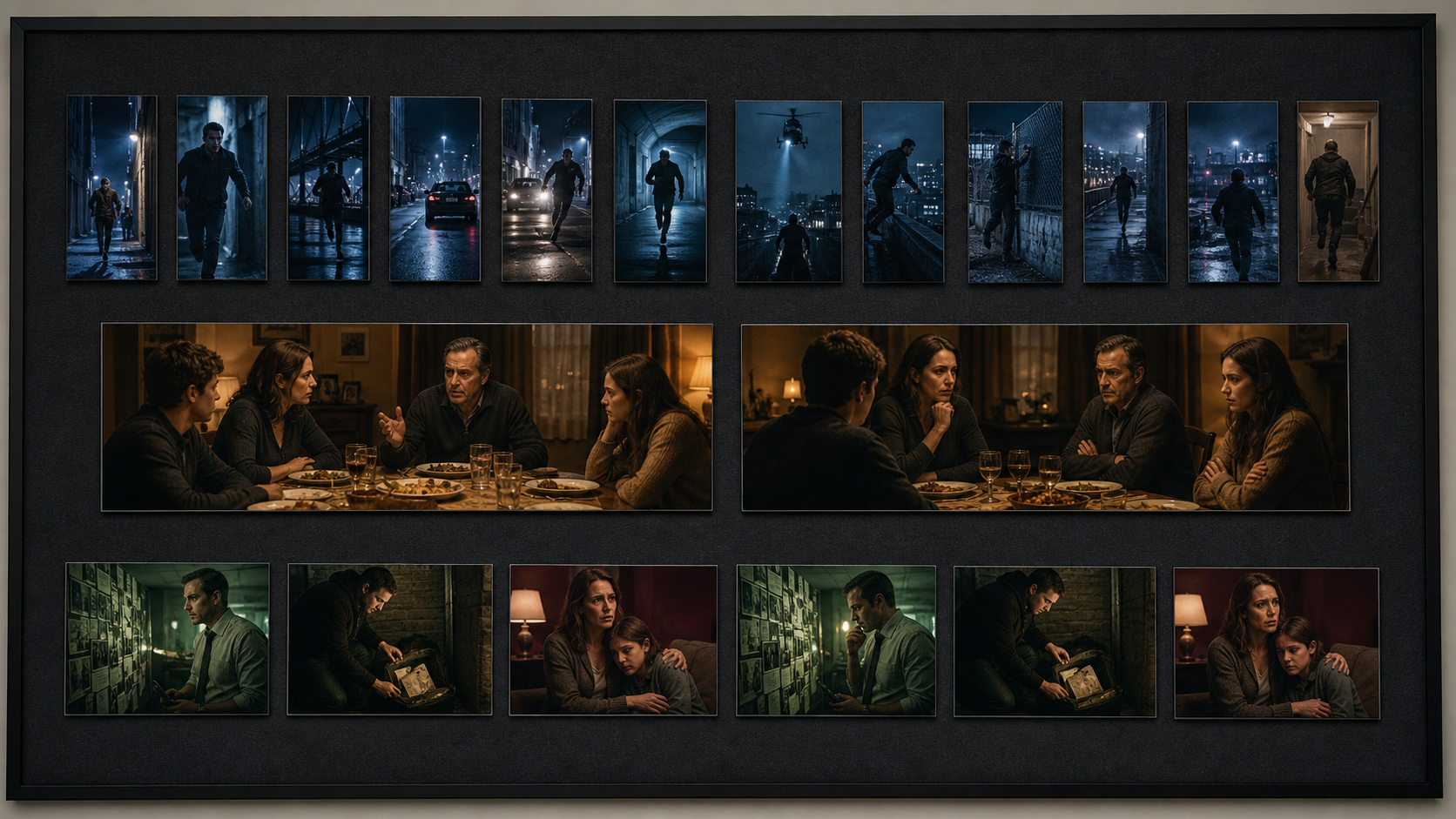
Genre strongly affects scene rhythm. Thrillers, action films, and broad comedies often move through locations quickly. Each discovery, chase turn, or comic reversal may require a separate scene.
A quiet family drama can remain at a dinner table for several pages because changing alliances provide movement within the conversation. One location does not mean nothing happens. Power can shift repeatedly without anyone leaving the room.
Main Plot, Subplots, and Character Viewpoints
More storylines usually require more scenes. A crime film might follow the detective, the suspect, and the victim’s family in separate locations. Cutting among them helps the audience understand how their choices collide.
Still, every subplot creates a demand on screen time. If a minor romance never changes the protagonist’s decisions or the main conflict, removing it may produce a tighter script with fewer scenes.
Writing, Directing, and Editing Style
Some writers favor compact scenes built around one sharp turn. Others let several beats unfold within a sustained encounter. Directors and editors later reshape that structure through long takes, montages, cross-cutting, and reordered material.
This flexibility explains why searching how many scenes are in a movie produces inconsistent answers. Two films with the same runtime can use completely different scene structures.
How to Write Effective Movie Scenes
A useful scene earns its place through purpose and change. The following process develops the story first and leaves the final count until later.
Step 1: Map the Essential Story Turns
List the changes that the movie cannot function without: the inciting incident, major decisions, rising complications, midpoint, crisis, climax, and resolution. Add essential moments from the protagonist’s arc and any necessary subplot.
Each turn should alter a character’s situation, goal, or next action. At this stage, concentrate on what must happen. Do not force every turn into one scene or assign a target count. This approach also works when learning how to write a script for a short film, although a short format usually supports fewer turns and subplots.
Step 2: Give Each Scene a Clear Objective
Identify the central character, what that person wants, and what blocks the desired result. Three questions can expose a weak scene:
Who wants what?
What stands in the way?
What changes by the end?
A daughter may enter a restaurant intending to persuade her father to sell the family business. He arrives planning to transfer it to her. Both characters want a decision, but their opposing expectations give the conversation direction.
Step 3: Build Conflict and Change into the Scene
Conflict does not always mean an argument. It can come from incompatible goals, hidden information, a deadline, or a choice that someone refuses to face.
By the final beat, something should differ. A character learns the truth, loses an advantage, changes a plan, damages a relationship, or accepts a risk. If removing the scene leaves the story unchanged, rewrite it, combine it with another scene, or cut it.
Step 4: Enter Late and Leave Early
Begin near the moment when the dramatic pressure starts. Audiences rarely need to watch a character park, enter a building, exchange greetings, and order coffee before asking the question that matters.
Once the main turn lands, end the scene before the characters explain what viewers already understand. This approach improves pace, but it does not require every scene to be brief. A painful confession may need time for resistance, disclosure, and reaction.
Step 5: Show the Story Through Action and Subtext
Screenplays communicate through images and sound. Instead of writing that a man feels nervous, show him folding the same receipt until it tears. The action gives an actor something playable and the camera something visible.
Dialogue also becomes stronger when characters leave thoughts unspoken. Evasion, pauses, lies, hints, and unexpected behavior create subtext. If viewers can see a broken window, a character does not need to announce that someone broke in.
For a scene built around a visual reveal, an AI image generator can help test whether the description produces a recognizable action, setting, and mood rather than an abstract idea.
Step 6: Arrange Scenes into a Cause-and-Effect Chain
One decision should create the problem or opportunity that drives the next scene. A journalist publishes an accusation, the subject threatens legal action, and the editor then demands proof. That chain feels connected because every result produces a new action.
Related scenes can form sequences built around one broader objective, such as an investigation, escape, relationship breakdown, or final confrontation. Count the scenes only after completing the scene-by-scene outline. Then check whether each act and major storyline receives enough space.
Turn the Finished Screenplay into a Movie Plan
A complete draft still needs practical testing. Breaking it into production elements can expose problems that remain hidden on the page.
Read the Full Script Aloud
A table read reveals repeated information, stiff dialogue, missing reactions, and scenes that continue after their purpose has ended. Time the reading as well. An apparently short exchange can play slowly when pauses and physical actions enter the performance.
Reading spoken lines aloud also helps writers apply the same clarity and timing principles used when writing a video script. If an actor struggles to say a line naturally, viewers may also struggle to follow it.
Convert the Script into a Scene Breakdown
Create a record for every scene heading. Note the location, time of day, characters, props, wardrobe, effects, vehicles, animals, and other production needs. The breakdown shows whether a simple story has accidentally created expensive or unnecessary location changes.
Create Storyboards and Shot Plans for Key Scenes
Visual planning works best for moments with complicated movement, screen direction, or spatial relationships. Break the opening, a major sequence, or the climax into characters, setting, action, mood, composition, and camera movement.
A storyboard can quickly reveal that viewers will not understand where the exit stands, why a character misses an approaching threat, or how two actions connect.
Test the Screenplay with a Video Preview
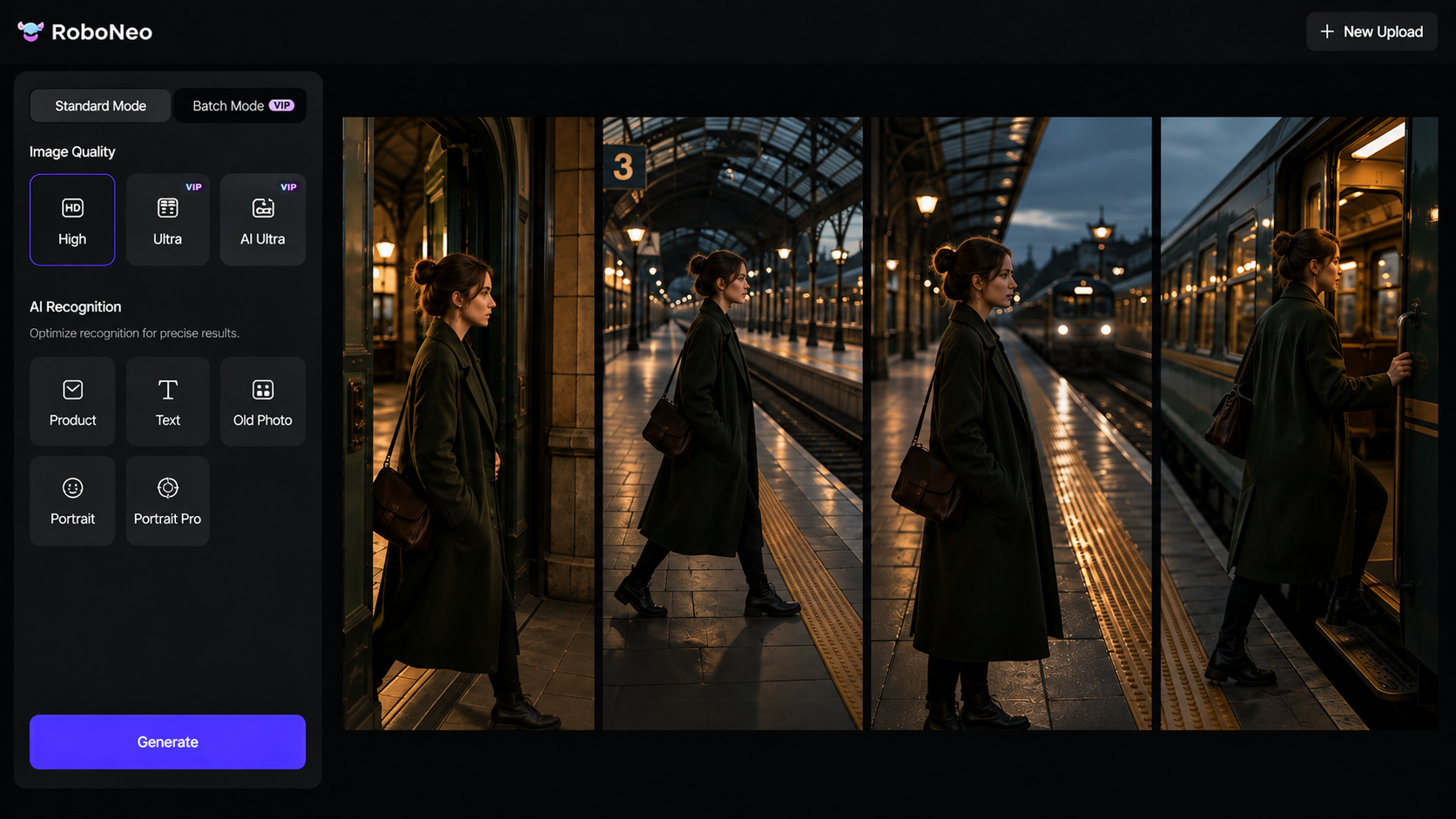
Selected scenes can also become a simple visual preview. With RoboNeo, a writer can use scene descriptions and character references to test key images or short video clips, then arrange them in screenplay order.
This preview helps assess character positions, movement direction, spatial continuity, and transitions. It does not calculate how many scenes the script needs. Start with a few important scenes rather than attempting the entire movie. Small tests make inconsistent character appearances, disconnected actions, and missing visual information easier to spot.
Revise the Script After the Preview
Return to the draft with specific findings. Clarify confusing action, simplify an impractical transition, combine repetitive locations, or add a visual cue that makes the scene readable. Change the script only when the preview identifies a storytelling or production problem, not because the generated result looks different from an imagined final film.
Common Scene-Writing and Production Mistakes
Scene-count concerns often lead writers toward mechanical fixes. These choices can weaken both the script and its eventual production.
Adding Scenes to Reach an Average
The commonly cited range of 40–60 scenes offers a broad planning reference for some features, not a quality standard. Extra characters, repeated information, and unrelated subplots do not improve a screenplay simply because they raise its count.
Story turns, character development, and pace should determine the total.
Splitting One Dramatic Beat into Too Many Scenes
A location, time, or viewpoint change should introduce fresh conflict, information, or choice. Several short scenes with the same people, objective, and emotional direction may work better as one concentrated encounter.
Moving a weak conversation from a car to a café does not create dramatic movement. The characters still need something to pursue and something that changes.
Keeping Long Scenes That Stop Developing
Length alone does not make a scene slow. A sustained confrontation can hold attention when information, tactics, power, and emotion keep shifting.
Problems begin after the characters have achieved the scene objective. Repeating arguments or explaining the outcome drains tension. Dividing that material into smaller pieces will not help unless each section gains a new objective and turn.
Writing Scenes That Cannot Be Clearly Visualized
Abstract feelings and private thoughts cannot carry an important plot change without visible or audible support. Present key information through behavior, dialogue, setting, or visual clues.
Storyboards and short previews can test whether a director and audience would understand the intended action.
Assuming the Final Movie Must Match the Script Exactly
Rehearsals, shooting conditions, and editing often cause scenes to be removed, combined, divided, or reordered. Reaction shots, inserts, sound, and cross-cutting may also create a rhythm that differs from the page.
The writer’s task is to make each scene’s function and the overall story structure clear while leaving room for sensible production choices.
FAQ
How long is an average movie scene?
Many movie scenes last between one and three minutes, but the range is wide. A transition may take only seconds, while a major confrontation can run for ten minutes or longer.
Can a movie scene be less than one page long?
Yes. A scene can consist of one image, action, or brief exchange. It still needs a clear purpose, even when it occupies only a few lines.
Does every new location require a new scene heading?
Usually, yes. A clear change in location, time, or interior/exterior status requires a new heading. Continuous movement through connected spaces may sometimes use a single heading or a secondary slug line.
Should scene numbers appear in a spec script?
Spec scripts generally omit scene numbers. Production teams normally add them after the script moves toward shooting so departments can schedule and track individual scenes.
How many sequences are usually in a feature film?
Many feature films contain roughly eight sequences, but this model is only one structural approach. A screenplay may use fewer or more depending on its runtime, genre, and story design.
You May Be Interested
480p vs 1080p: Which Resolution Should You Choose?

How to Create Stunning Visuals with the Best AI Music Video Generator
5 Best Free Tools to Remove Watermark from Video in 2026 | RoboNeo
Best YouTube Script Generator: From Script Writing to Video Creation

New from RoboNeo: Agent Team. The AI That Hired You a Whole Creative Squad