Horror Movie Ideas: Scary Plots for Low-Budget Films
 RoboNeo TeamAugust 22, 2026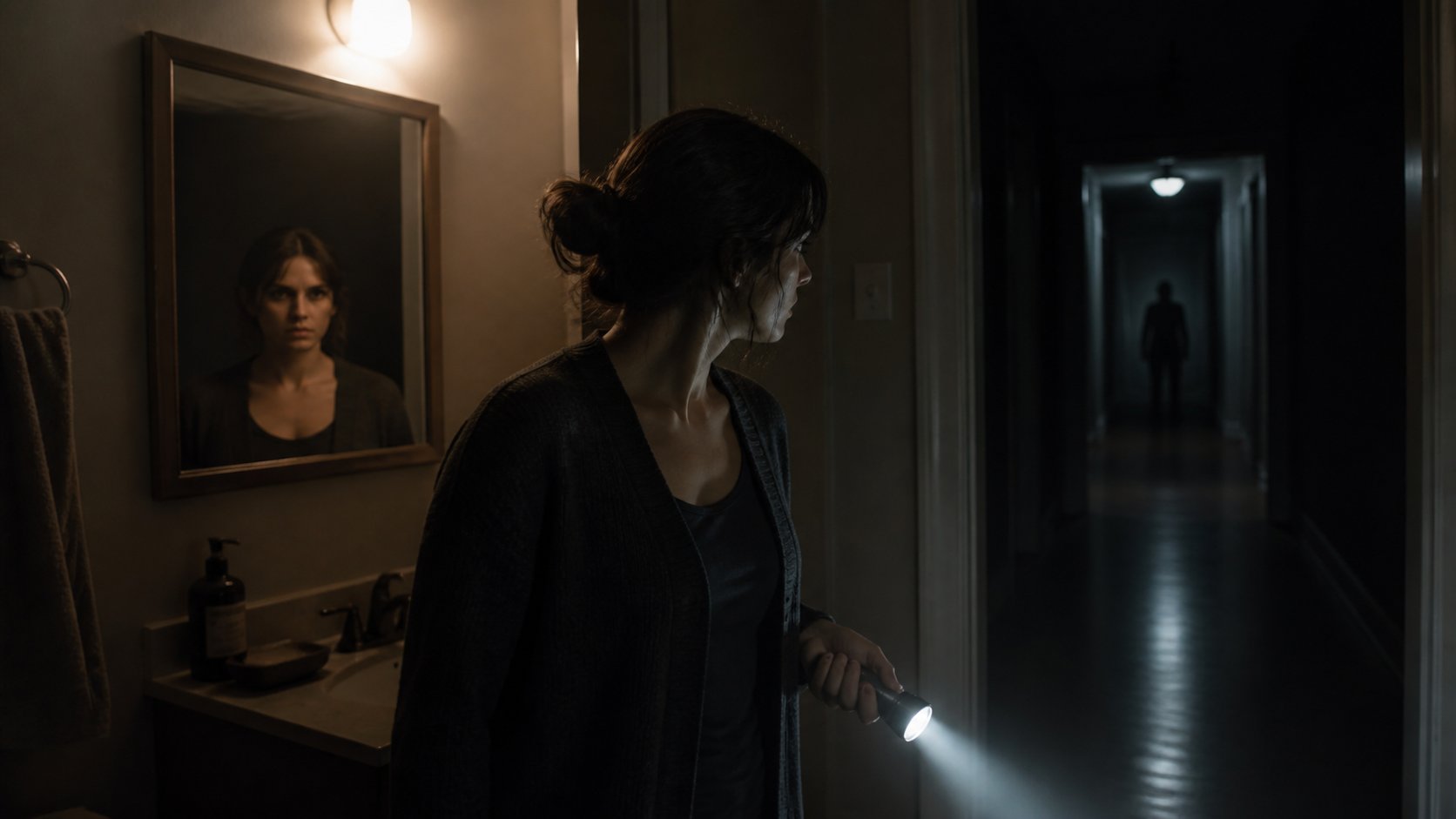
A frightening short film does not need a monster suit, a remote cabin, or a large effects budget. Often, the most unsettling horror movie ideas begin with something familiar behaving in a way it should not.
An apartment, bedroom, phone screen, security camera, or hallway can carry an entire story. For a low-budget filmmaker, the real challenge is not inventing the biggest threat. It is choosing a threat that can be shown clearly with the locations, actors, and tools already available.
15 Low-Budget Horror Movie Ideas You Can Actually Make
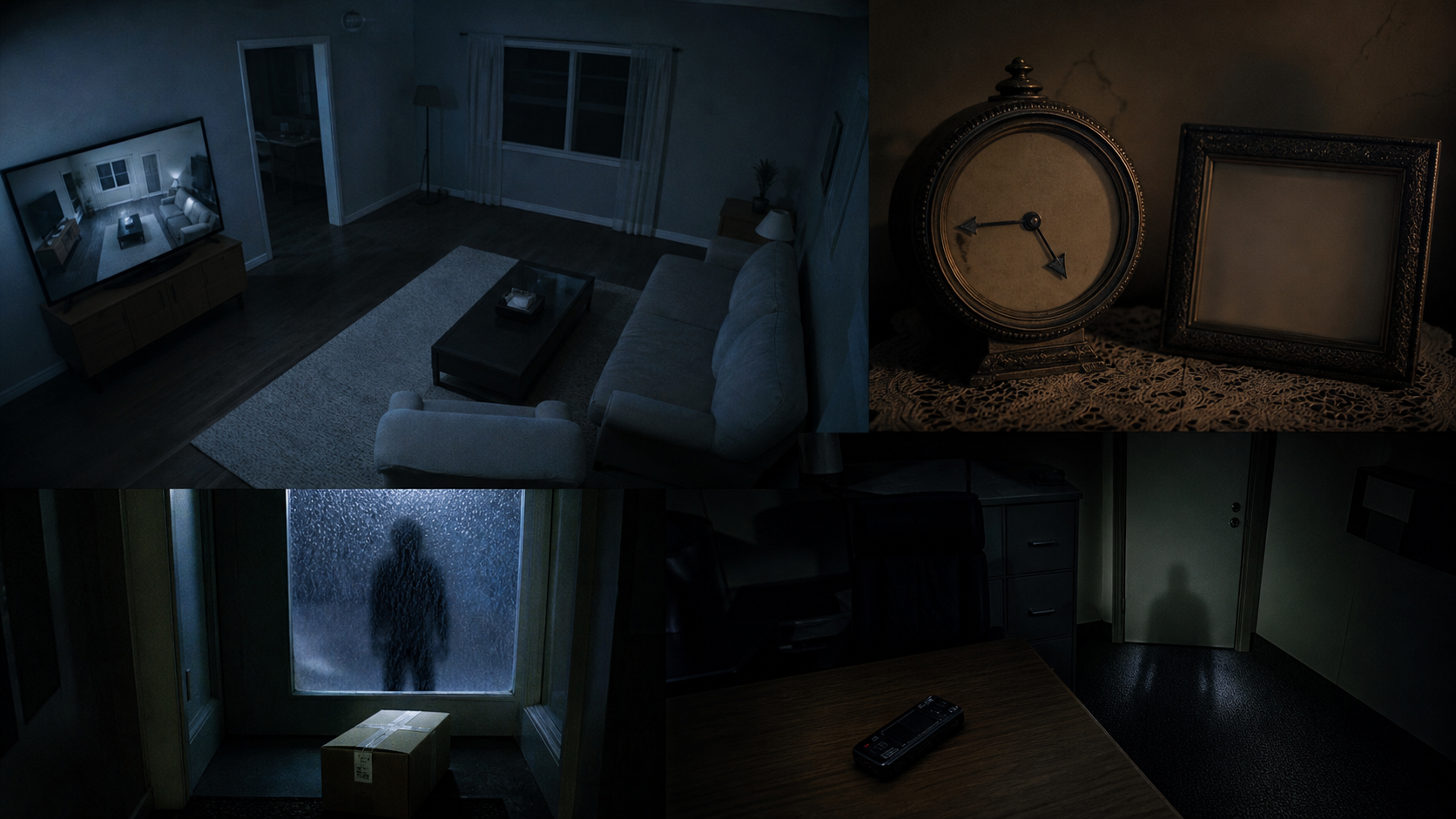
Here are 15 horror ideas that can be made with a small cast and locations you already have.
Haunted House and Supernatural Ideas
These ideas turn ordinary rooms and objects into the source of the horror.
1.The Footage From Tomorrow
A family notices that the television is playing tomorrow's home security footage. At exactly 2:14 a.m., every person in the recording disappears.
The story can stay inside one house with three actors. Screen inserts, reaction shots, and a few carefully timed cuts do most of the work.
2.The Previous Tenant's Voice
Every night at the same time, a new voicemail arrives from the apartment's dead former tenant.
The messages become increasingly specific until one says, “Do not open the bedroom door.” Sound carries the horror, allowing the unseen tenant to feel present without ever showing a ghost.
3.The Room Without an Exit
A teenager wakes up and discovers that the bedroom door and windows are gone.
Scratching begins inside the walls. Then comes a slow measuring sound, as if something is calculating the room's size.
Camera angles and changing furniture placement can make the space feel smaller without building a new set.
4.The Mirror Moves First
A woman living alone realizes that her reflection starts moving a few seconds before she does.
At first the differences are subtle. Eventually, the reflection begins blocking the path to the door.
A fixed camera and separate performances can create the effect with relatively simple editing.
5.The Inherited Clock
An antique clock begins counting backward for one minute every night. When it reaches zero, something in the house disappears.
The first losses are small. Then a photograph appears showing the main character's own name among the missing.
A clock, a quiet room, and carefully staged changes can carry the entire film.
Psychological and Home-Invasion Ideas
These stories focus on characters who no longer feel safe in familiar places.
1.Someone Is Streaming From Inside
A livestreamer discovers an account broadcasting their apartment in real time.
The camera angle is impossible: it comes from a room directly behind them.
Every refresh reveals a slightly different viewpoint, suggesting whoever is filming is moving closer.
2.The Wrong Apartment
A night-shift locksmith helps a frightened woman enter what she claims is her apartment.
Inside, he notices notes from the real tenant begging anyone who enters not to trust her.
The fear comes from shifting assumptions rather than supernatural effects.
3.The Empty Night Shift
A cleaner working alone in an office hears a voice recorder playing words they have not said yet.
Each recording predicts the next few minutes. Then the voice begins describing footsteps approaching their floor.
An empty workplace, one actor, and layered sound design are enough.
4.The Roommate in the Next Room
A student receives a call from a roommate who disappeared days earlier.
The roommate insists they are trapped in the bedroom next door. The problem: that door has never existed.
As the conversation continues, a faint outline starts appearing on the wall.
5.Proof of Delivery
A package arrives while a woman is away from the front door.
In the delivery photo, a masked figure stands in the background.
She refreshes the page. A new version appears, with the figure closer. The final image shows the camera from inside the house.
Found-Footage and Screenlife Ideas
These ideas tell the story through phone screens, video calls, livestreams, or security footage.
1.The Final Livestream
A content moderator discovers a livestream scheduled for tomorrow.
The video shows her dying at her own desk.
Trying to identify the source only causes the stream to update, adding details from her current actions.
2.The Uninvited Caller
Three friends are on a video call when a fourth window suddenly appears.
No one recognizes the account, and the image is too dark to make out a face. With every reconnect, the figure becomes slightly clearer.
3.The Repeating Hallway
A security guard's body camera shows that he has walked down the same hallway ten times.
In reality, he believes he is moving toward the exit. Each repetition changes one detail, while the exit appears farther away.
4.The Prank That Answered Back
Two creators fake a paranormal investigation inside an abandoned house.
During playback, they discover responses to questions they never asked and movements they did not stage.
Their fake haunting becomes evidence of something real.
5.The Sleeping Channel
A man living alone finds a channel uploading videos of him sleeping.
The uploads appear every morning. He cannot find a camera.
Then the newest video's title appears before he goes to bed: Final Night.
These scary movie ideas work well on small budgets because the fear comes from timing, sound, screens, and confined spaces rather than expensive spectacle.
How to Choose the Right Horror Movie Idea
The best concept is not necessarily the most complicated one.
Match the story to what you already have. A one-bedroom apartment naturally suits “The Mirror Moves First.” An empty office after hours makes “The Empty Night Shift” easier. A strong actor and good sound may be more valuable than elaborate makeup.
Factor | What to Consider |
Plot Type | Supernatural, psychological, home invasion, screenlife |
Primary Location | House, bedroom, apartment, office, hallway |
Cast Size | One actor or small group |
Key Props | Phone, mirror, clock, camera, package |
Practical Effects | Simple edits, lighting, prop movement |
AI Generation Needs | Creatures, impossible rooms, supernatural environments |
Editing Difficulty | Basic cuts to screen compositing |
Sound Dependence | Low to very high |
Suggested Runtime | 5–15 minutes |
A simple premise you can execute well usually produces a stronger film than a complex idea that exceeds the available budget.
How to Make a Low-Budget Horror Movie Step by Step
After choosing an idea, use the following steps to turn it into a film you can make with your available resources.
Step 1: Turn the Idea Into a Short Script
Begin with a logline that identifies the protagonist, the threat, the goal, and what happens if they fail. A clear structure is especially important for short films, where every scene needs to move the story forward. Following a simple short film script structure can help organize the opening, escalation, and ending.
The opening should introduce something wrong quickly. From there, the character tries to solve the problem and fails. Each attempt makes the situation worse until a final choice becomes unavoidable.
Keep the story centered on one conflict. Backstory that requires extra actors, locations, or long explanations can usually be removed.
Step 2: Plan the Shots and Production Method
Decide how each scene should be created before production begins.
Scenes using accessible actors and locations can be filmed with a phone or camera.
Monsters, impossible architecture, and supernatural environments may be easier to create with AI.
A mixed approach works when performance needs to remain real but certain visuals are impractical.
For live footage, plan framing, light direction, and actor movement. When creating scenes that are difficult to film, an AI Video Generator can help turn ideas such as impossible locations, supernatural environments, or creatures into visual sequences. AI scenes still need clear descriptions of appearance, location, action, camera angle, and mood.
Step 3: Create the Horror Footage
Test low-light scenes before the actual shoot. Darkness should hide information, not everything.
Fixed shots work well when the threat appears in the background. Handheld footage feels more appropriate during searches, escapes, or found-footage sequences. Reaction shots, empty rooms, and close-ups of important objects are often as useful as the main action.
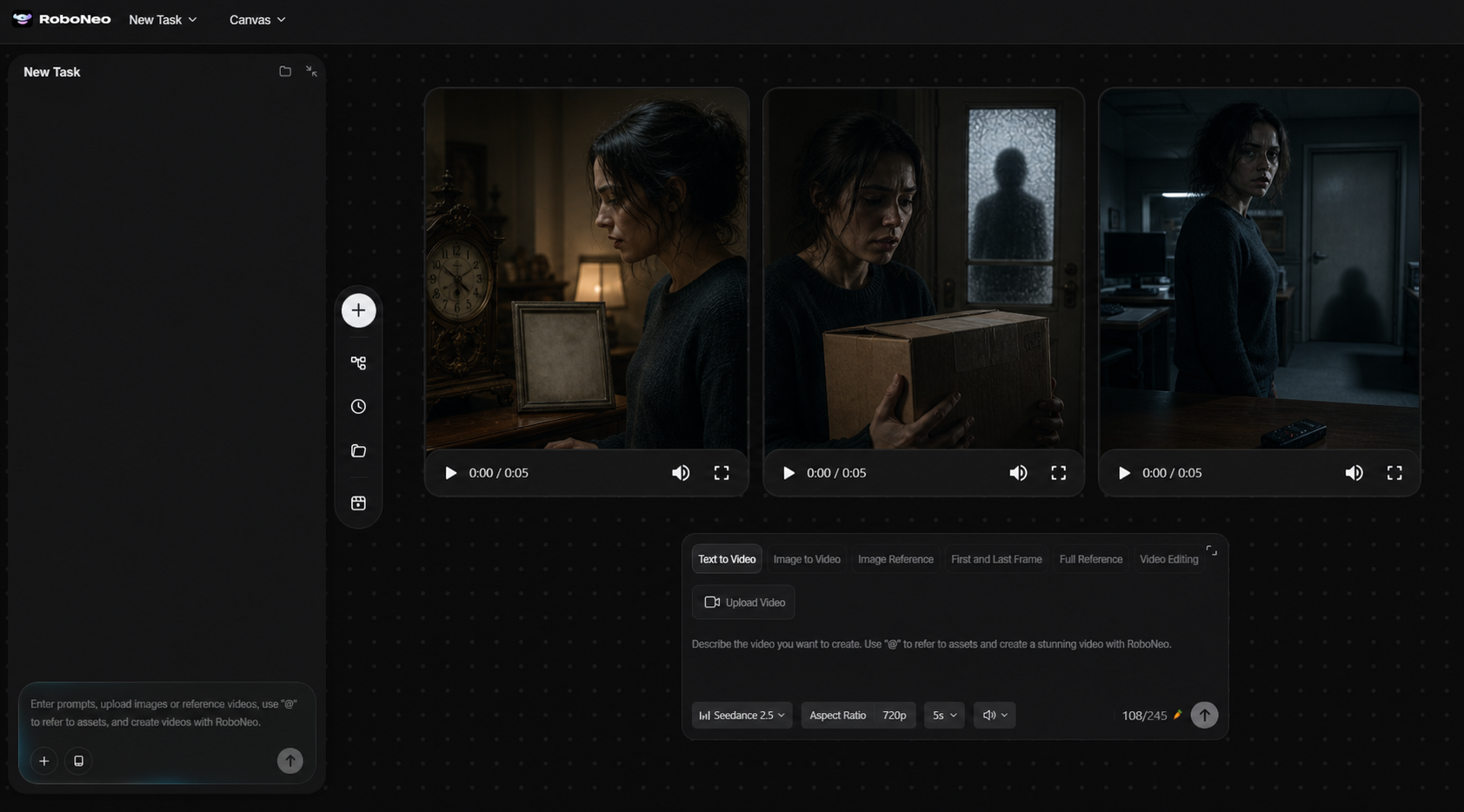
When actors, locations, or equipment are limited, RoboNeo can help turn a selected horror movie idea into a sequence of generated scenes. A story can be broken into character descriptions, locations, threat rules, and visual beats, then assembled into a short film.
AI is especially useful for rooms that transform, creatures that are difficult to show practically, or supernatural spaces that would otherwise require expensive sets.
Create Horror Videos with RoboNeo
Step 4: Edit for Suspense and Clarity
When using AI-generated footage, review each scene carefully because AI video generation limitations can affect character consistency, movement, and small visual details.
A good horror edit controls when the audience receives information. The sound of footsteps may arrive before the person appears. A quiet refrigerator hum can suddenly stop, making an ordinary kitchen feel wrong.
The middle of the film should reduce safety. The final scene needs to pay off an earlier clue, rule, or decision.
How to Make a Low-Budget Horror Film Feel Scary
You do not need expensive effects to scare the audience. The way you reveal the threat often matters more.
Let the Audience Notice the Threat
Fear grows when viewers see something before the character does.
A figure standing at the end of a hallway, a reflection that moves incorrectly, or a door opening in the background can hold attention longer than an immediate monster close-up.
Give Every Scare a Consequence
A scare should change the story.
A knock reveals the character's location. A recording proves their memory is wrong. A phone call causes two friends to stop trusting each other.
If removing the scare changes nothing, it probably does not need to be there.
Change How the Location Feels
One location can support an entire film if its meaning changes. This idea is also important in short film production, where limited locations are often used to create stronger storytelling through atmosphere and character choices.
A bedroom starts as a safe place and becomes a trap. A familiar hallway begins repeating. A mirror stops reflecting reality.
Small changes in light, exits, props, and sound can make the same room feel completely different.
Keep the Threat Consistent
Strong haunted story ideas usually give the threat understandable rules.
Perhaps it moves only in darkness. Maybe it can only be seen through a phone camera. Each time someone says its name, it gets closer.
Rules can be broken later, but the audience should first understand what they believed was safe.
FAQ
How long should a low-budget horror short film be?
Five to fifteen minutes is a useful range for a first project. It provides enough time for setup, escalation, and a complete ending without requiring too many locations or shooting days.
Can I shoot a horror movie with only one actor?
Yes. Calls, recordings, surveillance footage, off-screen voices, and unseen threats can create the presence of other characters.
Can a phone produce a good horror short film?
Yes, especially if exposure, sound, and stability are controlled. Keep at least one motivated light source in dark interiors so viewers can still read important actions.
Can I use an online horror prompt in my own film?
General ideas can inspire new work, but specific characters, scenes, and complete story expressions may be protected. Build your own conflict, progression, and ending.
How much gore does a scary movie need?
None, if the story does not require it. Psychological horror, screenlife stories, and supernatural films can create fear through uncertainty, sound, reaction, and mistrust.
You May Be Interested
New from RoboNeo: Agent Team. The AI That Hired You a Whole Creative Squad
Best 3D Character Creator to Make Custom Characters
6 Best AI Video Generators in 2026
5 Best Free Tools to Remove Watermark from Video in 2026 | RoboNeo
Canva Watermark Remover Review: Features and Limits