
How Long Does It Take to Write a Short Drama Script?
 RoboNeo TeamJuly 13, 2026
Microdrama has grown into an $11 billion global industry, nearly double the size of the FAST (free ad-supported streaming) channel market(Omdia, 2025). Average revenue per paying user hit $20 a week, showing just how willing audiences are to pay for this format.
More writers are entering the space, but the delivery speed matters. A multi-episode series with twists, new characters, and cliffhangers does not write itself in an afternoon. A single episode might take half a day; a full arc can stretch into days. This guide covers what slows you down, how to write faster, and what to check before you turn a script into video.

How Long Does It Actually Take to Write a Script for Short Drama?
Based on hands-on experience, here is a rough estimate:
Single episode, one core conflict, 1-2 characters: 3-5 hours
Single episode, multiple characters or a twist ending: 6-8 hours
Short series (5-10 episodes), simple arc: 3-5 days
Longer series (10+ episodes) with subplots: 1-2 weeks
These are typical pacing estimates, not published benchmarks — writing speed varies by writer. For context: the industry has converged on 60-100 episodes as the sweet spot for a full season, and a season that size typically shoots in about 10 days once scripts are locked — a useful reference for how much writing needs to happen before shooting starts. (These norms reflect 2026's landscape and are likely to shift as AI tools reshape production speed.)
What Affects Time to Write a Script for Short Drama
Writing time depends on how clear your story is before you start. A focused idea with one main conflict is much faster to write than a story with too many characters or plot turns.
1. Story Complexity
Simple triggers speed up your pen. Think messy breakups, buried secrets, sudden misunderstandings, or raw revenge. They often write themselves — often in a single sitting. Intricate plots demand heavy lifting up front to engineer believable motivations and tight endings, which can easily add a half-day or more to your timeline.
2. Episode Length and Number of Episodes
Brevity saves hours. A 60-second episode might only take 1-2 hours to draft, since it demands just one punchy scene. A 5-minute episode usually takes closer to half a day once you factor in setup, breathing room, and sustained banter.
3. Number of Characters and Relationships
More characters usually mean more writing time — as a rough rule, each additional major character can add an hour or more, since it needs a clear role, a distinct voice, and a compelling reason to occupy screen space. Crowded scripts drag down your pace fast.
Pro Tip: Keep the roster tiny. One or two protagonists usually suffice to drive a short narrative home.
How to Reduce the Time Needed to Write a Script for Short Drama

Writing fast takes a solid workflow. Without it, you will find yourself trapped in an endless cycle of major rewrites that drain your energy and stall your progress. Streamline your routine:
Idea → Core Conflict → Outline → Dialogue Draft → Revision → Final Script
Start with one clear idea, then define the main conflict. After that, create a short outline before writing full dialogue. This keeps the story focused and helps you move from idea to draft faster.
Using AI early on is a great way to beat the blank page. Bouncing your initial ideas off an AI Story Generator can give you a quick list of conflicts, character types, episode outlines, and even rough dialogue. Just treat whatever it spits out like a really messy first draft. From there, you take over—fixing the pacing, smoothing out the emotional beats, and making sure the story actually makes sense.
What to Do After You Finish a Short Drama Script
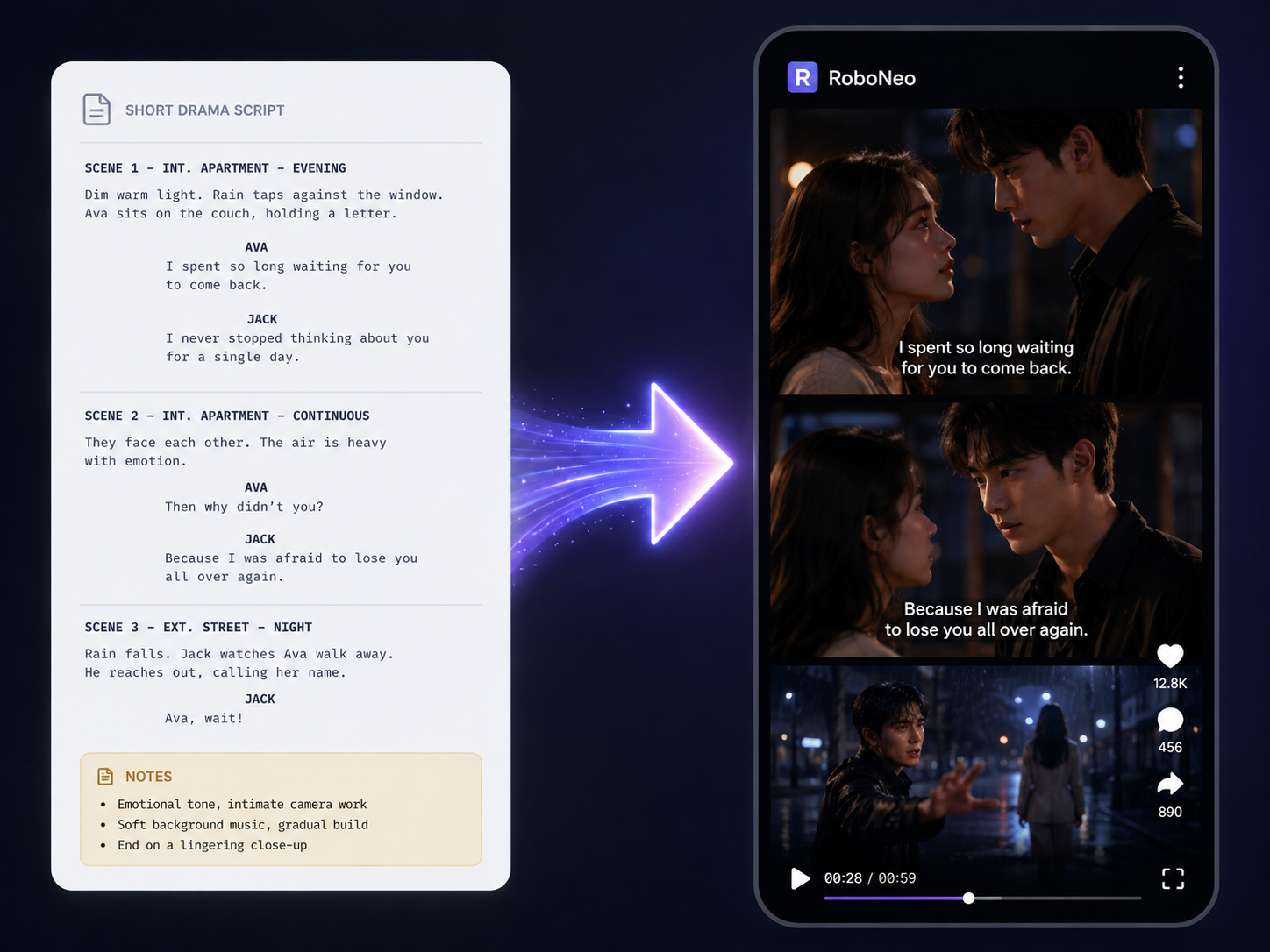
Finishing the script is only the first step. Before turning it into video, you need to organize the scenes, choose a production method, and prepare the visual details.
Build a Scene Plan
After finishing the script, break it into scenes. A simple scene plan can include:
Location
Characters
Main action
Key emotion
Opening hook or ending cliffhanger
This helps you see whether the story moves quickly enough and whether each scene is useful. Once you nail down the structure of every scene, you can turn your rough beats, notes, and captions into a solid plan for production.
Choose a Production Method
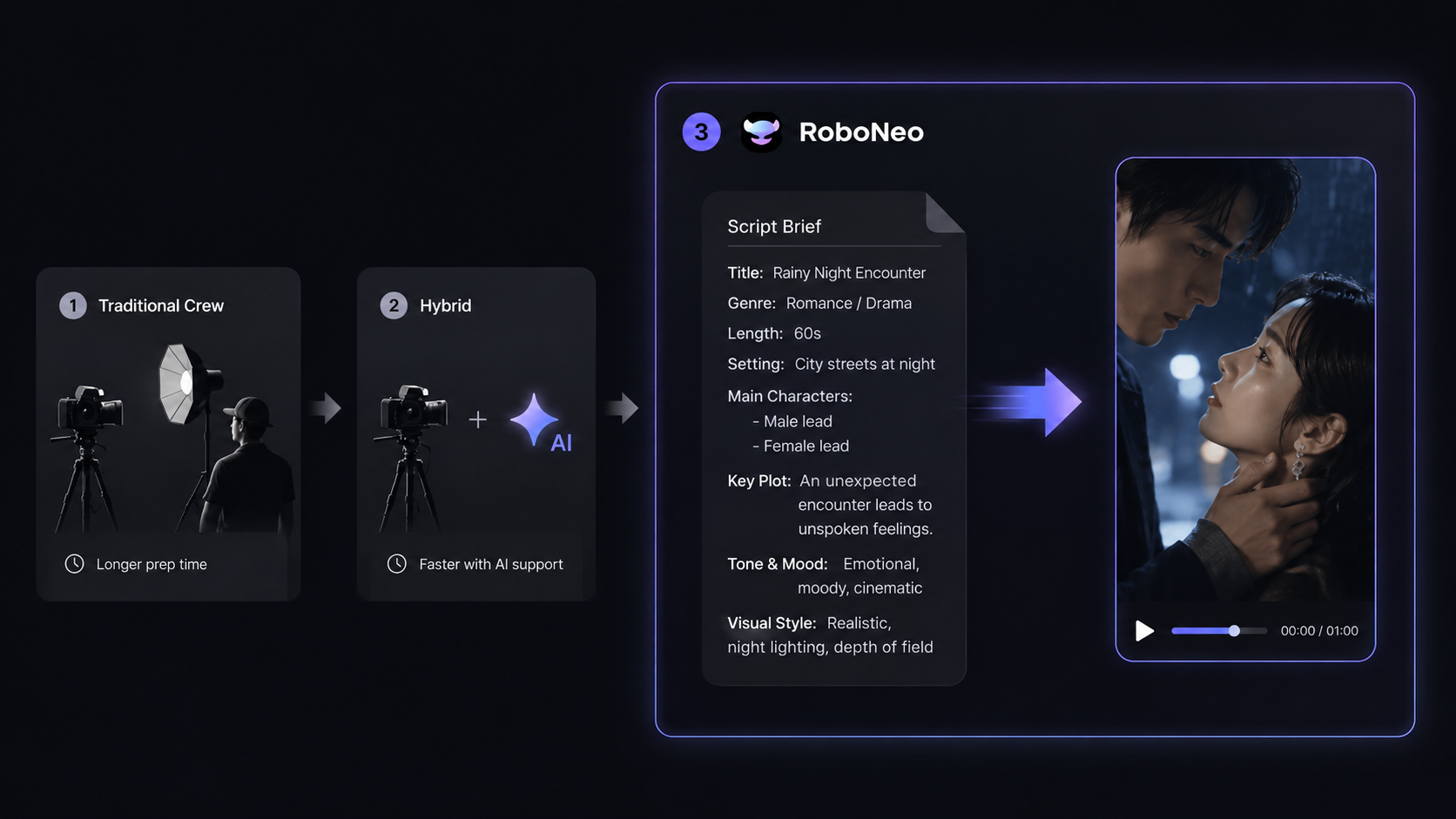
How will you bring this to life? You could hire a traditional crew, leverage modern generative video tools, or blend both approaches. For creators aiming for rapid deployment, RoboNeo translates scripts, concepts, or text descriptions directly into vertical, short-form video. It offers a swift way to validate ideas and generate visual clips without a Hollywood budget.
Prepare for Video Creation
Nail down the wardrobe, locations, lighting, and key camera angles before you kick off production. The workflow runs a lot smoother when you spell out a clear subject, action, setting, and visual vibe for every scene. The more you flesh out your visual plan, the less the video tool has to figure out on the fly.
Ways to Evaluate a Short Drama Script
A finished script still needs review before production. The goal is to make sure the story grabs attention, sounds natural, and can actually be produced.
1. Test the Opening Hook
Does the first line grab the throat? Start right inside the friction. Skip the leisurely exposition. A killer opening relies on a jarring confession, a dangerous choice, or a visceral reaction that forbids the viewer from scrolling away.
2. Read Dialogue Aloud
Speak the lines. Do they sound like real human speech? Short drama demands lean, high-impact phrasing. If a sentence trips your tongue or runs too long, cut it down. Subtlety beats exposition every time.
3. End With Curiosity
Leave them wanting more. A great exit uses a sudden revelation, a fresh threat, or an agonizing choice. For episodic content, your ending is the bridge that forces the audience to click the next button.
4. Check Production Fit
Be ruthless about your constraints. Can your current budget, gear, and calendar actually deliver these pages? Eliminate impossible stunts or complex locations. A masterpiece on paper means nothing if you cannot afford to shoot it.
FAQ
Can I sell a story that AI wrote?
Check the software's commercial licensing terms first. To stay safe, treat automated tools as brainstorming partners. Write the actual prose yourself to avoid copyright snags or recycled plots.
How many scenes should a 10 minute short film have?
Expect roughly 5 to 10 shifts in time or place. Do not obsess over the exact tally. Focus instead on whether each transition drives the story forward.
Will AI take over scriptwriting?
Machines handle data, structures, and rough drafts exceptionally well. However, they cannot replicate genuine human heart, precise comedic timing, or true originality. Writers remain essential.
Can you write a script for short drama in one day?
Absolutely. You can smash out a script in a single session if you isolate the conflict, limit the cast, and know the ending. Just budget time later for a ruthless polish.
How many pages is a short drama script?
Typically 1 to 10 pages. Because screen time dictates length, these scripts remain incredibly lean compared to traditional feature screenplays.
You May Be Interested

How to Turn Long YouTube Videos into TikToks with an AI Video Clip Generator

Best 3D Character Creator to Make Custom Characters

How to Choose the Best AI Text to Video Generator in 2026 (+ Our Top Pick)
Best Prompt for YouTube Script in 2026

How to Choose the Right Free AI Music Video Generator in 2026