
Linear and Nonlinear Storytelling: Choosing a Structure for Video
 RoboNeo TeamAugust 22, 20206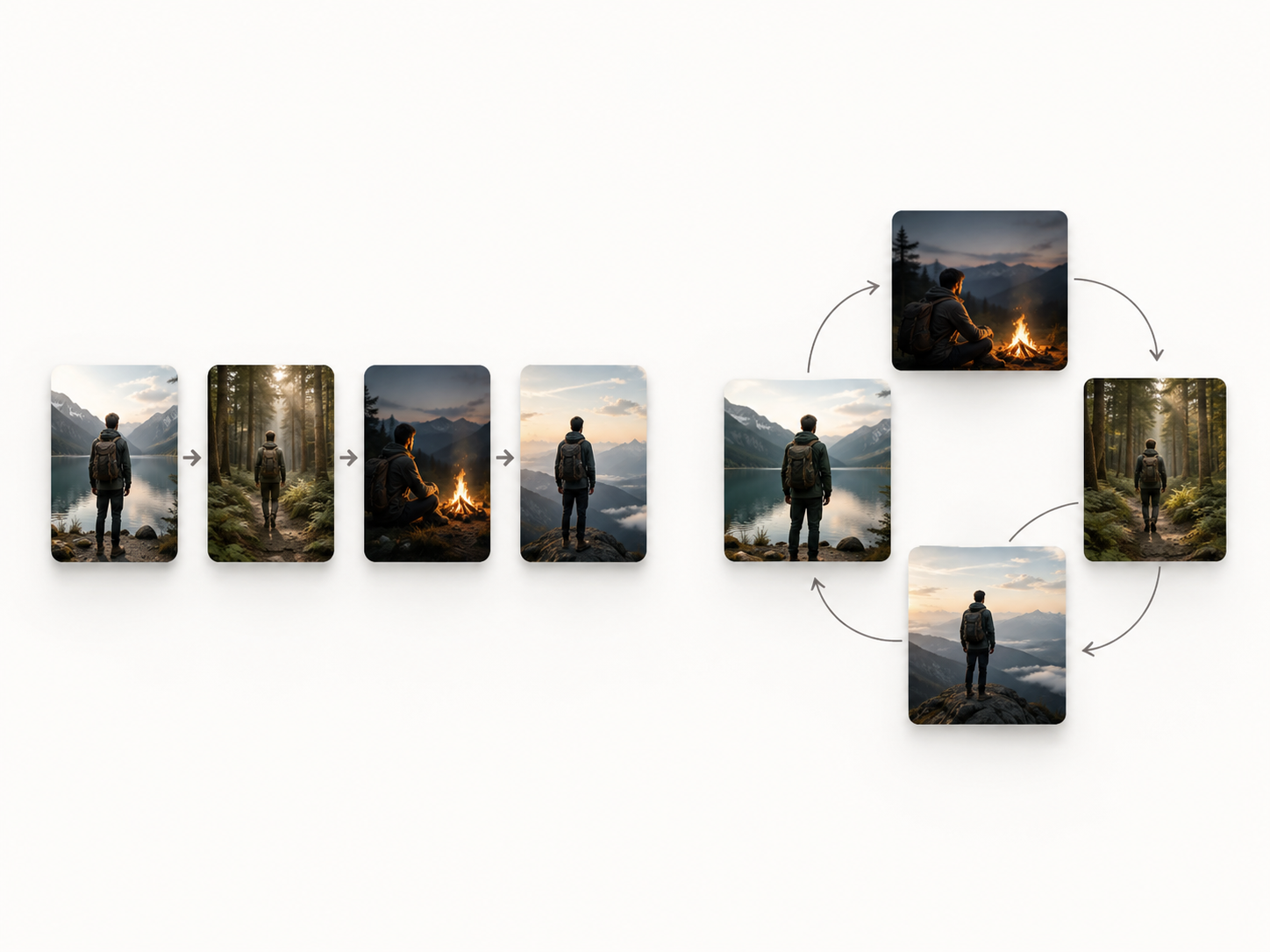
Linear and nonlinear storytelling differ mainly in how they arrange time and control the release of information. A linear narrative presents events in chronological order, while a nonlinear narrative rearranges them through flashbacks, flash-forwards, parallel timelines, or other time shifts. Neither structure is automatically better. The right choice depends on how clearly the audience must follow events and whether suspense, contrast, or a later reveal is central to the video.
This guide explains how the two structures work, when each one is most effective, and how to turn a narrative timeline into a practical sequence of video scenes.
How Do Linear and Nonlinear Storytelling Differ?
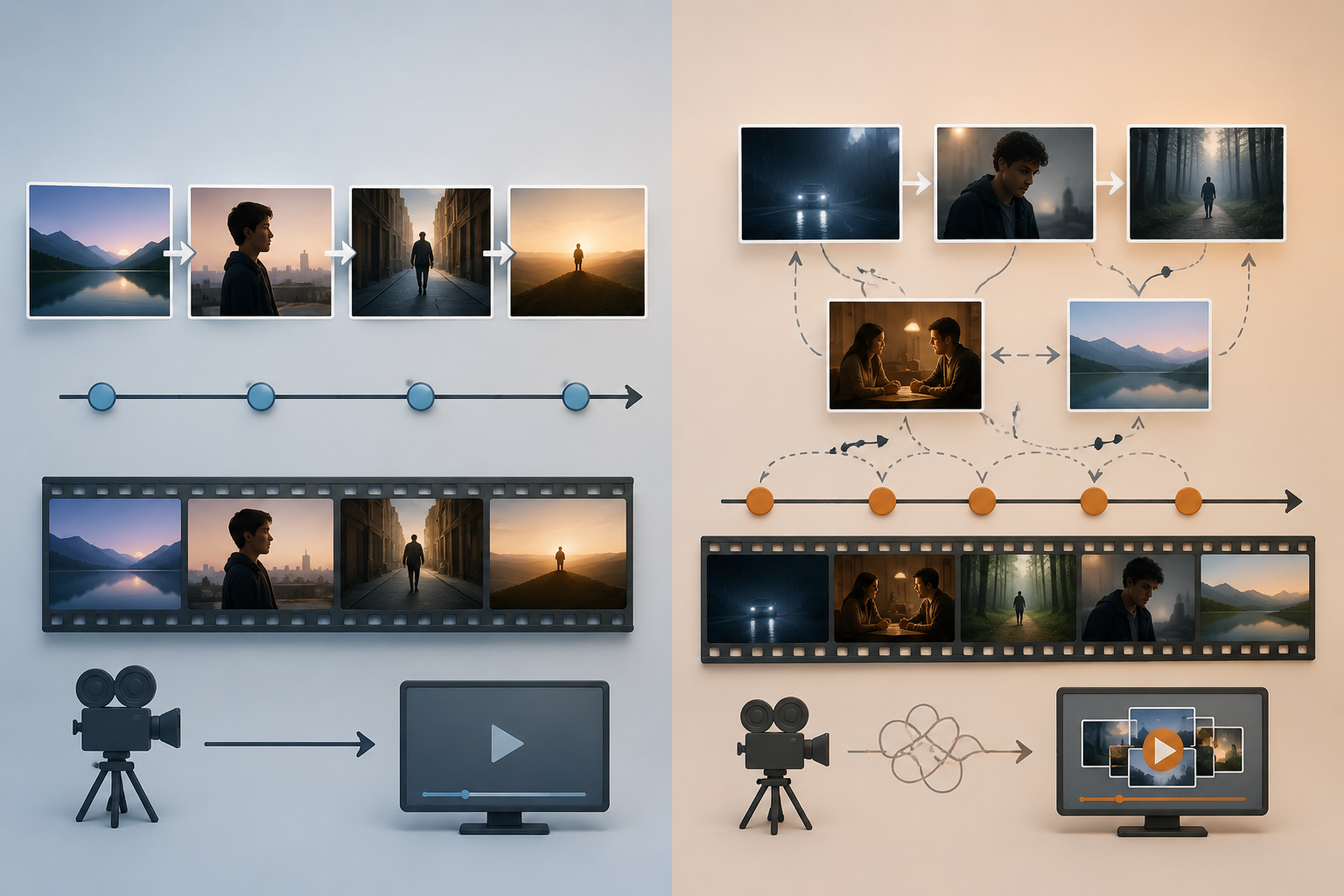
Linear storytelling follows events in the order they happen. The audience sees the beginning, the development of the conflict, the turning point, and the ending without major changes to the timeline. Cause and effect are usually easy to understand because each action leads directly to the next event.
A cooking tutorial is naturally linear. The viewer first sees the ingredients, then the preparation, cooking process, and finished dish. Rearranging those steps would make the instructions harder to follow without adding meaningful interest.
Nonlinear storytelling presents events in a different order from the one in which they occurred. A video might open with the final confrontation, return to an earlier event, and gradually reveal how the characters reached that point. The audience has to connect information from different parts of the timeline.
The distinction involves more than chronology. Each structure also creates a different viewing experience:
Linear storytelling emphasizes clarity, progression, and direct cause and effect.
Nonlinear storytelling emphasizes discovery, suspense, contrast, or changing interpretations.
Linear narratives usually tell viewers what happened as the characters experience it.
Nonlinear narratives may temporarily hide information that changes the meaning of an earlier scene.
Character development can also influence the structure. A basic character motivation definition is the internal or external reason a character takes action. Linear stories often establish that reason early, while nonlinear stories may reveal it gradually. When writing a short film script, common character motivation examples include protecting a family member, proving personal worth, escaping danger, or repairing a past mistake. Understanding what is character motivation in drama helps a creator decide whether the audience should know a character’s goal immediately or discover it through later scenes.
How Should a Video Choose Between Linear and Nonlinear Storytelling?
The choice should be based on the purpose of the video, the complexity of its information, and the importance of a reveal. Video length alone does not determine which structure will work.
A three-minute brand film can follow a straightforward timeline, while a 30-second advertisement may open with the result and then jump back to show how it happened. What matters is whether changing the order improves the audience’s understanding or emotional response.
Choose Linear Storytelling for Clear Videos
A linear structure works well when viewers need to understand a process, sequence, or chain of consequences quickly. Tutorials, product demonstrations, event recaps, training videos, and many documentary segments benefit from chronological order.
Consider a video showing how to assemble a desk. The viewer needs to see the frame built before the tabletop is attached. Showing the completed desk first may work as a brief preview, but repeatedly jumping between the finished product and earlier assembly stages would make the instructions unnecessarily difficult to follow.
Linear storytelling is also useful when the subject is already complex. A video explaining a technical workflow may involve unfamiliar terms, several tools, and dependent steps. Keeping the timeline simple allows viewers to focus on the information instead of working out when each event occurs.
Choose Nonlinear Storytelling for Stronger Reveals
Nonlinear storytelling is effective when the order of information is part of the experience. Mystery videos, dramatic stories, psychological narratives, and character-driven films can delay important facts to create suspense or change how the audience interprets previous scenes.
A short drama could begin with a woman leaving an unopened letter on a train. Earlier scenes then reveal who sent it and why she is afraid to read it. The time shifts are meaningful because each one supplies information that changes the emotional weight of the opening image.
Every jump should serve a clear narrative purpose. A flashback may reveal a hidden motive, while parallel timelines can show two characters unknowingly moving toward the same conflict. Without such a purpose, timeline changes add complexity but little value.
Nonlinear storytelling should not hide information that viewers need in order to understand the basic situation. Suspense comes from meaningful uncertainty, not from making the audience unable to identify the characters, location, or central conflict.
Use a Hybrid Structure for Clarity and Suspense
Many videos combine a mostly linear storyline with one or two nonlinear elements. This hybrid structure creates an engaging opening without making the entire narrative difficult to follow.
An event recap might begin with the winner crossing the finish line, then return to the morning preparations and proceed chronologically. A product video could open with the final result before showing the problem, setup, and demonstration in order.
The opening creates a question—how did this happen?—while the linear main section provides a clear answer. Flashbacks or parallel scenes can still appear later, but they should remain easy to identify through visual cues, dialogue, captions, or distinct changes in setting.
How to Plan Your Video Story Structure
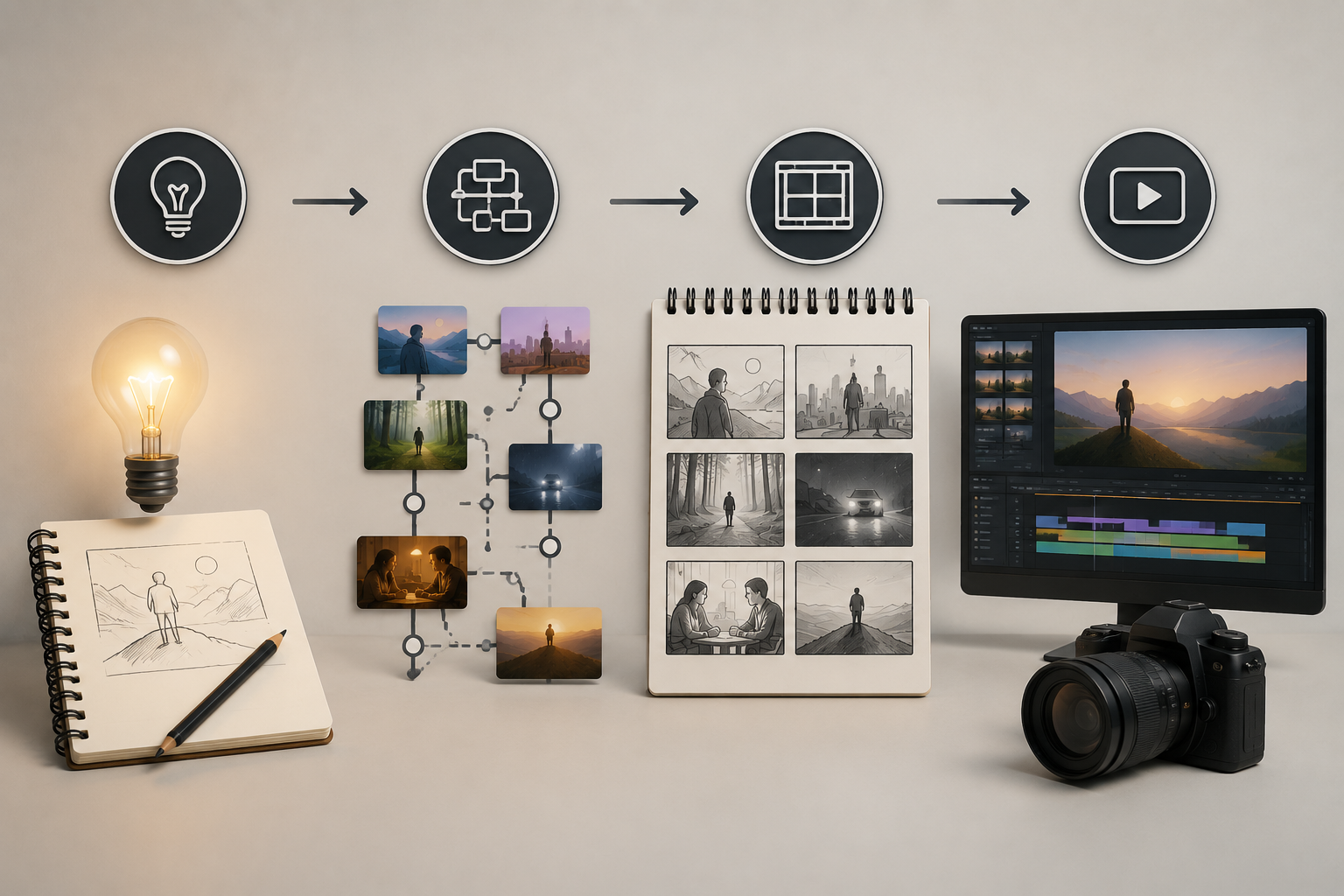
Once the structure has been selected, it needs to be translated into a practical production plan. A useful workflow moves from the real chronology to the viewing order and then to individual scenes.
Write the Chronological Story First
Even when the final video will be nonlinear, begin by writing events in their actual order:
Beginning → Key events → Turning point → Ending
This underlying timeline makes it easier to check whether every decision has a believable cause and every consequence follows logically. If a character suddenly leaves home in the final act, the chronological version should establish the pressure, decision, or discovery that prompted the departure.
Starting with a clear timeline also prevents nonlinear editing from hiding weaknesses in the story itself. Rearranged scenes may temporarily make a plot feel more mysterious, but they cannot replace missing motivation or an unsupported turning point. An AI script generator can help organize the initial idea into scenes, but the underlying cause and effect should still be reviewed before production.
Decide What the Audience Should Know and When
After confirming the chronological sequence, decide how information should reach the audience. Some facts can appear early, some can be delayed, and others may be shown from a different perspective.
Each change should accomplish at least one purpose:
Create suspense
Reveal motivation
Build contrast
Change the interpretation of an earlier scene
A crime story may show the result of a theft before revealing how it was planned. In a relationship drama, two scenes from different years can use the same location to contrast how the characters have changed. These choices affect meaning, not just chronology.
The audience should still receive enough context to remain oriented. A useful test is whether viewers are asking an intentional story question, such as "Why did she make that choice?" If they are instead asking "Is this before or after the last scene?", the transition probably needs to be clearer.
Turn the Narrative Order Into Scenes
The chosen narrative order can now be divided into a scene sequence. For each scene, identify its purpose, characters, location, main action, timeline position, and transition into the next scene. Understanding how to make a short film can also help connect the script, scenes, shot list, and final video.
Nonlinear stories require especially clear labels for flashbacks, flash-forwards, and parallel timelines. A childhood scene may use a distinct location or color treatment, but the production plan should still state exactly when it occurs and what new information it provides.
Once the structure is stable, the story can be organized in RoboNeo as a script and scene sequence before moving into later video production. Keeping the timeline, scene purpose, dialogue, and transitions connected makes it easier to notice missing story beats before generating or editing the final footage.
Structure stories with RoboNeo
Common Story Structure Mistakes to Avoid
One common mistake is treating nonlinear storytelling as a collection of scenes arranged as unpredictably as possible. Complexity can create interest, but only when viewers can eventually understand why events were shown in that order.
Too many flashbacks create a similar problem. If several time shifts repeat information or interrupt the main conflict, they weaken momentum. Combining related memories into one purposeful sequence often produces a stronger result.
Another mistake is withholding essential context in an attempt to create suspense. Hiding a character’s complete plan may keep viewers curious; hiding the character’s identity, goal, location, and relationship to the conflict may leave them detached.
These structural problems become harder to correct once footage has been created. Because current AI video generation has practical limitations, confirming the story order, pacing, and character intent before generating scenes can reduce unnecessary revisions.
A strong narrative structure controls what the audience knows and when they know it. It should not force viewers to spend most of the video determining which point in time they are watching.
FAQ
Can a linear story include flashbacks?
Yes. A linear story can include a small number of flashbacks as long as the main plot continues to move forward chronologically. A brief memory that explains a present decision does not necessarily make the entire narrative nonlinear.
Is nonlinear storytelling better than linear storytelling?
Neither structure is universally better. Linear storytelling offers greater clarity, while nonlinear storytelling is useful for suspense, contrast, twists, and gradual information reveals. The stronger option is the one that supports the video’s purpose.
Can short videos use nonlinear storytelling?
Short videos can use cold opens, flashbacks, or simple time jumps. Because there is little time to explain the structure, visual and narrative transitions must make each change easy to recognize.
Is a flashback considered nonlinear storytelling?
A flashback is a nonlinear storytelling technique because it moves away from the current chronological sequence. However, one brief flashback does not automatically make the whole story nonlinear.
Can you mix linear and nonlinear storytelling?
Yes. A video can maintain a linear main storyline while using selected flashbacks, flash-forwards, or parallel scenes. This approach can preserve clarity while adding suspense and emotional depth.
You May Be Interested

4K vs 1080p: Should You Upscale 1080p Video to 4K?

6 Best Ai Character Generator in 2026: Tested & Compared

Best App to Remove Tiktok Watermark in 2026

Best Prompt for YouTube Script in 2026

SD vs. HD Video: What Is the Difference and Which Is Better?