What to Tell AI to Humanize Text: A Practical Prompt Guide
 RoboNeo TeamAugust 14, 2026
AI-generated writing often sounds polished but impersonal. The problem is usually not grammar. Repetitive sentence patterns, broad claims, predictable transitions, and a lack of concrete detail make the writing feel mechanical.
If you are wondering what to tell AI to humanize text, avoid relying on a vague command such as “make this sound human.” A useful prompt should identify what must stay unchanged, what sounds unnatural, and how the revised version should serve its intended reader.
What Should You Tell AI to Make Text Sound Human?
A strong humanizing prompt gives the AI clear editorial boundaries. It should explain the purpose of the text, the intended audience, the preferred tone, and any information that must remain accurate.
The following instructions address many common problems:
Preserve the original meaning, facts, names, figures, and target keywords.
Replace generic statements with specific, useful information.
Vary sentence length and structure without making the writing choppy.
Remove repetitive transitions, unnecessary summaries, and inflated language.
Keep examples only when they are supported by the source material.
Do not invent personal experiences, opinions, statistics, or customer stories.
Match the level of formality to the audience and writing task.
These are practical ways to humanize AI text because they focus on substance rather than superficial tricks. Contractions and conversational wording can help, but they cannot rescue a paragraph that says very little.
Copy-and-Paste Prompts for Different Writing Tasks

The right prompt depends on where the writing will appear. A product page, client email, and LinkedIn post should not share the same rhythm or level of formality.
Prompt for Blog Posts
Blog content needs to remain useful and searchable while sounding less formulaic. This prompt protects the article’s facts and SEO intent:
Rewrite the blog content below so it reads naturally and provides clear value to the intended reader. Preserve its search intent, factual meaning, supporting evidence, and target keyword: [KEYWORD]. Remove generic introductions, repetitive conclusions, and statements that do not add useful information. Use natural transitions between paragraphs and vary sentence length and structure. Retain specific examples when they are supported by the supplied material, but do not invent facts, quotations, statistics, or personal experiences. Do not summarize every paragraph, and do not turn all information into bullet points. Keep the structure easy to follow and maintain an informed, straightforward tone. Content: [PASTE TEXT]
A travel article may need to keep exact baggage dimensions while replacing a generic opening about how “travel can be exciting and challenging.” The revised introduction can answer the reader’s packing question directly without sacrificing the target keyword.
The same principles apply to scripts. A useful AI script prompt should define the audience, purpose, tone, and required output instead of asking for something broadly “engaging.”
Prompt for Marketing Copy
Marketing language feels more credible when it connects features with realistic user benefits. Unsupported superlatives usually have the opposite effect.
Rewrite the marketing copy below for [AUDIENCE AND CHANNEL]. Translate each relevant product feature into a specific user benefit, but preserve the product name, confirmed features, technical data, pricing details, and stated limitations. Remove unsupported terms such as “revolutionary,” “seamless,” and “game-changing.” Do not create performance claims, customer reviews, guarantees, or outcomes that are not supported by the source material. Keep the copy persuasive but credible, with a clear value proposition and an appropriate call to action. Source copy: [PASTE TEXT]
For a commercial campaign, the approved message may also need to be adapted into a hook, voiceover, scenes, and a call to action. A clear plan for writing a TV commercial script can help preserve the message as it moves from marketing copy into video.
Once the wording is finalized, the same concept can be extended into ad images or social media visuals with RoboNeo. In this workflow, RoboNeo supports visual content creation from the approved copy and creative requirements; it is not being presented as a dedicated text humanizer.
Prompt for Emails and Professional Messages
An effective professional email should make the request and next step easy to understand. Excessive politeness can bury both.
Rewrite this message for [RECIPIENT AND RELATIONSHIP]. Preserve the request, deadline, action items, names, dates, and necessary context. Adjust the formality to suit our relationship while keeping the tone respectful and direct. Remove repeated thanks, excessive apologies, overly formal wording, and template-like closing lines. Do not expand a short message into a long email. Make the required response or next action immediately clear. Message: [PASTE TEXT]
A reminder to a regular client may need one polite acknowledgment and a clear review date. It does not need three expressions of gratitude before stating what is awaiting approval.
Prompt for Social Media Posts
Social posts need a clear point and platform-appropriate pacing, not forced enthusiasm.
Rewrite this post for [PLATFORM] and [AUDIENCE]. Preserve one clear central point and any verified facts, names, links, or calls to action. Use a length, structure, and rhythm appropriate for the platform. Remove forced casual language, stacked rhetorical questions, generic motivational claims, and excessive exclamation marks. Do not invent a personal story or use phrases such as “I recently discovered” unless that experience appears in the source material. Keep the post natural, focused, and useful. Draft: [PASTE TEXT]
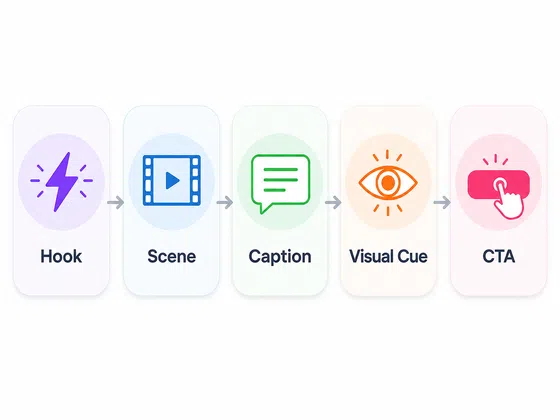
On LinkedIn, a concise observation followed by its practical implication often feels more convincing than a dramatic personal anecdote that never happened. TikTok requires a different pace, so reviewing how an AI TikTok script generator uses audience, length, hooks, and selling points can help clarify what the prompt needs to include.
When the post also needs a visual, the finished message can guide an AI image generator. The image prompt should specify the subject, format, visual style, composition, and any approved brand elements instead of simply asking for an “eye-catching social media image.”
Prompt Based on Your Own Writing Sample
People searching for “how to humanize my text” usually want to preserve their own voice. In that case, a genuine writing sample is often more helpful than a list of abstract adjectives.
Complete this task in two stages. First, analyze the writing sample and describe its sentence length, vocabulary level, tone, strength of opinion, paragraph rhythm, and common transition patterns. Do not rewrite anything yet. Second, rewrite the target text using those general characteristics. Preserve the target text’s facts and meaning. Do not copy any sentence, fact, anecdote, metaphor, or distinctive phrase from the sample. Writing sample: [PASTE SAMPLE] Target text: [PASTE TARGET TEXT]
A past article, email, or product description written by the author gives the model observable patterns to follow. This usually produces a more consistent personal or brand voice than the instruction “sound more human.”
Humanize AI Text in a Step-by-Step Editing Workflow

One large rewrite may change too much at once. A staged review makes it easier to protect the original meaning while improving the writing.
Step 1: Diagnose Why the Draft Sounds Robotic
Begin by asking AI to identify empty claims, repeated sentence structures, overly formal vocabulary, unnatural transitions, and unsupported conclusions. At this stage, it should mark and explain the problems without rewriting them.
This separation gives the author control. A repeated term might be intentional for SEO, while a formal phrase may be required in a legal or technical document.
Step 2: Rewrite One Problem at a Time
Structure and repetition should come first. Tone and sentence rhythm can be adjusted next, followed by a final check of vocabulary and supporting detail.
Putting every preference into one enormous instruction can lead to lost facts or an exaggerated style. Longer articles are easier to manage section by section or across several editing rounds. Focused follow-up instructions work well:
“Keep the tone, but make the opening more direct.”
“Shorten this paragraph without removing the example.”
“Vary the sentence structure while preserving the technical terms.”
Step 3: Add Details Only You Can Provide
Real observations, verified data, brand positions, and firsthand experience make writing more distinctive. AI can organize this material, but it should not fill missing information with invented memories or assumed feelings.
A restaurant owner might add that customers frequently ask whether a dish contains nuts. That detail is more credible than adding random slang or deliberately misspelling words to simulate spontaneous writing.
Step 4: Read, Verify, and Edit the Final Draft
Reading the draft aloud reveals awkward phrasing and monotonous paragraph rhythms. Any sentence that feels unlike something the author would actually say deserves another look.
The revision should also be compared with the source. Names, numbers, quotations, logic, links, and keywords can change unintentionally during rewriting. The author should make the final decisions about the opening, main viewpoint, and conclusion so the finished piece reflects real judgment rather than another automatic transformation.
If the approved text will become a marketing or social video, it can then move into a text-to-video workflow. Finalizing the wording first reduces the risk of building visuals around inaccurate claims or an unfinished message.
Why Humanizing Prompts Sometimes Fail

Even detailed prompts can produce disappointing results. In most cases, the instructions are unclear, contradictory, or focused on surface-level style.
The Instructions Are Too Vague
“Make this sound human” does not define the audience, purpose, tone, or acceptable level of change. The model may simply add contractions and conversational transitions. Clear constraints produce a more controlled revision.
Too Many Style Rules Conflict with Each Other
A prompt might request concise, detailed, professional, casual, authoritative, and friendly writing at the same time. These qualities are not always compatible. Prioritize the two or three characteristics that matter most for the task and identify the intended reader.
The Rewrite Adds Fake Personality or Experience
Commands such as “add personal stories” or “make it emotional” may encourage fabricated experiences. Supply real material and ask AI to organize it. When firsthand experience is unavailable, request a verified example or a concrete explanation instead of a fictional story.
The Text Sounds Casual but Still Generic
Contractions, slang, questions, and sentence fragments do not automatically create useful writing. A casual paragraph can still lack a clear opinion, meaningful context, or specific detail.
Deliberate grammar mistakes and random expressions are not reliable ways to humanize AI text. Credibility comes from accuracy, relevance, and a recognizable point of view.
The Prompt Focuses Only on AI Detection
AI detectors can misclassify human writing and may produce different results for the same passage. No prompt can guarantee that rewritten text will be “undetectable.”
Accuracy, readability, author voice, and reader value are more useful measures of success. School, publishing, client, and workplace policies may also require disclosure or restrict how AI-generated material can be used.
FAQ
Can AI humanize text without changing its meaning?
Yes, but the prompt should explicitly protect facts, intent, names, figures, quotations, and essential terminology. The author still needs to compare the final version with the source.
Should I give AI a sample of my own writing?
A genuine sample can help AI identify consistent features of your voice. Instruct it to imitate general characteristics without copying unique phrases, facts, or stories.
Why does AI-humanized text still sound unnatural?
The source may lack concrete detail or a clear viewpoint. Surface changes such as contractions and shorter sentences cannot replace useful information or genuine judgment.
Can AI detectors reliably identify rewritten text?
No detector is consistently reliable in every context. Human writing can be flagged, while AI-generated text may go undetected. Detector scores should not be treated as definitive proof.
Is it acceptable to humanize AI-generated content for work or school?
That depends on the applicable rules. Review your school, employer, publisher, or client policy and disclose AI assistance when required. Humanizing a draft does not remove the responsibility to verify its accuracy or follow usage guidelines.
You May Be Interested

New from RoboNeo: Agent Team. The AI That Hired You a Whole Creative Squad

480p vs. 720p: Which Resolution Should You Choose?

Best AI Video Enhancer in 2026: 8 Tools, Pros and Cons
Best TikTok Script Generator in 2026
RoboNeo x Happy Horse 1.0: The Epic Combo Is Here