Open Ending Meaning: How It Works in Films and Videos
 RoboNeo TeamAugust 22, 2026
An open ending leaves an important part of a story unresolved, allowing viewers to form two or more reasonable conclusions. The story still reaches a meaningful stopping point, but the final outcome, a character’s future, or the meaning of the last scene remains uncertain. This article explains how open endings work, looks at several film examples, and shows how to write and produce one for a video.
What Is an Open Ending and How Does It Work?
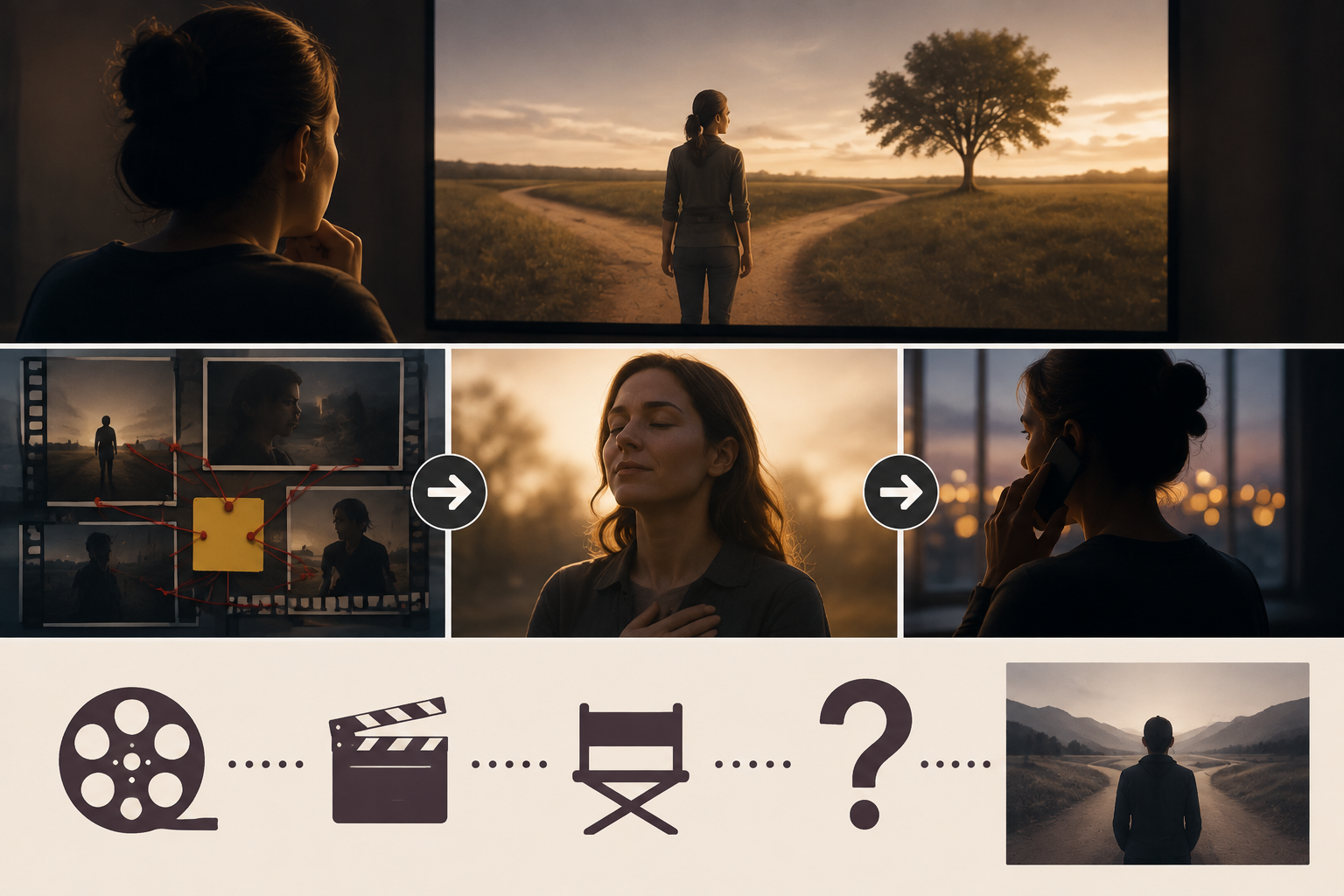
A clear open-ended definition is a conclusion that does not confirm the answer to an important story question. The film or video has ended, but viewers must decide what happened, what the character will do next, or what the final image means.
The open-ended conclusion meaning should not be confused with a missing ending. Writers usually resolve the main conflict or complete a meaningful stage of the character’s emotional journey. They leave only one theme-related question unanswered.
An effective open ending usually contains three parts:
Earlier scenes provide clues supporting different conclusions.
The central action or emotional arc receives enough closure.
The final image, action, or sound stops before the answer is confirmed.
Consider a story about a woman deciding whether to accept a job in another city. The final scene might show her answering the employer's call after overcoming her fear of change, but the video ends before viewers hear her response. Her emotional development is complete, while her practical decision remains open.
Open endings can overlap with related techniques. A cliffhanger normally stops during an unfinished crisis and may lead into another episode. An ambiguous ending allows completed events to have different meanings. An open ending more often preserves uncertainty about the final result or what happens next.
The most direct open-ended antonym is a closed ending, which clearly explains the main conflict, character outcome, or final event.
Open Ending Examples in Films and Videos
Well-designed open endings do not create uncertainty in the same way. Some withhold the result of an action, while others leave a relationship or final image open to interpretation.
Inception
Inception completes the team’s mission and brings Cobb back to his children. His emotional journey also reaches a conclusion: instead of continuing to test reality, he walks away from the spinning top.
The camera remains on the top, which appears to wobble, but the film ends before it falls or continues spinning. Viewers must decide whether Cobb has returned to reality or remains in a dream.
This ending works because the top already has an established meaning. Both possibilities have support in the story, and the unresolved question connects to the film’s themes of perception and belief.
Lost in Translation
Bob and Charlotte complete their time together and say goodbye in Lost in Translation. Their shared experience has ended, but the audience cannot hear what Bob whispers to Charlotte during their final meeting.
The unresolved element is the meaning of their relationship rather than the main plot. The private conversation allows viewers to see their connection as friendship, romance, or a brief encounter that changes both of their lives. Keeping the words unheard also suits a story about loneliness and imperfect communication.
The Lobster
In The Lobster, David and the short-sighted woman escape the rebel group in the forest and reach the city. Because their society expects couples to share a defining characteristic, her sudden blindness threatens their relationship.
David enters a restaurant bathroom with a knife and prepares to blind himself. The film does not show whether he completes the action or returns to the table. He might injure himself for the relationship, leave the woman, or find another solution. Each possibility reflects the film’s questions about love, conformity, and sacrifice.
An Open Ending in a Short Video
A short video does not need a complex twist. Imagine a character who has spent years planning to leave their hometown. In the final scene, they walk toward a railway platform. The next shots show the train doors closing and a ticket left on a bench, but the character is no longer visible.
The abandoned ticket could mean that the character stayed behind. It could also suggest that they boarded without it after abandoning their original plan. Earlier scenes must give viewers a reason to accept either interpretation.
A recurring object, facial reaction, or change in sound can create this effect within a limited runtime. Keeping the cast, locations, and central conflict focused also makes it easier to develop a complete short film without weakening the final uncertainty.
How to Write an Open Ending
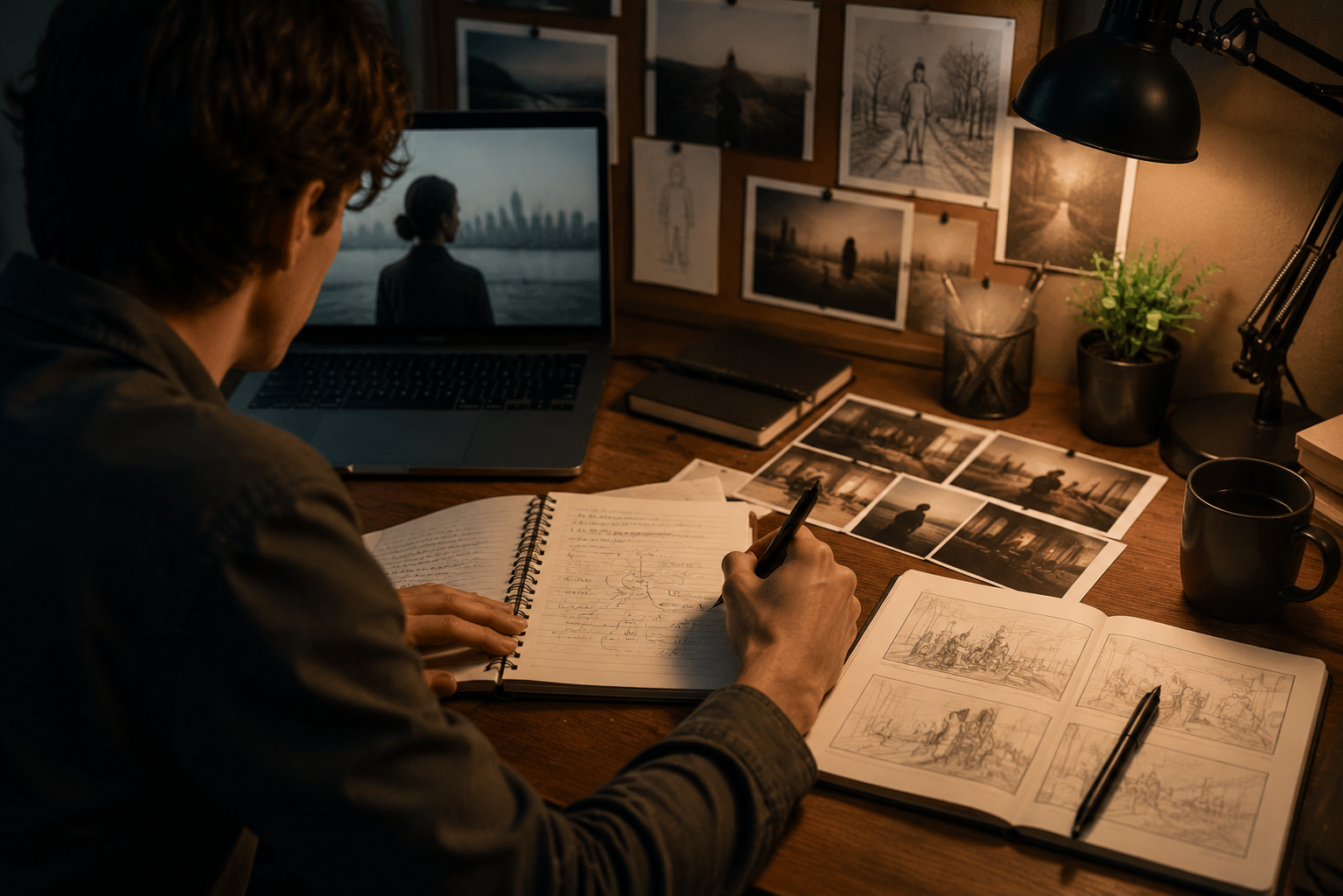
A strong open ending should grow from the story’s theme and the choice facing its main character. The same principles used to write a focused short film script also apply here: identify the essential conflict, understand what the character wants, and decide what the ending must resolve.
Decide What to Resolve and What to Leave Open
Choose one central question to preserve. It may concern whether a character has changed, whether a relationship will continue, or whether the reality shown on screen can be trusted. The question should connect to an idea explored throughout the story.
The main conflict or emotional decision still needs meaningful development. Viewers may not know the eventual result, but they should understand what the character has experienced and why the final choice matters.
A story about someone reconnecting with an estranged parent could end as the character stands outside the parent’s door. Whether they knock remains unseen, but the preceding scenes should explain the fear and emotional growth that brought them there.
Plant Clues for Different Interpretations
Dialogue, behavior, environmental details, and recurring objects can support different conclusions. Each interpretation needs evidence, but no clue should completely eliminate the other possibilities.
A character considering the end of a relationship might pack a suitcase in one scene and repair a photograph of the couple in another. If the final image shows the suitcase beside the door, the audience has reasons to believe that the character may leave or stay.
Avoid adding an unfamiliar person, new threat, or unexplained symbol only in the final scene. Meaningful uncertainty comes from tension between established clues, not from missing information.
Choose the Final Moment
The ideal stopping point often appears immediately before confirmation. An unfinished action, off-screen sound, character reaction, or symbolic object can preserve uncertainty without making the story feel cut off.
Stopping too early removes the emotional payoff. Ending too late may confirm the only possible answer. Testing several versions can reveal which final frame keeps the core question open while still providing a satisfying conclusion.
How to Turn an Open Ending Into a Video
The unresolved question in the script must become visible through shots, actions, objects, and sound. Careful planning helps ensure that the final sequence supports multiple interpretations without accidentally confirming one.
Plan the Ending Sequence
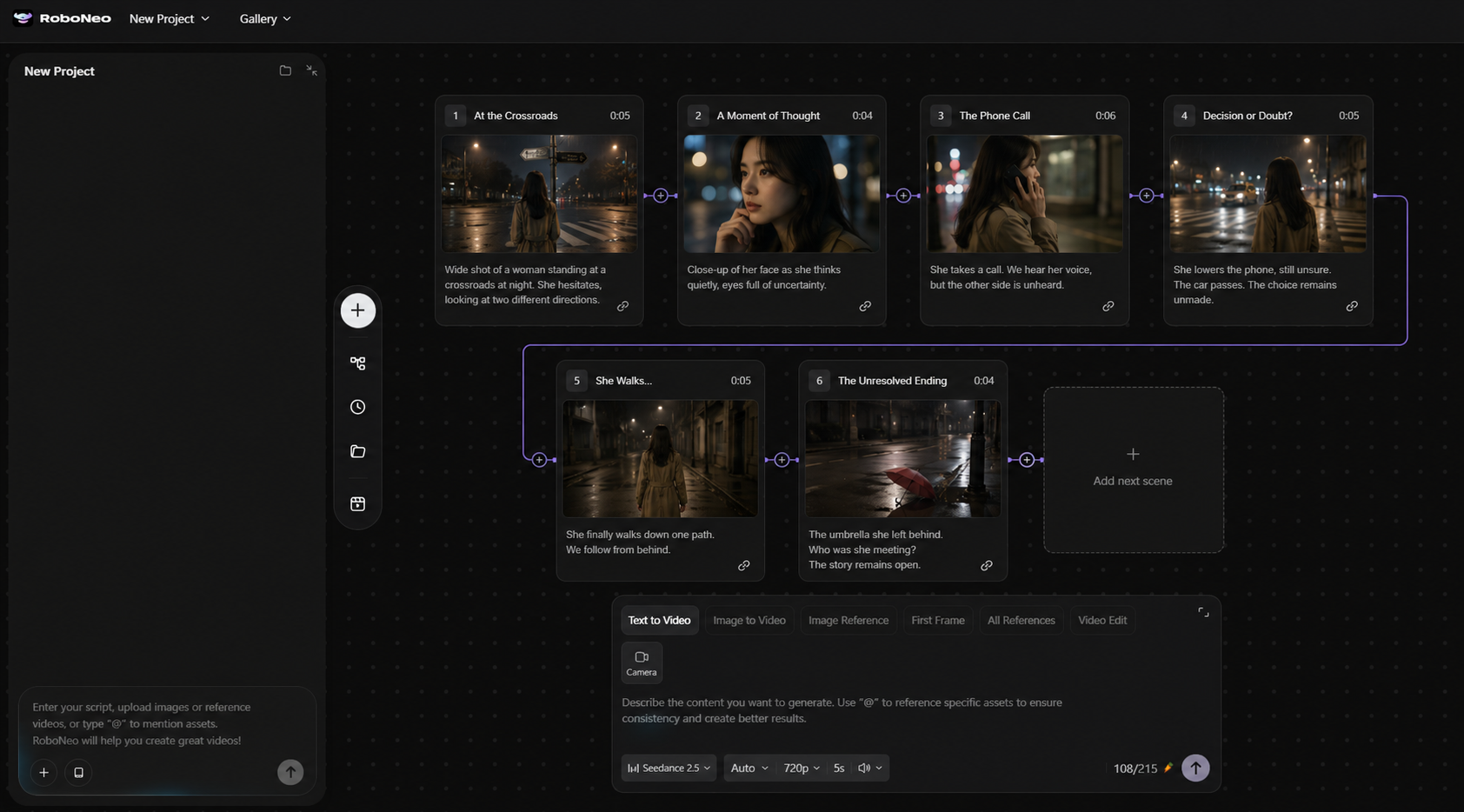
Break the final scene into consecutive shots and define the scene, character, action, shot size, camera angle, sound, and duration. A structured AI script generator can help organize these story details into scenes and ordered shots before production begins.
The sequence should establish the situation, present clues for different interpretations, and stop before the result becomes certain. Choose a visual element that already has meaning, such as a ticket, photograph, door, mirror, or familiar gesture. Changing its position or condition in the final scene can suggest a new development without explaining it directly.
Create the Video Scenes
Prepare the key actions, character reactions, environmental shots, and final clue according to the shot plan. Live-action footage requires consistent costumes, prop positions, lighting, and scene layouts. Otherwise, continuity errors may distract viewers from the intended question.
When filming is impractical or a creator wants to test the sequence first, RoboNeo can turn a script and shot descriptions into a short video draft. Different final shots can then be compared before the ending is finalized.
Review the Final Video
Watch the complete video and check the shot order, character and setting consistency, action continuity, sound synchronization, and visibility of the ending clue. This review is especially important because common AI video generation limitations, including inconsistent characters or changing scene details, may unintentionally confuse the story.
The last shot should stop before the answer is revealed, while the earlier scenes provide enough evidence for at least two reasonable conclusions. If viewers invent explanations unsupported by the story, the relevant clues may need to be clearer.
Common Mistakes When Creating an Open Ending
Uncertainty does not automatically create a meaningful conclusion. The following mistakes occur when essential story development is withheld instead of one carefully chosen question being left open.
Ending Before the Story Reaches a Resolution
If the conflict, character choice, and emotional development have barely progressed, a sudden ending feels unfinished. Before selecting the final shot, identify which central promise the story has already fulfilled and leave only the resulting outcome uncertain.
Adding a New Mystery at the End
A stranger, threat, or piece of information introduced without preparation gives viewers no evidence to interpret. An effective open question should develop throughout the story and gain additional meaning in the final scene.
Leaving Too Many Questions Unanswered
Leaving the character's fate, central conflict, event history, and theme uncertain at the same time weakens the ending's focus. Preserve one core question and resolve or substantially develop the other necessary information.
Using the Ending Only to Set Up a Sequel
Stopping the current conflict solely to introduce another installment deprives the present story of its own payoff. A sequel can continue the narrative, but the current film should still complete a meaningful action or emotional arc.
FAQ
Does an open ending mean the story is unfinished?
No. An open ending concludes the story at a meaningful point while intentionally preserving one important result or interpretation. An unfinished story usually lacks sufficient conflict development, character change, or narrative payoff.
Can an open ending have a correct answer?
Some works allow several equally reasonable answers. Others suggest that one interpretation is more credible without confirming it. The creator may also have a preferred answer that is never revealed in the finished work.
Is an open ending the same as a sad ending?
No. "Open" describes whether the conclusion remains uncertain, while "sad" describes its emotional effect. An open ending can feel hopeful, tragic, tense, peaceful, or bittersweet.
Do open endings always lead to sequels?
No. An open ending can serve as the final conclusion to a standalone film, and its central question may never receive an official answer. A cliffhanger more commonly signals that the action will continue.
What is the opposite of an open ending?
A closed ending is the opposite of an open ending. It clearly explains the main conflict, character fate, or event outcome, giving viewers relatively definite closure.
You May Be Interested
New from RoboNeo: Agent Team. The AI That Hired You a Whole Creative Squad
Best 3D Character Creator to Make Custom Characters
Best AI Features for Enhancing UGC Video Quality in 2026
Best App to Remove Tiktok Watermark in 2026
5 Best Free Tools to Remove Watermark from Video in 2026 | RoboNeo