How Do You Write Dialogue: A Guide for Video Scripts
 RoboNeo TeamAugust 22, 2026
Good video dialogue should sound natural without copying real conversation word for word. Every exchange needs to reveal character, create conflict, deliver useful information, or move the story forward. It should also work with actions and visuals instead of making the characters explain everything the audience can already see.
So, how do you write dialogue that feels believable on screen? This guide explains why dialogue can be difficult, how to develop it step by step, how it changes across short films, ads, and educational videos, and which common mistakes can weaken a conversation.
Why Can Dialogue Sometimes Be Difficult to Write for Video Scripts?
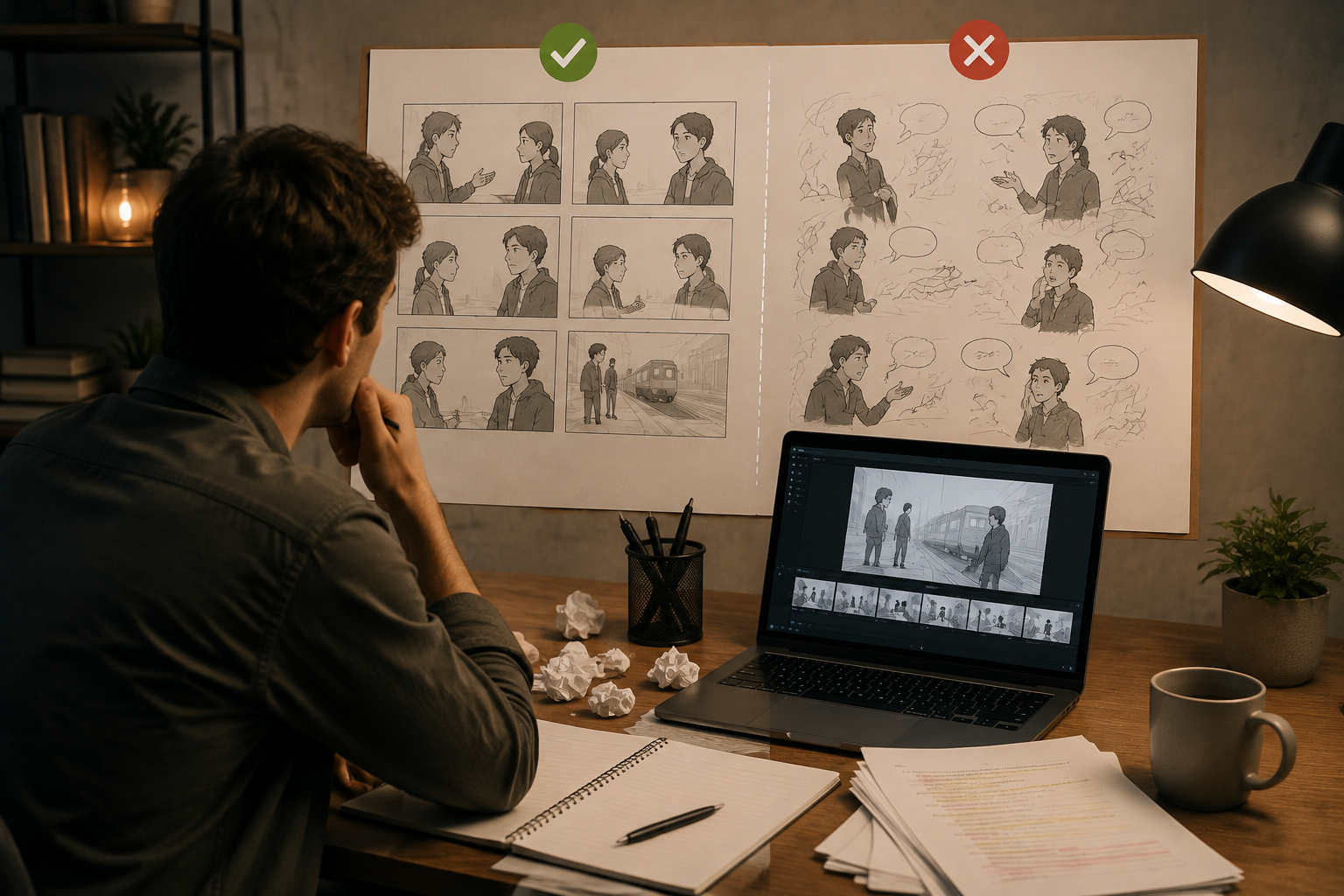
Dialogue can be difficult because several storytelling demands must be handled at the same time. A writer needs to consider character purpose, natural speech, story information, scene pacing, and visual storytelling within the same conversation. These elements are also important when learning how to write a video script, since dialogue must fit the wider structure and visual plan.
Real conversations rarely move in a clean line. People pause, repeat themselves, use filler words, change the subject, and leave thoughts unfinished. A direct transcript of an everyday conversation may sound realistic, but it will often feel slow when placed in a video.
Script dialogue needs to be more selective. It keeps enough irregularity to sound human while removing details that do not contribute to the scene. Two friends discussing a missed train might spend several minutes complaining, checking the time, and repeating what happened in real life. In a script, the conversation could focus on the missed train revealing that one friend deliberately delayed the other.
The main challenge is finding the right balance. Dialogue that is too polished may sound artificial, while dialogue that copies reality too closely may lack direction.
How Can You Write Better Dialogue for a Video Script?

A reliable dialogue-writing process begins before the first line is written. Instead of trying to make each sentence sound clever, build the exchange around the scene's purpose and the characters' competing needs.
Step 1: Define the Purpose of the Scene
First, determine why the scene exists. Something should be different by the time the dialogue ends. A character may discover new information, make a decision, begin a conflict, or experience a change in a relationship.
Consider a scene in which two sisters are preparing dinner. If nothing changes, their conversation about ingredients may feel unnecessary. The scene becomes meaningful when one sister reveals that she plans to leave home. The ordinary cooking activity now provides a setting for a conversation that changes their relationship.
A clear scene purpose also makes editing easier. When a line does not support that purpose, it can usually be shortened or removed. An AI script generator can help organize a draft into scenes and story beats, but the writer still needs to decide what each conversation should change.
Step 2: Decide What Each Character Wants
Every important character should enter the conversation wanting something. The goal may be practical, emotional, or hidden from the other person.
One character might want permission to borrow a car, while the owner wants an apology for earlier damage. Their different goals create resistance. The borrower avoids discussing the accident, and the owner refuses to answer the request directly. Questions, evasions, compromises, and rising tension emerge naturally from this difference.
Useful character goals include:
Obtaining information or permission
Hiding a mistake
Changing another person's decision
Protecting a relationship
Ending or delaying the conversation
When both characters want exactly the same thing and face no resistance, the exchange may become a simple transfer of information. Even a small disagreement can give it direction.
Step 3: Give Each Character a Distinct Voice
Character voice comes from more than word choice. Personality, background, relationships, and current emotions can influence vocabulary, sentence length, rhythm, and directness.
A nervous employee may speak in long sentences filled with qualifications when addressing a manager. The same person might use shorter, more confident lines with a close friend. Meanwhile, an impatient manager may interrupt or ask direct questions.
Distinct voices should not depend entirely on exaggerated accents, catchphrases, or slang. Small differences are often more convincing. One character may answer questions immediately, while another avoids direct replies. One may describe events precisely, while another focuses on how those events felt.
After removing the character names from a scene, the writer should still be able to identify at least some of the speakers from their wording and rhythm.
Step 4: Build the Dialogue Around Action and Response
Strong dialogue develops through interaction rather than a series of separate speeches. Each line should affect what comes next.
One possible structure is:
Statement, response, reaction, and new pressure
A teenager says that the car is missing. His father asks when he last saw it. The teenager hesitates, which makes the father suspicious. The father then asks where he went the previous night.
Another useful progression is:
Goal, resistance, adjustment, and escalation
A customer requests a refund. The shop assistant explains that the return period has ended. The customer shows an earlier email from the store. The assistant notices that the item was bought under a different name, creating a new problem.
These patterns help answer the practical question of how to structure a dialogue without making the exchange feel mechanical. The important point is that every response should create a reason for the next line.
Physical action can also shape the conversation. A character may continue packing a suitcase while denying that they intend to leave. That action makes the spoken denial more interesting than a direct explanation.
Step 5: Use Subtext Instead of Explaining Everything
People do not always say exactly what they feel or want. They soften requests, avoid uncomfortable subjects, hide emotions, and sometimes say the opposite of what they mean. Subtext allows the audience to understand this unspoken layer.
Imagine that a woman sees her former partner at a party. Instead of saying, "I am upset that you came with someone else," she might comment, "You got here quickly." Her words appear neutral, but her silence, expression, and refusal to look at the new partner reveal a different meaning.
Indirect answers, contradiction, avoidance, silence, and physical reactions can all create subtext. The audience becomes more involved because it must interpret the difference between the spoken words and the character's behavior.
Subtext should still be understandable within the scene. If every intention is hidden without any visual or narrative clues, the conversation may become confusing rather than layered.
Step 6: Read, Cut, and Refine the Dialogue
Dialogue that looks natural on a page may sound awkward when spoken. Reading the scene aloud reveals overly long lines, formal vocabulary, repeated information, and characters with rhythms that are too similar.
Pay attention to where you naturally pause or run out of breath. A line that is difficult to say may need to be divided or shortened. Contractions and partial sentences can also make formal writing sound more conversational.
Anything already communicated by the visuals should be reconsidered. If the camera shows smoke pouring from the oven, a character does not need to say, "The oven is smoking." A sharper response such as "Did you set the timer?" adds information and conflict.
Once the first draft is complete, you can bring the script into RoboNeo to organize scenes, dialogue, and visual direction. Seeing the lines within an actual video sequence makes it easier to identify slow pacing, unnatural transitions, and exchanges that run too long.
Refine Video Dialogue with RoboNeo
How Should Dialogue Change for Different Video Types?
The basic principles remain consistent, but the balance between character, information, and pacing changes with the video format.
Narrative and Short Film Dialogue
Narrative dialogue usually places greater emphasis on character voice, conflict, subtext, and emotional change. A conversation should do more than communicate facts. It should affect the characters or the direction of the story.
Writers wondering how do you write a story with dialogue should avoid treating spoken lines as decoration between actions. Dialogue becomes part of the story when a promise creates a future problem, an unanswered question increases suspicion, or a careless remark damages a relationship.
Short films have limited time, so each exchange often performs several functions. A conversation at a hospital reception can establish the setting, reveal a strained marriage, and introduce an urgent decision without providing three separate scenes. This focus is especially important when writing a script for a short film, where every scene must contribute to the central conflict.
Ads and Brand Videos
Dialogue in ads and brand videos is usually shorter and reaches the central problem or benefit quickly. Characters should not sound as though they are reading a feature list.
A commuter struggling with a wet umbrella could ask a colleague why their bag is completely dry. The response may introduce the product's waterproof material through a believable interaction. This feels more natural than having someone announce every specification to the camera.
The product message still needs to be clear, but it should emerge from a recognizable need, action, or conversation. Because commercial runtimes are often limited to 15, 30, or 60 seconds, the process of writing a TV commercial script also requires careful control of dialogue length.
Explainers and Educational Videos
Clarity and information flow matter most in educational content. Dialogue can be more direct, especially when a presenter speaks with an expert, customer, or animated character.
However, an artificial question-and-answer format can weaken the script. One character should not repeatedly ask questions that no real person in that situation would need to ask. A workplace training video feels more credible when the employee encounters a problem and requests specific help, rather than asking broad questions solely for the audience's benefit.
What Dialogue Mistakes Should You Avoid?
Even technically correct dialogue can weaken a scene when it repeats information or lacks a clear effect. Common problems include:
Using long speeches to explain facts that both characters already know
Giving every character the same vocabulary and sentence rhythm
Keeping too much filler or small talk in an attempt to sound realistic
Making characters directly state every emotion
Repeating information already shown through visuals or actions
Allowing a conversation to continue without changing the plot, relationship, or audience's understanding
A useful final check is to remove several lines and see whether the scene still works. If nothing changes, those lines probably were not necessary. If removing a line damages the tension, character development, or logic, it is likely performing a clear function.
FAQ
How much dialogue should a video script have?
The amount of dialogue should depend on the purpose of each scene. When visuals, actions, expressions, or sound can communicate the information clearly, additional lines may be unnecessary.
Should dialogue sound exactly like real conversation?
Script dialogue should sound natural, but it does not need to reproduce real conversation exactly. Filler, repetition, irrelevant details, and long pauses are usually reduced so that the exchange remains focused.
How do you write dialogue between more than two characters?
Give each character a reason to participate in the conversation. Keep speakers, responses, and topic changes clear, and make sure the characters react to one another instead of simply taking turns delivering lines.
Can a video script have very little dialogue?
Yes. Actions, visuals, sound, and facial expressions can carry much of the story. Dialogue is most useful when it adds information, conflict, personality, or emotional meaning that other elements cannot communicate as effectively.
What is the difference between dialogue and voiceover?
Dialogue generally refers to spoken exchanges between characters within a scene. Voiceover is narration or character speech placed over the visuals and does not necessarily occur in the scene currently being shown.
You May Be Interested

480p vs. 720p: Which Resolution Should You Choose?

New from RoboNeo: Agent Team. The AI That Hired You a Whole Creative Squad
6 Best Ai Character Generator in 2026: Tested & Compared

How to Choose the Best AI Text to Video Generator in 2026 (+ Our Top Pick)

Best App to Remove Tiktok Watermark in 2026