What Is Character Motivation: Creating Stronger Video Stories
 RoboNeo TeamAugust 22, 2026
What is character motivation? Character motivation is the personal reason a character takes action, makes a choice, or pursues a particular outcome. It is the "why" behind the character’s behavior and may come from survival, love, belonging, justice, fear, revenge, or recognition.
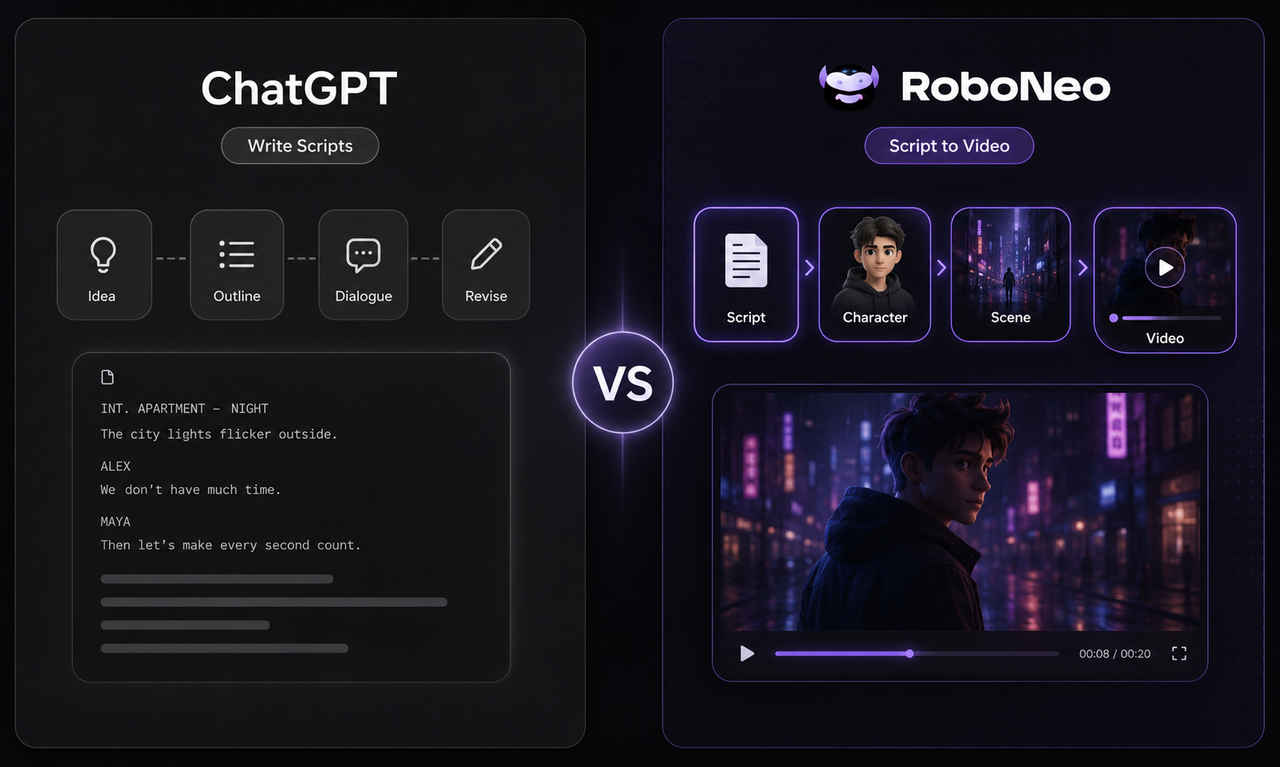
A goal describes what a character wants, while motivation explains why it matters. This guide covers the main types of character motivation, their effects on a story, and how to show them through actions and visual details.
Common Types of Character Motivation

A simple character motivation definition includes reasons that come from within the character or from outside circumstances.
Internal Motivation
Internal motivation grows from a character's emotions, values, beliefs, fears, or psychological needs. The character may want recognition, struggle to overcome shame, feel a need to prove personal worth, seek belonging, or attempt to correct a past mistake. Defining these needs early also gives an AI story generator clearer guidance when developing a character and conflict.
Because these needs cannot always be shown directly on screen, the audience usually discovers them through behavior. A character who repeatedly rejects help may be protecting a sense of independence. Someone who hesitates before entering a family home may still carry guilt connected to an earlier event. Reactions, repeated habits, relationship changes, and moments of hesitation can communicate the inner reason without requiring a long explanation.
External Motivation
External motivation is created by a reward, threat, deadline, or practical pressure outside the character. Escaping danger, winning a competition, paying off a debt, rescuing someone, or completing a mission can all create immediate action.
These motivations are easy to present visually because the audience can see the task and its consequences. However, an external objective alone may leave the character feeling as though the plot is simply pushing them forward. The writer still needs to ask why this particular task matters to this particular person.
A courier may need to deliver a package before midnight, but the deadline becomes more meaningful when completing the job is the only way to keep a promise to a late friend. The external goal creates movement; the personal reason gives the movement emotional weight.
Conflicting and Changing Motivations
A character can have several motivations at the same time. A journalist may want to expose corruption while fearing that the report will put a family member in danger. Both desires are understandable, but they point toward different actions. That conflict forces the character to reveal what matters most through a difficult choice.
Motivations may also change as the character gains information, builds relationships, or experiences failure. A detective who begins an investigation to earn a promotion might later continue because an innocent person needs protection. The change feels convincing when it develops from story events. A sudden reversal made only to move the plot into its next stage usually feels artificial.
Character Motivation Examples and Their Story Effects
Useful character motivation examples should show the full connection between motivation, goal, behavior, and story effect. The same broad need can lead to very different choices depending on the character’s personality and circumstances.
Survival and Risk
A character trapped inside a locked building has an immediate goal: find an exit. Survival influences every decision that follows. The character may conserve water, distrust strangers, search for tools, or take a dangerous shortcut rather than wait for rescue.
Each action creates a visible consequence. Limited resources increase tension, suspicion produces conflict, and the risky route may expose the character to a new threat. Motivation therefore does more than explain behavior; it shapes the direction and pace of the story.
Protection and Moral Choice
A parent who wants to keep a child away from danger may hide important information, refuse outside help, or damage another relationship. The desire to protect is sympathetic, yet the resulting behavior can still cause harm.
This motivation works especially well when safety conflicts with honesty and trust. A mother who secretly cancels her daughter’s trip may prevent an immediate risk but lose the daughter's confidence. The story becomes more complex because a caring intention produces a damaging result.
Recognition and Ambition
A young director wants to win a film competition and prove that their work deserves attention. That desire may lead to endless revisions, arguments with collaborators, or attempts to challenge the judges' expectations.
Ambition pushes the competition forward, while the need for recognition exposes insecurity beneath the character’s confidence. Losing then means more than missing a prize. It threatens the identity the character has been trying to establish.
Revenge and Moral Limits
After being betrayed by a former business partner, a character begins collecting evidence to destroy that person’s reputation. The pursuit of revenge may involve manipulating allies, leaking private information, or rejecting opportunities for reconciliation.
The central question is not simply whether the character succeeds. The audience also watches to discover which moral boundaries the character is willing to cross. Every escalation tests whether revenge remains a response to injustice or becomes another form of wrongdoing.
Belonging and Identity
A new employee wants to be accepted by a close-knit team. To fit in, they imitate their coworkers, hide parts of their background, and eventually participate in behavior that conflicts with their principles.
The desire for belonging shows what is character motivation in drama while raising a question about identity. Acceptance may be possible, but the cost could be the loss of honesty and self-respect. Creators developing character-based video content also need to keep these personality traits consistent, whether they design the character manually or use an AI character generator to explore visual directions.
Redemption and Change
A character who caused serious harm in the past may seek redemption by accepting responsibility, helping the people affected, and giving up personal advantages. An apology alone is rarely enough. Change becomes credible through sustained action, particularly when the character receives no immediate forgiveness.
A former manager who once took credit for a colleague’s work might later risk a promotion to reveal the truth publicly. The sacrifice demonstrates that the character now makes a different choice when facing the same temptation.
The same goal can also come from different motivations. Two athletes may both want to win a race. One needs to prove personal ability, while the other needs the prize money to support a family member. Their responses to injury, competition, and the possibility of cheating will differ because the reasons behind the goal are not the same.
How to Create Strong Character Motivation Step by Step
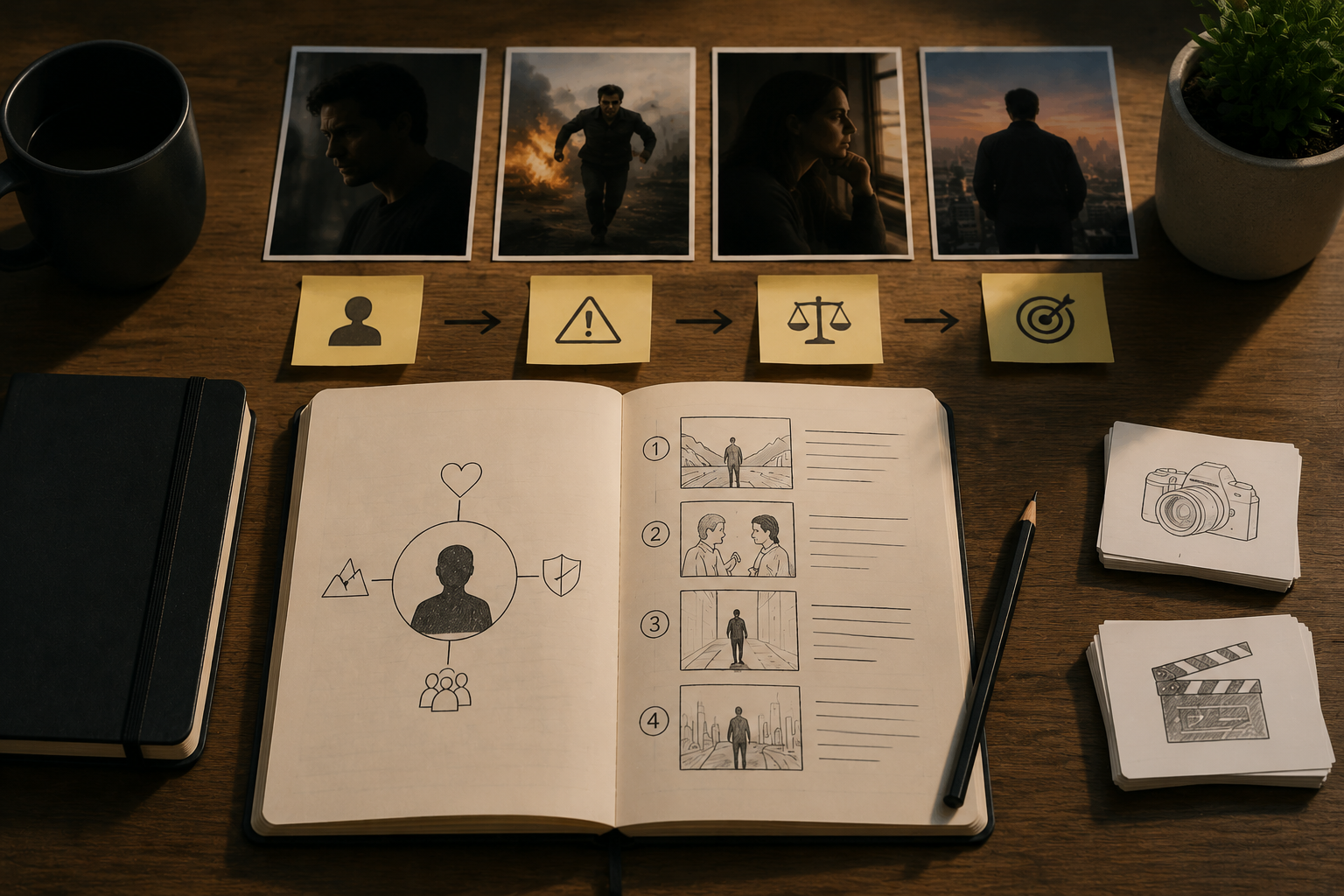
A strong motivation should influence both the overall plot and the decisions made within individual scenes. The following process connects the character’s inner reason to actions that can be shown in a video.
Step 1: Define the Character’s Immediate Goal
Start with the concrete result the character wants at the current stage of the story. The goal should lead to action and allow the audience to judge whether the character is moving closer to or farther from success.
"Become happy" and "build a better life" are too broad to organize a scene. "Get accepted into the local cooking program" gives the character something specific to pursue. It can generate applications, practice sessions, interviews, and possible rejection. This goal can then become the foundation of a structured scene outline when you begin to write a video script.
Step 2: Ask Why the Goal Matters Personally
Continue asking why the character wants that result until the answer reaches a value, fear, relationship, absence, or past experience. The motivation does not need to involve a dramatic tragedy. It only needs to carry personal meaning.
A man rushing to catch a train may appear to have a simple practical goal. If missing it means breaking another promise to see his daughter, the journey gains emotional importance. His impatience, willingness to ask for help, and reaction to delays now come from a recognizable personal need.
Step 3: Add an Obstacle and Meaningful Stakes
An effective obstacle challenges the motivation rather than merely delaying the character. It may come from an opponent, the environment, limited resources, an important relationship, or the character’s own fear and false beliefs.
The consequences of failure should also be clear. Consider three kinds of stakes:
Practical stakes: What result, opportunity, or resource will be lost?
Relationship stakes: Who may be disappointed, harmed, or pushed away?
Internal stakes: What fear or negative belief will the failure reinforce?
A musician who freezes during auditions faces more than rejection. Failure may disappoint a supportive sibling and confirm the character’s belief that performing in public is impossible.
Step 4: Turn Motivation Into Scene-Level Choices
For each major scene, identify what the character wants at that moment, why action is necessary now, and what price the character is prepared to pay. These questions keep behavior connected to motivation.
Suppose a student needs a recommendation letter to qualify for a scholarship. During a meeting with a teacher, the student may flatter, confess, argue, or offer evidence of improvement. Each option reveals personality and creates a different scene outcome.
Supporting characters also need their own immediate goals. A teacher who wants to protect the school’s reputation will respond differently from one who wants to give struggling students a second chance. This prevents secondary characters from existing only to provide information to the protagonist. An AI script generator can help organize these goals, actions, and scene transitions, but the writer should still review whether every choice follows the character's motivation.
Step 5: Translate the Motivation Into Video Scenes
Character goals, obstacles, choices, and consequences must eventually become visible or audible. A key shot should show at least one meaningful change in action, reaction, environment, or relationship.
Instead of having a character say, "I need everyone to respect me," a scene might show them deleting a nearly finished project after noticing one critical comment. A close shot of the hesitation before deletion communicates insecurity, while the action reveals how far the need for recognition has begun to control the character.
Once the scenes have been planned, RoboNeo can turn character details and scene descriptions into an initial video draft. Reviewing the resulting behavior, expressions, and camera cues helps determine whether the motivation is actually understandable on screen. The tool can support this review, but the writer still decides why the character acts and what each choice means.
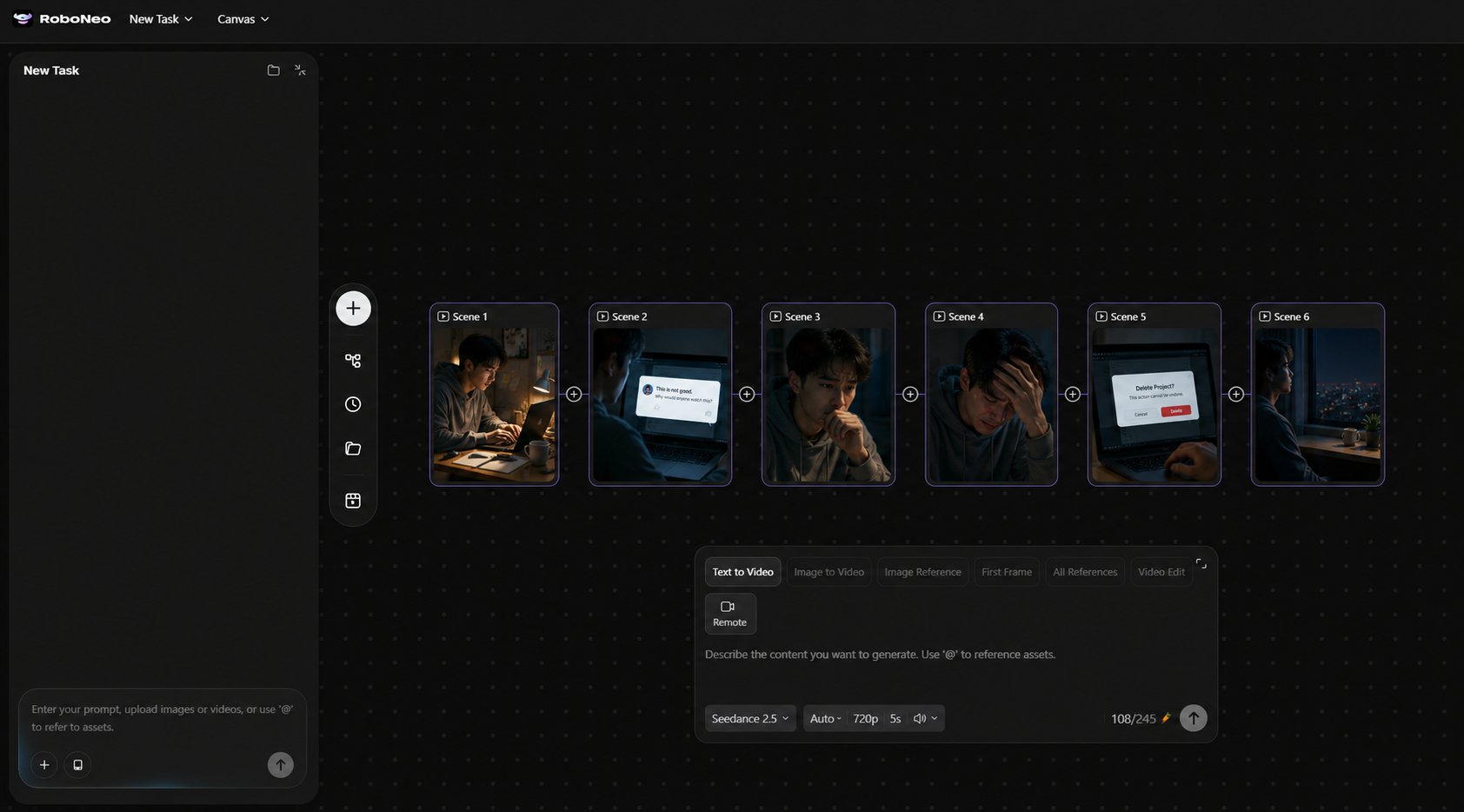
Visualize Motivation with RoboNeo
Common Character Motivation Mistakes
Even a promising motivation can weaken the story when it remains disconnected from behavior or changes without a convincing cause.
| Common mistake | Why it weakens the story | How to fix it |
| Giving the character a vague desire | The audience cannot identify what the character is trying to do | Replace the broad desire with a specific, observable goal |
| Explaining motivation only through dialogue | The character’s feelings are stated but never demonstrated | Show the motivation through choices, reactions, habits, and sacrifices |
| Using only an external task | The plot moves forward, but the character lacks personal investment | Connect the task to a fear, value, relationship, or past experience |
| Changing motivation suddenly | The character appears inconsistent or controlled by the plot | Use new information, failure, or relationship changes to cause the shift |
| Adding multiple unrelated motivations | The character feels overloaded rather than complex | Make the motivations support or conflict with one another during key decisions |
| Removing meaningful consequences | The character can abandon the goal without losing anything | Establish practical, relational, and internal stakes |
| Giving supporting characters no goals | Other characters become passive tools for the protagonist | Give each important character a reason to help, resist, or leave |
FAQ
Can a character have more than one motivation?
Yes. A character may be driven by family responsibility, personal ambition, and fear at the same time. Multiple motivations work best when they connect or conflict during important choices rather than appearing as separate pieces of background information.
Does every character need a motivation?
Not every person who appears on screen needs a complete character arc. However, anyone who significantly affects the plot should have a reason for their behavior. A supporting character’s motivation can be simple as long as it explains why that person helps, obstructs, or leaves the protagonist.
Can a villain have sympathetic motivation?
Yes. Protecting family, correcting an injustice, or seeking belonging can make a villain’s motivation understandable. Understanding does not require approval. The methods the villain uses, the people harmed, and the moral limits they refuse to accept still shape how the audience judges them.
Should the audience know a character's motivation immediately?
Not always. Writers can hide the exact reason to create mystery, but early behavior should still follow an understandable internal logic. When the motivation is finally revealed, it needs to match the choices and clues shown earlier.
What is the difference between motivation and a character arc?
Motivation explains why a character pursues a goal. A character arc describes how that person changes during the pursuit. Motivation can drive the arc, while conflict, failure, and new understanding may also change what the character wants and why.
You May Be Interested

480p vs. 720p: Which Resolution Should You Choose?
Best 3D Character Creator to Make Custom Characters
Best App to Remove Tiktok Watermark in 2026
5 Best Free Tools to Remove Watermark from Video in 2026 | RoboNeo

6 Best Tools to Fix Blurry Videos in 2026