Best Free AI Story Generators in 2026: Tested and Ranked
 RoboNeo TeamJuly 8, 2026
AI story generators are practical enough to sit in a real workflow—whether you’re a creator, marketer, or writer trying to beat a block, shape a plot, or draft scenes quickly. The catch: the “best” tool depends on the output. A novel outline, a social caption arc, and a short drama script need different things.
This guide ranks free options by use case and walks through fit, limits, and who each one is for—so you’re not forcing one app to do every kind of story.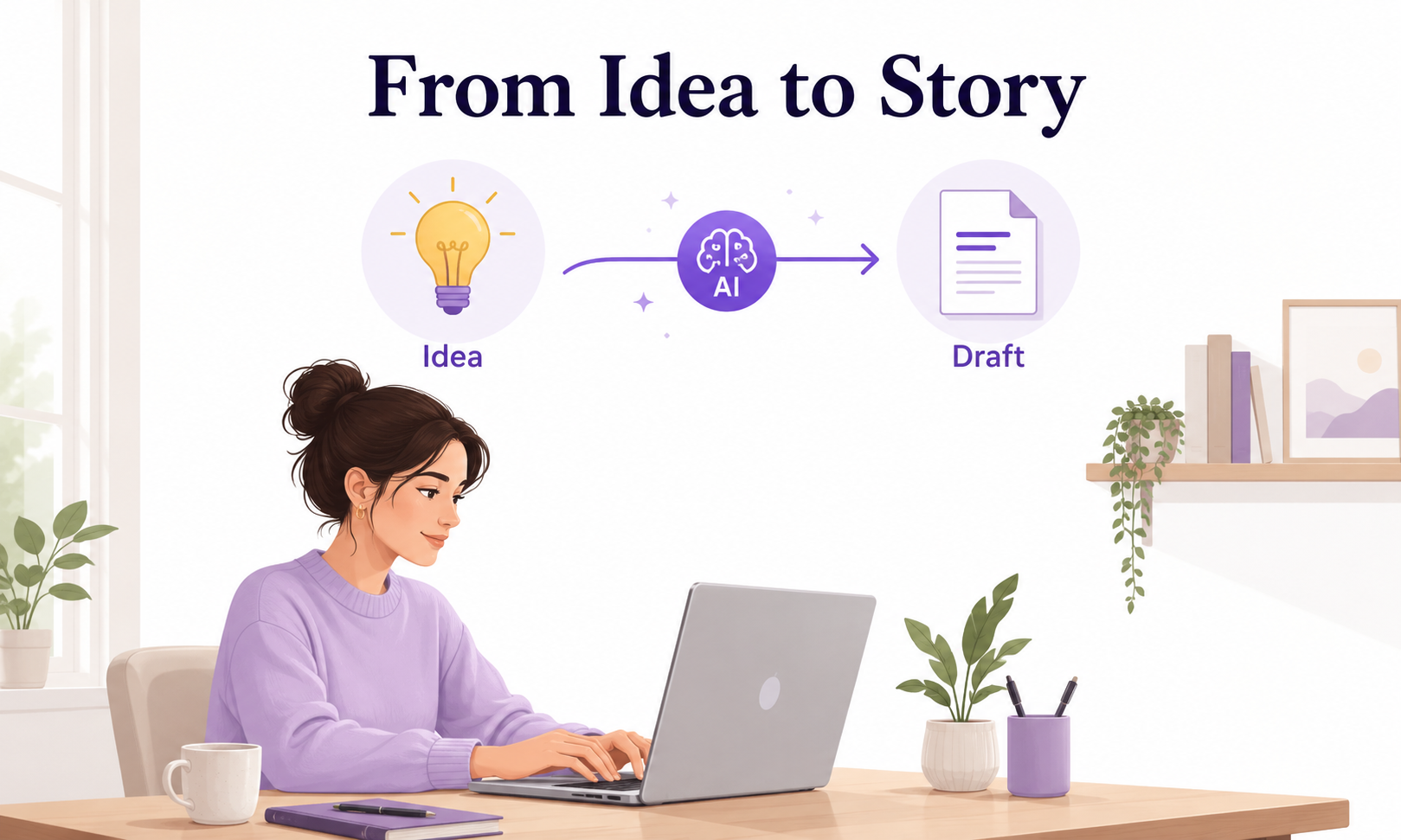
Why AI Story Generators Are Popular Now
AI story generators have become more common because language models have improved a lot. Early tools often struggled to keep plots consistent or remember character details. Today’s tools are better at following narrative context, which makes them more useful during the creative process.
This shift helps content teams and individual creators produce more ideas in less time. Instead of starting with a blank page, you can generate plot hooks, character arcs, or dialogue options in minutes. This is especially helpful for social media and advertising, where teams constantly need fresh story ideas, campaign angles, and short concepts they can build with an AI advertising generator. It gives you a faster path from concept to first draft, leaving more time for editing and refinement.

How We Tested and Ranked These AI Story Generators

We evaluated each generator based on the real needs of creators and marketers. The goal was to see which tool works best for specific tasks in a practical workflow. Here are the main criteria we used to evaluate each tool:
Use Case Fit: Does the tool work well for a specific format, such as long-form novels, short social media stories, or video scripts?
Output Quality & Consistency: Can it keep the tone, character voice, and plot logic consistent throughout the story?
Control & Customization: How much can you guide the AI with prompts, outlines, character details, and story structure?
Commercial Use Rights: Can you use the generated content for commercial projects under the free plan? Always check the tool’s latest terms of service.
Ease of Use: Is the interface easy to use, or does it take a while to get good results?
Free Tier Limitations: What limits apply to word count, projects, or access to advanced features on the free plan?
Top 5 Free AI Story Generators to Try
part of the story creation process. Think about your end goal, whether it is a book, a social media post, or a video, before choosing the best free AI story generator for your workflow.
RoboNeo: AI Short Drama Story
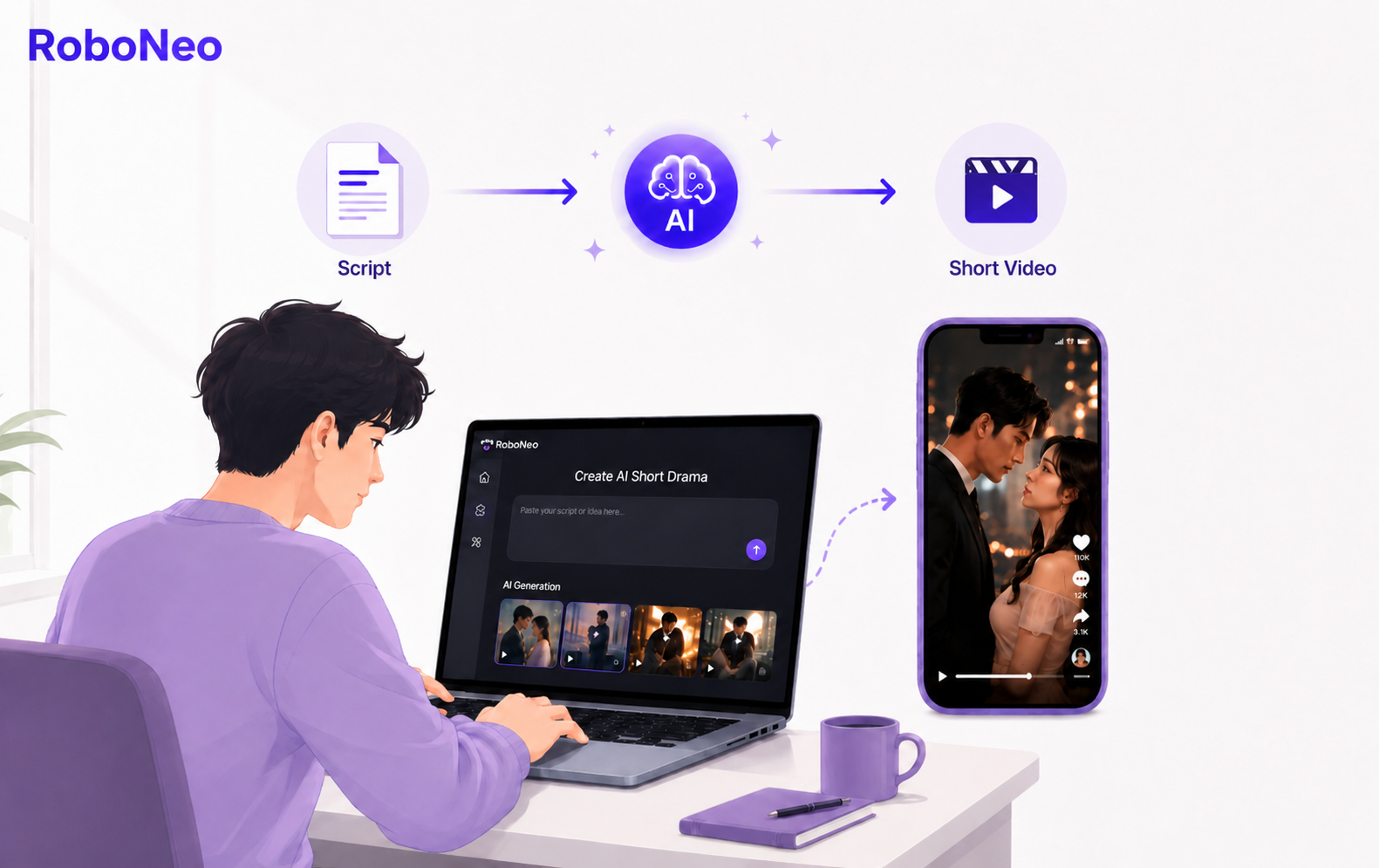
For creators focused on video content, RoboNeo offers a more specialized workflow. It is designed as an AI social media creation agent for short dramas, ads, and social media videos. Its workflow focuses on scripts with clear visual cues, strong opening hooks, and character conflict that can help hold attention on platforms like TikTok and YouTube.
It helps turn a simple idea into a script that is easier to produce by focusing on key video elements.
Who it's for: Growth marketers, creators, and agencies that need to produce video content at scale.
Workflow: Provide a one-sentence concept, and RoboNeo can help generate a script, identify trends, and support a text to video workflow for short-form content.
Limitation: It is highly specialized for video scripts and social media content, so it is not meant for novels or long-form articles.
ChatGPT: Story Ideas, Outlines
ChatGPT is one of the most flexible AI tools for early-stage writing. With its current GPT-5.5 models, it can help brainstorm story ideas, test plot twists, build outlines, and refine tone through follow-up prompts. It works best when you need fast ideation before moving into a more specialized script or novel-writing workflow.
Who it's for: Writers, marketers, and creators who need broad support for brainstorming, outlining, and getting past writer’s block.
Workflow: Share your genre, tone, audience, character, and key plot points. For YouTube projects, a best prompt for youtube script can help set the hook, scene flow, and audience angle before you refine the result.
Limitation: ChatGPT is a general-purpose tool, so script formatting, novel structure, and production-ready scene planning may still need detailed prompts and manual editing.
Squibler: Short Stories
Squibler is built with a writer’s workflow in mind. Its biggest value comes from its organization features. It helps you turn a basic concept into a more structured narrative, with tools for managing chapters, notes, and character profiles. The AI can also generate scenes or expand your ideas within a setup designed for more serious writing projects.
Who it's for: Fiction writers and authors who need one place to write, organize, and generate story content.
Workflow: Use the generator to create early scenes or get past writer’s block, then organize and edit the text with Squibler’s built-in writing features.
Limitation: The free tier has limits, and its focus on long-form writing may be more than you need for quick social media content or video scripts.
NovelAI: Character-Based Stories
NovelAI focuses on long-form, character-driven storytelling with a high level of customization. It is known for adapting to specific writing styles and keeping characters consistent across longer stories. Users can add detailed lorebooks and character memory prompts to guide the AI and keep it aligned with the story world. This makes it popular with fiction writers, especially in fantasy and science fiction.
Who it's for: Novelists, hobby writers, and fanfiction writers who want more control over character, style, and world-building.
Workflow: Create detailed character and world-building notes to guide the AI, then generate prose step by step as the story develops.
Limitation: The learning curve can be steep for new users, and the free trial is limited. Because it focuses more on prose than interactive character conversations, it may not be the best fit for users looking for a character AI alternative or a tool built around script formats.
Feature | ChatGPT | Squibler | NovelAI | RoboNeo |
Best For | Brainstorming and outlines | Structured short stories | Character-driven novels | Short video drama scripts |
Typical Workflow | Conversational prompting | Outline and generate | Guided narrative generation | Idea to video script |
Key Free Feature | Flexible general text generation | Story organization tools | Style and character memory | Video-focused story structure |
Commercial Use | Permissible, but verify terms | Check plan details | Check plan details | Designed for commercial use |
Limitation | Limited built-in story structure | Too much for simple tasks | Steeper learning curve | Not for long-form prose |
Tips to Get Better Results from Free AI Story Tools
1. Start With a Clear Story Idea
Before writing a prompt, define your core idea. What is the story about in one sentence? Who is the main character, and what do they want? A clear premise gives the AI a better direction to follow.
2. Define the Main Character and Conflict
Give the AI a quick character sketch with the name, personality, and motivation. This matters even more in a script for a short film, where the audience needs to understand the character conflict right away. Then add the central conflict. For example: “A cautious librarian must team up with a reckless adventurer to find a lost book.”
3. Choose the Genre, Tone, and Story Length
Include these details in your prompt. “Write a 500-word sci-fi story with a humorous tone” will lead to a very different result than “Write a 1,000-word fantasy story with a dark, serious tone.”
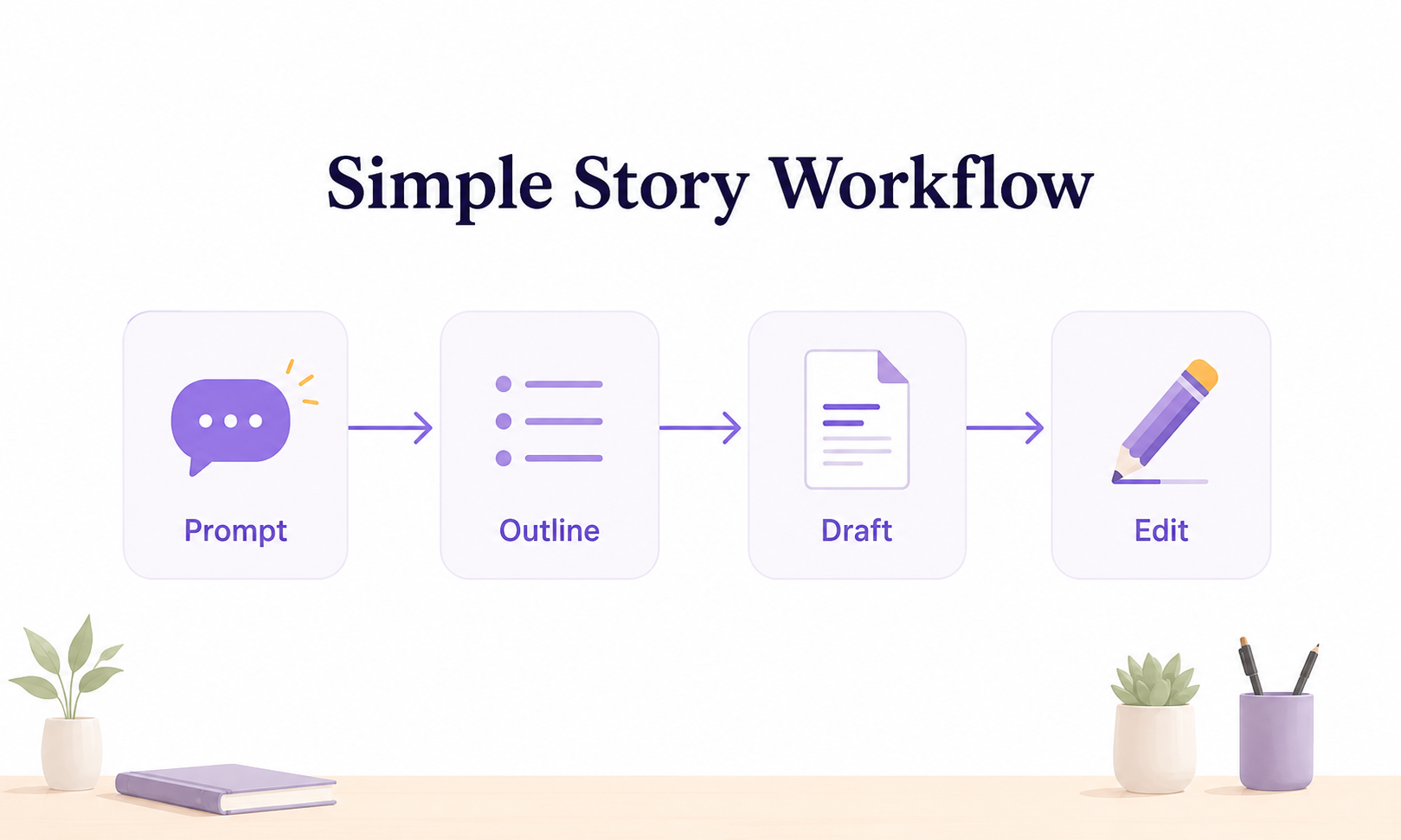
4. Ask for an Outline Before the Full Story
Do not ask for a full story all at once. Start with a simple three-act outline: beginning, middle, and end. Review and edit the outline first. Once the structure works, ask the AI to write the story section by section based on that outline.
5. Edit the Final Story Before Publishing
Treat AI-generated text as a first draft. Always review it yourself to fix logic issues, improve pacing, strengthen the dialogue, and make sure the story matches your brand voice and quality standards.
FAQ
What is the best free AI story generator?
It's up to your goal and uses. ChatGPT is a strong choice for brainstorming, outlines, and general story ideas. Squibler works better for writers who want more structure. If your goal is short drama or video scripts, RoboNeo is a better fit because it focuses on story ideas that can be turned into video content.
Can AI story generators write a full story?
AI story generators can write a full story, but the result usually works best as a first draft. AI can help build the plot, write scenes, create dialogue, and suggest endings. However, you should still review the story for pacing, logic, character consistency, and tone before publishing or sharing it.
Are free AI story generators good for beginners?
Free AI story generators are helpful for beginners because they make it easier to start writing without facing a blank page. You can use them to test story ideas, create simple outlines, or generate a rough draft. For better results, give the AI clear details about the genre, main character, conflict, tone, and story length.
Can I use an AI story generator for short drama scripts?
An AI story generator can help create short drama scripts, especially if you need quick ideas, emotional conflict, strong hooks, or simple scene structure.
Can I legally write a book with AI?
In many cases, you can use AI to help write a book, but you should check the tool’s terms of service and understand how copyright rules apply in your region. Human creativity, editing, structure, and original input still matter. If you plan to publish or sell the book, review the platform rules and consider getting legal guidance for commercial or high-value projects.
You May Be Interested
6 Best Ai Character Generator in 2026: Tested & Compared
How to Write a Video Script: 7 Steps for Beginners
6 Best AI Video Generators in 2026
Best Prompt for YouTube Script in 2026