Talking Animals in Stories: Creating Characters for AI Videos
 RoboNeo TeamAugust 22, 2026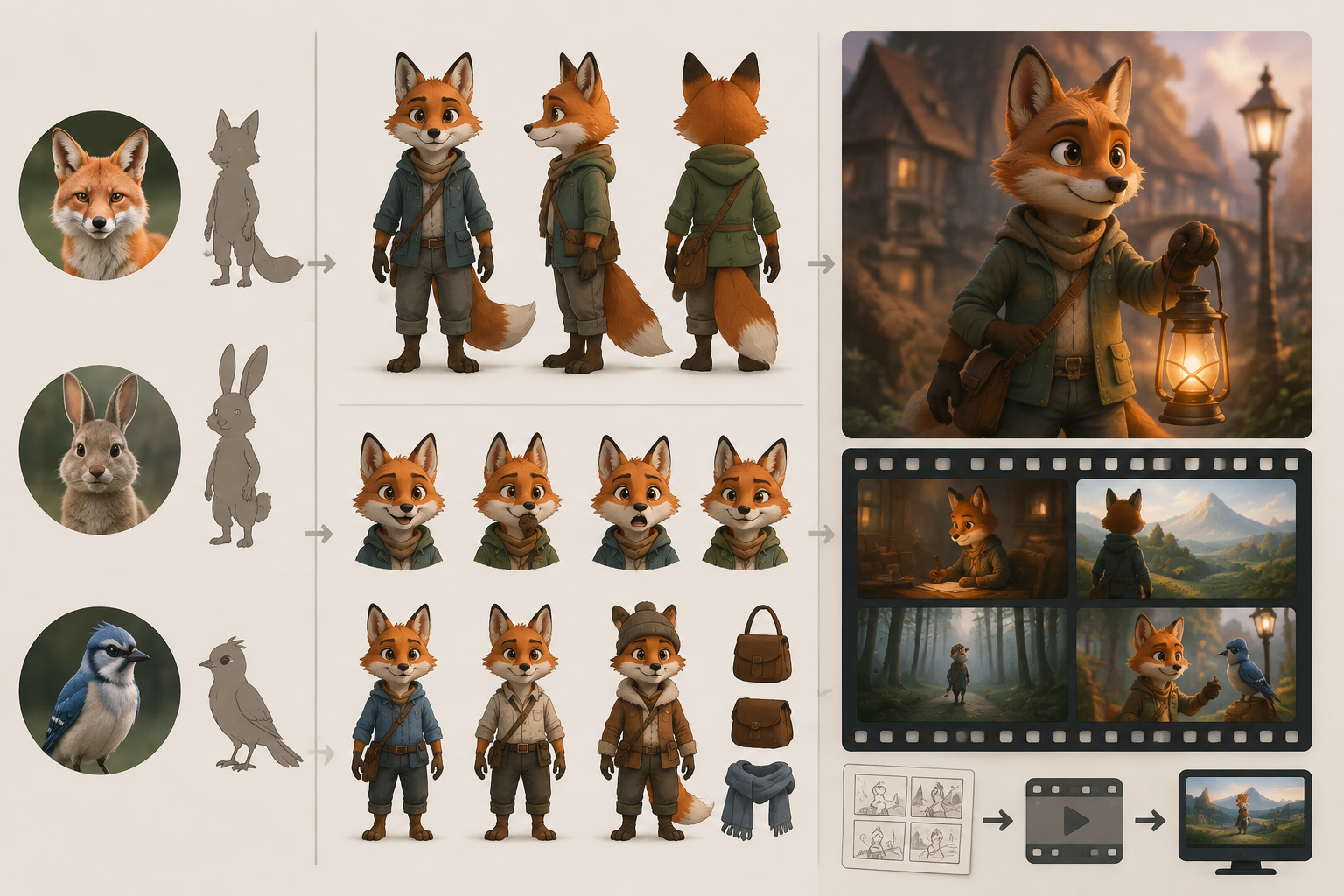
Talking animal characters combine human qualities with recognizable animal traits. They may speak, express complex emotions, make plans, or face moral choices, but their bodies, instincts, and behavior should still reflect their species. A fox might rely on stealth, while a bird can experience the world from above.
The most memorable talking animals in stories are more than humans placed inside animal bodies. Their species influences how they move, respond to danger, build relationships, and interact with the world.
This article explains why these characters work across different genres, how to develop them, and how to turn a character concept into an AI video.
Why Do Stories Need Talking Animals?
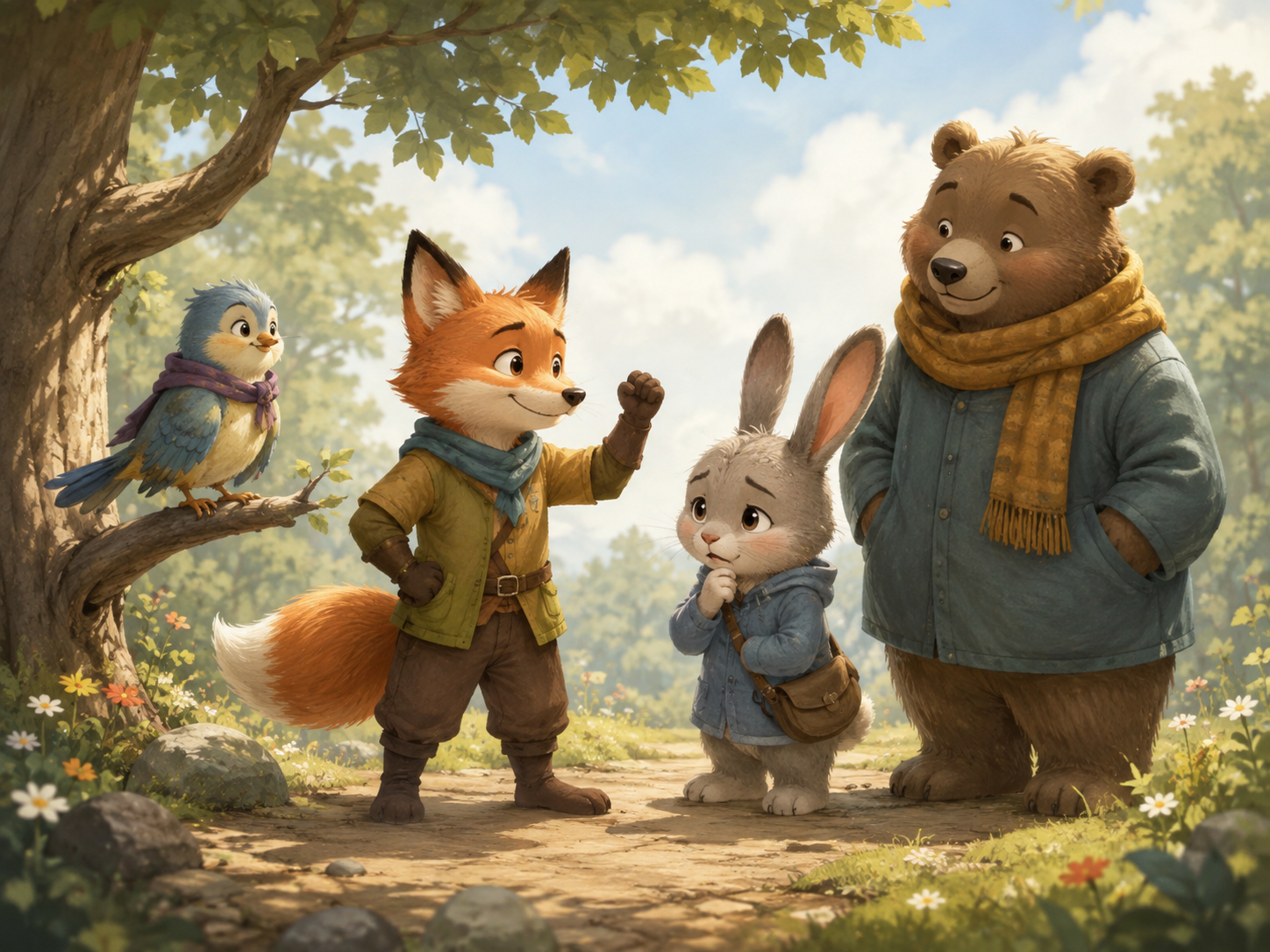
Talking animals give creators a visually distinctive way to explore familiar emotions and conflicts. They can make a character immediately recognizable while allowing serious themes to feel more approachable, imaginative, or entertaining.
Stronger Character Recognition and Emotional Appeal
Animals already have distinctive shapes, movements, and behaviors. Long ears, a heavy walk, a curled tail, or quick head movements can communicate personality before the character speaks. These visual signals help viewers identify characters quickly, which is especially valuable in short videos.
Species traits can also strengthen emotional appeal. A small rabbit standing up to a much larger opponent naturally appears vulnerable but courageous. A tired old dog waiting beside a doorway may suggest patience, loyalty, or loneliness without requiring a long explanation.
Visual recognition becomes even stronger when appearance supports personality. A cautious hedgehog may wear practical clothing and keep its body slightly closed, while an energetic parrot might use bright accessories and broad wing movements. The design gives viewers an immediate sense of who the character is.
More Flexible Ways to Express Human Themes
Friendship, fear, conflict, ambition, and morality can all be explored through animal characters. Because the characters are separated from a specific human age, nationality, or social group, their experiences may feel more universal.
Stories with talking animals can also present difficult subjects through symbolism. A group of forest animals competing for a shrinking water source can represent inequality or environmental pressure without turning the story into a direct lecture. A young wolf afraid to join the pack may express social anxiety in a form that younger viewers can understand.
This distance creates flexibility in tone. Serious ideas can be presented gently, while familiar human behavior can become funnier or easier to examine when performed by animals.
Popular Genres for Talking Animal Characters
Talking animals appear naturally in fables, children’s stories, fantasy, comedy, and adventure. Each genre uses animal characteristics differently.
Fables often connect species traits with a moral decision. Fantasy stories may build entire societies around habitats, food chains, migration, or relationships between species. Comedy can emerge from physical contrasts, such as a tiny mouse attempting to command a team of large farm animals. In an adventure, flying, climbing, swimming, digging, or tracking may directly affect how the characters solve problems.
Animal behavior can support worldbuilding as well. A city designed for birds would need landing areas and open vertical spaces, while an underground mole community might communicate through vibration and carefully mapped tunnels. Details like these make the setting feel connected to its inhabitants rather than added around them.
Talking Animal Characters in Ads and Short-Form Content
Brand mascots, story-driven ads, AI shorts, and social videos benefit from characters that can be understood within seconds. A distinctive animal silhouette, color palette, voice, and behavior pattern can create recognition before the viewer remembers the character's name.
A delivery service might use a fast, organized squirrel that never loses a package. A sleep product could feature a calm bear whose slow movements and soft voice reinforce comfort. In both cases, the species supports the message instead of serving as decoration.
Short-form content also rewards repeatable personalities. When the same character returns across several videos, familiar reactions, gestures, and speech patterns help the audience recognize the series immediately. Creators learning how to make a short film can use the same approach to build a focused story around one recognizable animal character.
How Do You Create a Talking Animal Character for AI Video?
A strong character usually develops through four connected elements: narrative role, animal behavior, visual identity, and performance. Decisions made at this stage also make later AI video generation more consistent.
Define the Character's Role and Personality
Start with the character’s purpose in the story. A detailed appearance cannot compensate for a character who has no goal or influence on the plot.
Clarify four basic elements:
Role: What function does the character serve in the story?
Goal: What does the character actively want?
Motivation: Why does that goal matter?
Flaw: What habit, fear, or belief makes success more difficult?
A raccoon courier may want to deliver a mysterious parcel before sunrise because failure would cost him the trust of his neighborhood. His curiosity, however, repeatedly tempts him to open the package. That conflict gives the character something meaningful to do and creates choices that can move the plot forward. A clear character goal and obstacle also provide a stronger foundation when you write a script for a short film.
Balance Human Personality With Animal Traits
A talking animal may wear clothes and express human emotions, but its species should continue to shape its behavior. The central principle is simple: The animal should affect how the character behaves, not just how it looks.
Movement, size, instinct, senses, and social behavior can all influence a scene. A rabbit may freeze briefly when startled, even if she is normally confident. An owl might notice movement in low light that other characters miss. A dog could become distracted by a familiar scent during an important conversation.
Animal traits should not control every decision, but they should create believable opportunities and limitations. This balance prevents the character from feeling like an ordinary person with an animal face.
Build a Consistent Visual Identity
When using AI character generators, scenes can change a character’s appearance unless the visual description remains precise. Before generating video, establish a reusable character reference covering:
Species and body proportions
Fur, feather, skin, or scale colors
Face shape and key markings
Clothing and accessories
Art style and level of anthropomorphism
Descriptions should use stable, observable details. "A friendly fox" is too broad, while "a slim red fox with a cream muzzle, dark ear tips, a green messenger bag, and a blue neck scarf" gives the generation system clearer visual anchors.
The same core description should appear in every relevant scene prompt. Temporary details, such as wet fur after rain, can change, but identity-defining features should remain fixed.
Match Voice and Movement to Personality
Voice and movement complete the character. Speech rhythm, volume, facial expression, posture, and gesture should all communicate the same personality.
A nervous mouse may speak quickly, pause mid-sentence, and use small movements close to the body. A calm bear can have a slower delivery, broader gestures, and heavier steps. If the bear suddenly speaks rapidly and moves with the same lightness as the mouse, the performance may feel disconnected from the design.
Physical behavior should also account for anatomy. Wings, paws, hooves, and tails cannot always perform human gestures naturally. Decide how human-like the movement will be and keep that level consistent throughout the video.
How Do You Turn a Talking Animal Character Into an AI Video?
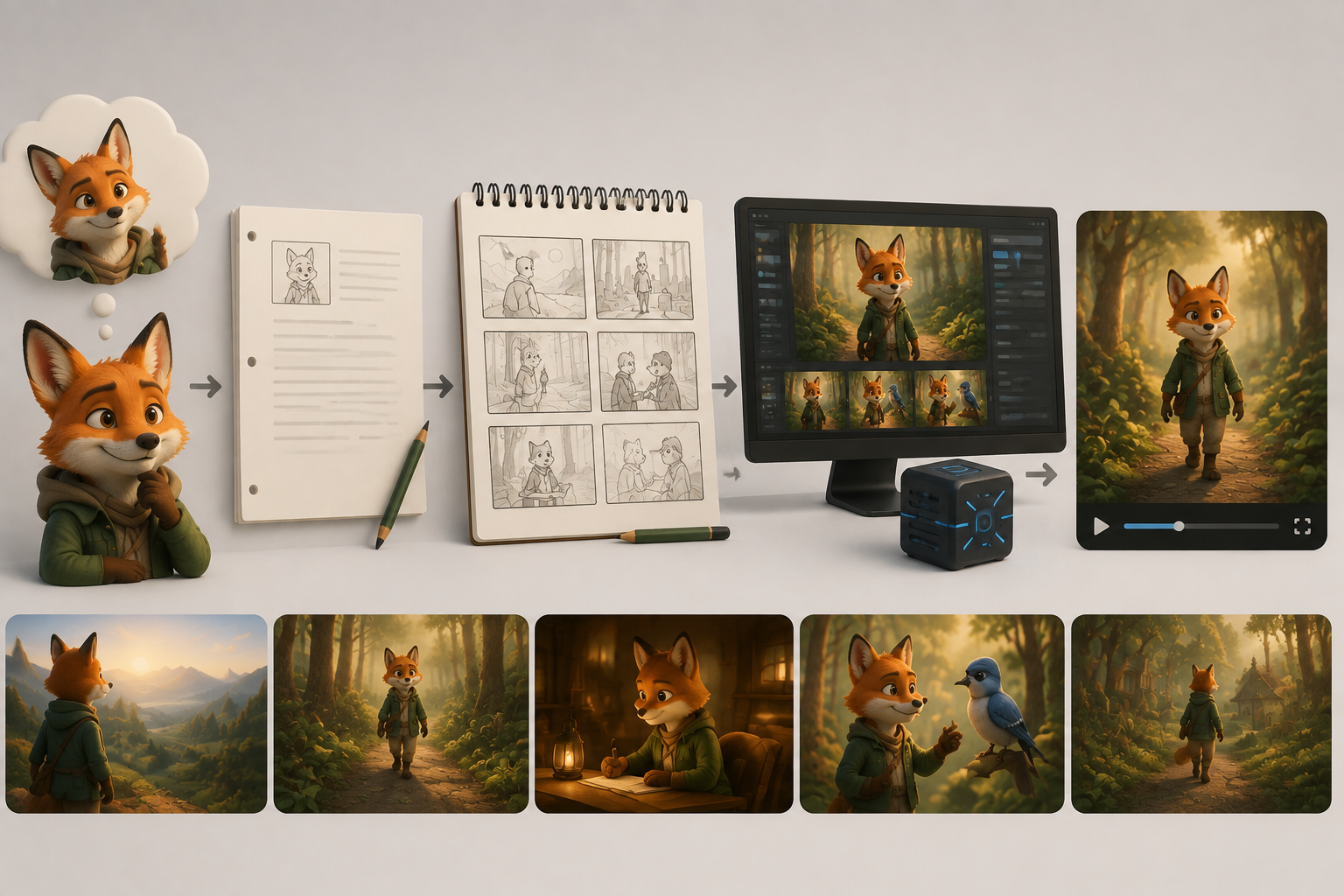
Once the character is defined, production can move from story planning to scripts, storyboards, and generated scenes. A structured workflow reduces visual changes and makes problems easier to identify before the complete video is produced.
Break the Story Into Scenes
Begin with the character, goal, conflict, action, and location. Then divide the story into a sequence in which every scene has a clear purpose.
One scene may introduce the character’s goal, another may create an obstacle, and a later scene may force a difficult decision. If removing a scene does not change the story or reveal anything important, it may not be necessary.
A short video about a fox returning a lost key could follow three simple stages: finding the key, resisting the temptation to keep it, and returning it to its owner. This sequence gives the character a complete emotional action without requiring a complicated plot.
Build the Script and Storyboard
The character brief and story outline must now become production-ready instructions. Each scene should identify the speaker, dialogue, action, expression, location, and camera direction. These details also give a text-to-video tool clearer guidance when generating individual shots.
Dialogue needs to reflect the character’s established voice rather than merely explain the plot. A proud lion and a shy rabbit should not use identical sentence length, vocabulary, and rhythm.
The storyboard then clarifies where the character appears in each shot, what action takes place, and how the emotion changes. It can also reveal practical issues. A wide shot may hide an important facial reaction, while several complex actions in one short shot may be difficult to understand or generate consistently.
Generate and Refine Scenes
Testing a few key scenes first is more efficient than generating the entire video immediately. Choose shots that reveal the character from different angles, include important dialogue, or require noticeable movement. These tests show whether the appearance, voice, proportions, and visual style remain stable.
After preparing the character reference, script, and storyboard, creators can continue the production process in RoboNeo. Its script generation, AI video creation, and consistent video workflow can help turn the planned character into connected video scenes. The first results can then guide adjustments to prompts, actions, camera directions, and scene design.
During review, pay particular attention to character appearance, body proportions, dialogue timing, and continuity between shots. A scarf that changes color or a character that suddenly becomes taller may be more distracting than a minor background difference.
Create Talking Animal with RoboNeo
What Mistakes Should You Avoid With Talking Animal Characters?
One common problem is combining a human personality with an animal appearance without allowing the species to affect behavior. The result may look appealing but feel generic.
Stereotypes can also limit the character. Foxes do not always need to be clever, lions do not always need to be brave, and rabbits do not always need to be timid. Unexpected combinations often create more individual personalities, provided the behavior still feels coherent.
Several other mistakes can weaken the story:
Giving every animal the same personality and dialogue style
Changing fur, clothing, proportions, or art style between scenes
Shifting unpredictably between realistic and human-like anatomy
Adding cute behavior that interrupts an important emotional moment
Designing a memorable appearance without giving the character a meaningful goal
Consistency does not require the character to remain emotionally static. The character can learn, fail, or change, but those developments should grow from the established personality and story events.
FAQ
What are stories with talking animals called?
They are often called anthropomorphic animal stories, animal fables, or talking-animal stories. The most suitable term depends on the genre and how many human qualities the animals possess.
Do talking animals have to act like humans?
No. They may speak and express human emotions while retaining animal movement, instincts, habits, senses, and physical limitations.
Can talking animal characters be used outside children's stories?
Yes. Talking animals also work in fantasy, comedy, satire, advertising, animation, games, and stories created for adult audiences.
How do you keep the same animal character across AI video scenes?
Use a fixed character reference and repeat the same species, body proportions, colors, facial markings, clothing, accessories, and visual style in each scene description.
Should talking animal characters look realistic or anthropomorphic?
Either approach can work. The appropriate level of anthropomorphism depends on the story genre, intended audience, performance requirements, and overall visual style.
You May Be Interested

4K vs 1080p: Should You Upscale 1080p Video to 4K?
How to Use an AI Video Generator Online to Create Viral Content
How to Create Stunning Visuals with the Best AI Music Video Generator
Best AI Video Enhancer in 2026: 8 Tools, Pros and Cons

Best App to Remove Tiktok Watermark in 2026